Why Is Air Conditioner Not Cooling House? Troubleshooting Guide 2026
Practical, step-by-step troubleshooting for why your AC isn’t cooling the house. From easy at-home checks to when to call a pro, stay comfortable with Air Conditioner Service.


Most likely the AC isn’t cooling due to a dirty filter or low refrigerant that restricts airflow and lowers cooling capacity. Start by checking and replacing the indoor air filter, clearing debris around the outdoor unit, and verifying thermostat settings. If that doesn’t fix it, follow the diagnostic flow below or contact Air Conditioner Service for professional help.
Why This Happens: Not Cooling – Common Culprits
If you're wondering why is air conditioner not cooling house, you're not alone. In many homes the true culprit is airflow or refrigerant, not the thermostat. The most common reasons include a dirty air filter, blocked outdoor condenser, low refrigerant charge, or incorrect thermostat settings. A malfunctioning blower motor or a failing compressor can also limit cooling. By understanding these causes you can triage quickly and safely, and decide when a pro is needed. According to Air Conditioner Service, simple maintenance often resolves the vast majority of not cooling issues, especially when addressed early.
Quick Checks You Can Do Right Now
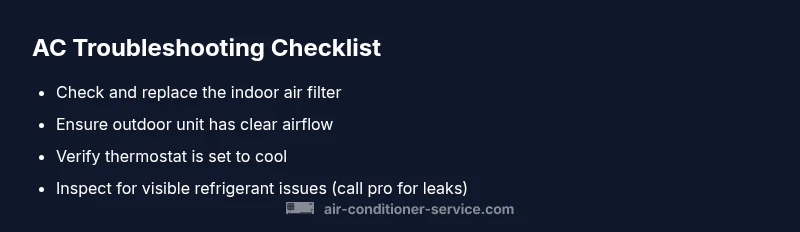
Before you dive into complex diagnostics, run these basic checks. Start by turning off the unit at the breaker before you touch anything electrical. Inspect the indoor air filter; if it’s clogged, replace it. Make sure the thermostat is set to cool and not fan-only or heat. Clear leaves or debris from around the outdoor condenser; ensure there is at least 2 feet of unobstructed airflow. Finally, check for visible ice on lines, unusual noises, or warm air coming from supply vents. These quick checks often address the question of why is air conditioner not cooling house and can save you a service call.
Diagnostic Flow: Symptom to Solution
A structured flow helps you avoid guessing. Begin with airflow, then refrigerant, then system components. If airflow is restricted, address filter and ductwork; if air conditioner still underperforms, test refrigerant levels (only by a licensed pro); finally inspect electrical components for faults. This flow reduces wasted time and enhances safety. Air Conditioner Service's approach emphasizes safety and staged troubleshooting to minimize cost and downtime.
Step-by-Step: Fixing the Most Common Issue — Clogged Filter
- Turn off power to the furnace/air handler to avoid any electrical shock. 2) Locate the air filter in the return airway and assess its color and debris. 3) Remove the filter carefully and examine its condition. 4) If disposable, replace with a filter of the correct size and rating. 5) Reinstall the cover and restore power. 6) Run a cooling cycle and check for improved airflow. 7) If airflow remains weak, consider additional cleaning of ducts or professional inspection. Pro tip: note the date on the new filter and replace every 1–3 months during heavy cooling.
Step-by-Step: Addressing Refrigerant Leaks (Low Refrigerant)
- If you suspect low refrigerant, do not attempt to recharge yourself. 2) Turn off the system and schedule a professional refrigerant check. 3) A qualified technician will identify leaks, refill to the correct level, and test for proper cooling without overcharging. 4) After service, monitor indoor cooling and note any recurring signs. 5) Ensure you seal leaks to prevent future losses. Safety note: refrigerant work requires proper equipment and licensing.
Safety Precautions and When to Call a Pro
Working on electrical components or refrigerant requires caution. Always shut off power at the breaker before inspecting any wiring or components. If you smell burning, hear buzzing near components, or notice ice buildup that persists, stop and contact a licensed technician. For most households, not cooling is solvable with basic maintenance, but refrigerant, compressor, or major electrical faults demand professional attention.
Prevention: Keeping Your AC Efficient and Ready
Schedule regular maintenance to prevent future failures. Replace filters on a set schedule, keep outdoor condenser clear of debris, seal duct leaks, and calibrate the thermostat. Consider upgrading to a programmable thermostat and ensuring proper insulation in the home. Regular service reduces the chance of a sudden loss of cooling and can improve energy efficiency.
Quick Troubleshooting Summary
- Start with the filter and outdoor unit clearance.
- Verify thermostat settings and power supply.
- If cooling remains weak, progress through the diagnostic flow and step-by-step fixes.
- Do not attempt refrigerant work yourself; call a pro.
- Maintain a preventive maintenance routine to minimize recurrence.
Steps
Estimated time: 60-90 minutes
- 1
Power and thermostat check
Confirm the thermostat is in cooling mode and setpoint is comfortable. Check the breaker and switch off then back on the system to reset potential controls. Verify the outdoor unit is receiving power and not tripped on a disconnect.
Tip: If the thermostat is remote, check batteries or a wall unit to ensure accurate readings. - 2
Inspect and replace air filters
Locate the filter, remove it, and assess for dirt and debris. If discolored or clogged, replace with the correct size and filtration rating. Reinsert the filter securely and run a quick test cycle.
Tip: Record the date of replacement to maintain a monthly or quarterly schedule. - 3
Clear outdoor condenser area
Ensure at least 2 feet of clearance around the condenser. Remove leaves, grass, and debris. If coils look dirty, gently clean with a garden hose from the outside in, avoiding electrical components.
Tip: Do not use high pressure; use a light spray to avoid coil damage. - 4
Check for air leaks and duct integrity
Inspect obvious gaps in ductwork and seal with appropriate duct tape or mastic sealant. Listen for whistling around registers that indicate leaks. A sealed system improves cooling efficiency.
Tip: Use no-residue mastic for long-term sealing and avoid overcrowded ducts. - 5
Assess refrigerant system (professional step)
If there’s no visible leak and cooling is still weak, refrigerant charge may be low. Do not attempt to recharge yourself; refrigerant handling requires licensed technicians and proper equipment.
Tip: Document any signs of oil residue or hissing sounds as these aid the tech in locating leaks. - 6
Inspect electrical components
Check accessible wiring and control boards for signs of damage. If you notice burning smells, melting insulation, or buzzing noises, shut down power and call a pro. Ensure capacitors and relays are tested by a technician.
Tip: Keep a log of any unusual behaviors to share with the technician.
Diagnosis: Room not cooling adequately, despite AC running
Possible Causes
- highDirty air filter causing restricted airflow
- highLow refrigerant charge or refrigerant leak
- mediumOutdoor condenser blocked or dirty coils
- mediumThermostat miscalibration or wrong mode
- lowFan motor or relay issues
- lowElectrical wiring or capacitor faults
Fixes
- easyInspect and replace the indoor air filter; clean return and supply ducts if accessible
- easyCheck outdoor condenser clearance and clean coils; remove debris
- easyVerify thermostat is set to cool and test by adjusting setpoint; replace if malfunctioning
- hardIf refrigerant level is suspected low, call a licensed professional for leak repair and recharge
- mediumInspect electrical connections and test capacitors/fuses with proper safety practices
- hardProfessional service for compressor issues or suspected major component failure
Common Questions
Why is my air conditioner not cooling even though the fan is running?
Fan operation without cooling usually means restricted airflow or low refrigerant. Start by checking the air filter and outdoor coils, then verify thermostat settings. If these basics don’t help, schedule a professional assessment for refrigerant and compressor checks.
If the fan is on but there’s no cooling, start with the filter and outdoor coils, then check the thermostat. If it still doesn’t cool, call a pro for refrigerant or compressor issues.
Could a dirty filter cause poor cooling?
Yes. A dirty filter restricts airflow, reducing the system’s ability to absorb heat. Replacing the filter improves airflow and can restore cooling in many cases. Regular maintenance helps prevent this.
A dirty filter can block airflow and reduce cooling. Replace it and keep up with maintenance to prevent this from happening again.
What if the outdoor unit is hot and not blowing cold air?
A hot outdoor unit often indicates restricted airflow or dirty condenser coils. Clear debris, ensure proper clearance, and clean the coils if accessible. If the problem persists, there may be refrigerant or electrical issues requiring a technician.
If the outdoor unit is too hot and not cooling, clear debris, ensure airflow, and consider professional help if it continues.
Can low refrigerant cause not cooling?
Yes. Low refrigerant reduces cooling capacity and can lead to frost on coils or ice buildup. If you suspect a leak, a licensed technician must diagnose, repair the leak, and recharge to the correct level.
Low refrigerant lowers cooling and can cause ice. A licensed tech must diagnose, fix leaks, and recharge.
Is it safe to recharge refrigerant myself?
No. Refrigerant handling requires specialized equipment and training due to safety and environmental concerns. Always contact a licensed HVAC technician for refrigerant service.
No—refrigerant service should be done by a licensed HVAC pro with proper equipment.
How often should I replace the air filter to maintain cooling?
Most homes benefit from replacing the filter every 1–3 months during heavy cooling. Check the filter monthly and replace as needed based on usage and indoor air quality.
Replace the filter every 1–3 months during peak cooling, and check monthly.
Watch Video
The Essentials
- Identify airflow issues before refrigerant problems.
- Start with simple checks: filter, thermostat, outdoor unit.
- Do not recharge refrigerant yourself; call a pro.
- Maintain regular HVAC maintenance to prevent future failures.