Air Conditioner Tripping Circuit Breaker Troubleshooting Guide
Urgent, practical troubleshooting guide for when your air conditioner trips the circuit breaker. Learn safe checks, common causes, and when to call a pro for safe repairs.


A circuit breaker tripping when your AC starts almost always points to an electrical overload or a failing component. Start with the simplest checks: reset the breaker, inspect the outdoor unit for obstruction, replace a clogged air filter, and test the thermostat. If it trips again, power off and call a licensed technician.
Why air conditioner tripping circuit breaker happens
According to Air Conditioner Service, the most common reason the air conditioner tripping circuit breaker occurs is an electrical overload or a failing component within the unit. When the compressor or fan attempts a high-current start, the breaker can trip to protect the circuitry. Other frequent causes include a dirty air filter restricting airflow, a damaged or loose wire in the outdoor unit, a faulty run capacitor, or an undersized breaker for the AC’s starting surge. Regular maintenance reduces these risks, and a professional HVAC technician can verify electrical connections, capacitors, and the condenser coil. Air Conditioner Service analysis shows that addressing maintenance gaps dramatically lowers the odds of unexpected trips over the lifetime of the system.
What to remember: never ignore a tripping breaker; continued attempts to run the unit can cause overheating and hazards. A sustained trip often points to something unsafe or failing that needs diagnosis beyond quick DIY fixes. This guide is designed to help homeowners and renters take safe, constructive steps and know when to escalate to a pro.
Safe, quick checks you can perform now
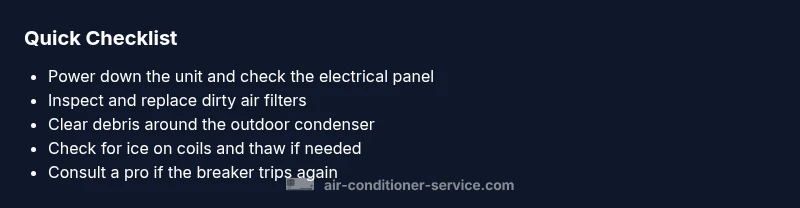
Before calling for help, perform a few safe, non-invasive checks. Ensure your hands are dry and you’re standing on a non-conductive surface. Turn off the thermostat, then switch off the corresponding circuit breaker. Check the outdoor unit for debris, leaves, or snow blocking airflow. Inspect and replace a dirty or clogged indoor air filter. Look for ice on the evaporator coil inside the air handler – if you see ice, turn the system off and allow it to thaw before investigating refrigerant or airflow issues. Confirm the thermostat wiring is secure and there are no obvious signs of damaged insulation or loose conductors. If other devices share the same circuit, consider redistributing loads or upgrading to a dedicated AC circuit to reduce trips. If the breaker continues to trip after these checks, you should call a professional.
Diagnostic basics: reading symptoms and pairing with causes
Understanding symptoms helps narrow down the cause. If the breaker trips during startup, the issue is often a surge from the compressor or a capacitor. If it trips after running for a while, it may indicate overheating in the compressor or restricted airflow. A persistent trip with ice on coils points to refrigerant or airflow problems. Air Conditioner Service suggests documenting your observations (noise, heat, ice, odor) and noting any recent changes (filters, thermostat, new appliances) to help a technician diagnose quickly. Always consider a dedicated circuit for the AC to prevent overload from other devices.
Diagnostic flow: symptom to diagnosis
Following a logical diagnostic flow reduces guesswork:
- Symptom: Breaker trips on start or during runtime.
- Possible diagnoses: overload, faulty capacitor, loose wiring, ice on coils, dirty filter, refrigerant issue.
- Immediate actions: power off, disconnect power to the outdoor unit if safe, and check airflow and filters.
- If the breaker trips again after safe checks, escalate to professional testing (capacitors, contactors, wiring) and refrigerant inspection. The goal is to identify whether the cause is electrical, mechanical, or refrigerant-related and to address safety first.
Step-by-step: safe, practical fixes for the most common causes
Before you begin, ensure you have a dry area and non-conductive footwear. If you’re unsure about electrical work, skip to professional help. Start with the simplest fix—the most likely issue is a blocked or dirty filter and restricted airflow. Clean or replace the filter, clear outdoor debris, and ensure vents are open. If the problem persists, inspect the outdoor disconnect and the breaker—reset and observe if it trip again or trip immediately. Next, examine the refrigerant-related issues; ice on the coil indicates airflow or refrigerant problems that require a licensed tech. If you suspect a faulty capacitor or contactor, those components typically require a professional to test and replace. Finally, if all safe DIY checks fail, contact Air Conditioner Service or a licensed electrician for a comprehensive diagnostic and safe repair.
TIPS & WARNINGS
- Use a non-contact voltage tester to confirm the power is off before touching any wires.
- Do not bypass a tripped breaker or run the unit while you hear buzzing or see arcing sounds.
- A dirty filter increases the unit’s workload and can trigger trips; replace filters every 1–3 months depending on use and filters.
- If you see bulging capacitors, burnt smells, or melted insulation, stop immediately and call a pro.
- Never work on energized electrical components; only perform low-risk checks like filter replacement and external inspection.
- If your system shares a circuit with other heavy-load appliances, consider upgrading to a dedicated AC circuit to prevent future trips.
- Schedule regular maintenance to catch wear and tear before it causes trips.
Preventive maintenance to reduce future trips
Preventive maintenance is the best defense against breaker trips. Schedule seasonal inspections to test capacitors, contactors, wiring, and the condenser. Replace air filters regularly and ensure proper airflow around the outdoor unit. Keep the area around the outdoor unit clean of debris and ensure nothing blocks the return vents indoors. Use a dedicated circuit for the AC when possible, and have a licensed technician verify refrigerant levels and the electrical panel integrity at least once a year. Proactive care reduces unplanned trips and extends the life of your system. Air Conditioner Service recommends recording maintenance and any changes to filters, thermostats, or loads to inform future troubleshooting.
Steps
Estimated time: 60-120 minutes
- 1
Power down safely
Turn off the thermostat and switch off the corresponding circuit breaker. Use a non-contact tester to confirm power is off before touching any wiring. This protects you from shock while inspecting the outdoor unit.
Tip: Always verify power with a tester before handling wires. - 2
Check airflow and filters
Inspect the indoor filter; replace if dirty and ensure vents aren’t blocked. Check the outdoor unit for leaves, grass, or debris blocking airflow.
Tip: A clogged filter can cause higher current draw and trips. - 3
Inspect electrical components
Look at the outdoor disconnect and the main breaker for signs of wear, corrosion, or heat. If you’re comfortable, tighten accessible connections; otherwise, skip to a pro.
Tip: Loose connections can cause arcing and trips. - 4
Test the capacitor and contactor
If you’re trained, discharge and inspect the run capacitor; replace if bulging or leaking. Testing contactors often requires specialized tools—call a professional if uncertain.
Tip: Bulging capacitors are a red flag. - 5
Check for ice and refrigerant issues
Inspect the evaporator coil for ice. If ice is present, turn off the system to thaw and call a pro to check refrigerant levels and airflow.
Tip: Running with ice can damage the compressor. - 6
Reassemble and test
Once components are verified or replaced, restore power and test the system. Monitor for immediate trips and listen for abnormal sounds. If trips recur, shut down and contact a professional.
Tip: Document what you checked for future reference.
Diagnosis: AC trips the circuit breaker when starting or during operation.
Possible Causes
- highOverloaded circuit or undersized breaker
- mediumFaulty run capacitor or loose wiring
- lowDamaged insulation or wiring in outdoor unit
- lowIce on evaporator coil indicating airflow or refrigerant issues
Fixes
- easyReset the breaker and reduce other loads on the same circuit
- mediumInspect and replace the run capacitor or contact a professional to test electrical components
- mediumInspect wiring, tighten connections, and replace damaged insulation—call a licensed electrician if damage is found
- mediumThaw any ice on coils and have refrigerant pressure checked by a pro
Common Questions
What should I do first when my AC trips the circuit breaker?
Power down safely, reset the breaker, and inspect for obvious issues like air filters or outdoor obstructions. If the breaker trips again, stop and call a professional.
First, turn off the power, reset the breaker, and check for obvious issues. If it trips again, contact a professional.
Can a bad capacitor cause a breaker to trip?
Yes, a failing capacitor can cause high current draw and trip the breaker. Have the capacitor tested and replaced if needed by a qualified technician.
Yes. A bad capacitor can trip the breaker; it should be tested and replaced by a professional.
Is it safe to keep running my AC on a tripping breaker?
No. Do not run the unit. A persistent trip may indicate a dangerous electrical issue or refrigerant problem that needs professional assessment.
No. Don’t run it. If it keeps tripping, call a professional.
How can I prevent breaker trips in the future?
Maintain regular airflow and replace filters, ensure the circuit is adequately sized for the AC, and have annual professional inspections.
Keep up with maintenance, replace filters, and ensure a proper circuit size with a yearly check.
When should I call a professional?
If breaker trips persist after basic checks or you notice signs of damage, gas refrigerant issues, or burning smells, it’s time to call a licensed HVAC technician.
If trips continue after checks or you smell burning, call a pro.
Watch Video
The Essentials
- Check simple fixes first (filters, airflow, load)
- Identify whether the trip is electrical or refrigerant-related
- Do not run the unit if the breaker repeats tripping
- Schedule professional help if trips persist or you notice damage