Air Conditioner Repair in Tucson: DIY Troubleshooting Guide
Learn practical steps to diagnose and repair common air conditioner problems in Tucson. Safe DIY tips, maintenance routines, and guidance on when to call a pro.


Goal: learn how to diagnose and address the most common air conditioner problems in Tucson's hot climate. This quick guide covers safety basics, how to inspect the outdoor unit and thermostat, verify airflow, and perform simple fixes you can safely complete. It also explains when a licensed technician is needed to avoid harming the unit or voiding warranties.
Why Tucson climate shapes AC repair decisions
According to Air Conditioner Service, the desert heat in Tucson places unique demands on cooling systems. With long, sweltering summers and high outdoor temperatures, your air conditioner runs longer, ages faster, and faces more stress on components like capacitors, contactors, and outdoor coils. That means performance can degrade quickly if filtration is poor or if routine maintenance is skipped. Local homes with poor insulation or sun-exposed ducts tend to experience slower cooling and higher energy use. Understanding these climate-driven realities helps homeowners prioritize preventive checks, identify problems early, and approach repairs with realistic expectations. This guide emphasizes practical, non-technical steps you can take safely while recognizing when a pro is needed to ensure the system remains energy-efficient and compliant with warranties.
Common causes of AC problems in Tucson homes
Desert climates stress HVAC equipment in several predictable ways. Dirty condenser coils, clogged indoor air filters, and restricted airflow from poorly sealed ducts are frequent culprits for reduced cooling and higher energy bills. Electrical issues, including worn capacitors, failed contactors, and thermostat malfunctions, are common in aging systems. Refrigerant leaks, though less visible, can quietly degrade cooling capacity and trigger ice formation on coils. In many cases, a combination of dirty coils, restricted airflow, and aging electrical components leads to noticeable performance drops. Regular inspection, coil cleaning, and filter changes can prevent most breakdowns and extend system life.
Safety and preparedness before you start
Before touching any HVAC components, power down the thermostat and switch off the outdoor and indoor unit at the main service disconnect. Wear PPE: safety glasses and gloves, and never work on live electrical circuits. Keep a clear workspace, and use a flashlight to inspect hard-to-see areas. If you notice signs of refrigerant hissing, burned electrical smells, or exposed wiring, stop immediately and call a licensed technician. Remember that some tasks, like refrigerant handling or capacitor replacement, require proper training and licensing. Prioritize your safety and the protection of your home’s electrical system.
A practical diagnostic approach without heavy tools
Start with the simplest checks: confirm the thermostat setting, check the air filter, and inspect the outdoor condenser for debris or signs of damage. If the fan inside the outdoor unit is not spinning, reset the breaker and test the disconnect switch. Clean dirt from coils using a garden sprayer or soft brush, avoiding high-pressure water that can damage fins. Check for icy buildup on the evaporator coil inside the return plenum and address restricted airflow by replacing dirty filters and sealing leaks in ducts. If coils are clean and the unit still won’t cool, there may be a refrigerant issue or a failing compressor, which requires professional evaluation.
When to call a professional and what to expect
Professional HVAC technicians should be contacted for refrigerant leaks, compressor or capacitor failures, and any serious electrical hazards. If you notice persistent ice on coils after cleaning, warm air from vents, or unusual noises that persist after a reset, schedule a visit. A technician will typically perform a diagnostic, test refrigerant pressures, inspect electrical components, measure airflow, and verify thermostat calibration. Expect a written estimate, a diagnosis, and a scope of work. Regular maintenance visits can prevent many issues from escalating.
Ongoing maintenance to prevent heat-wave breakdowns
Proactive maintenance is the best defense against Tucson’s extreme heat. Replace disposable air filters every 1–3 months, depending on usage and pet dander. Schedule a coil cleaning at least once a year to keep heat transfer efficient, and inspect duct insulation for leaks. Ensure attic and ductwork are properly insulated to minimize heat gain, and consider shade or reflective roof coatings to reduce solar heating of the outdoor unit. Finally, keep the area around the outdoor unit clear of vegetation and debris for optimal airflow.
Authority sources
For trusted, detailed guidance on air conditioning basics and energy efficiency, consult authoritative resources: • https://www.energy.gov/eere/buildings/articles/air-conditioning-system-basics • https://www.energy.gov/energysaver/air-conditioning • https://www.eia.gov/energyexplained/home-heating-and-cooling/air-conditioners.php
Tools & Materials
- Screwdriver set (Phillips and flat-head)(Phillips #2 is the common size for service panels)
- Multimeter / voltage tester(Test for safe power before touching electrical components)
- Brush or coil-cleaning tool(Gently remove dirt from condenser coils)
- Garden sprayer or spray bottle(Light misting to clean coils; avoid high pressure)
- Safety gloves and goggles(Protect hands and eyes during inspections)
- Nut driver or adjustable wrench(Useful for disconnects and mounting hardware)
- Digital thermometer (or thermostat reading)(Check supply and return air temperatures)
- Duct tape and mastic sealant(Seal minor duct leaks if accessible)
- Portable fan for airflow checks(Speed up airflow testing during diagnostics)
Steps
Estimated time: 45-90 minutes
- 1
Power down and safety check
Shut off the thermostat and then switch off both indoor and outdoor units at the main disconnect. Verify there is no live current before opening access panels. This prevents electrical shock and protects components.
Tip: Double-check with a voltage tester at the exposed terminals. - 2
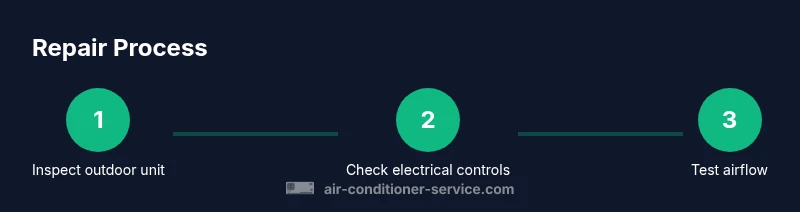
Inspect outdoor condenser and coils
Look for debris, leaves, or dirt obstructing the outdoor coil. Gently remove debris with a brush and use a light water mist if needed. Do not use high-pressure water, which can bend fins.
Tip: Clear a 2–3 ft radius around the unit for proper airflow. - 3
Check thermostat and airflow
Set the thermostat to cool and compare supply and return air temperatures. Replace dirty filters and inspect ducts for obvious leaks or gaps. Poor airflow is a common cause of poor cooling in Tucson homes.
Tip: Take temperature readings to verify if the system is moving sufficient air. - 4
Inspect electrical components inside access panel
With power still off, check visible wiring for signs of damage, corroded terminals, or loose connections. If you see burnt smell or melted insulation, stop and call a pro.
Tip: Only handle controls you can clearly see; avoid touching live wires. - 5
Test operation and observe performance
Reconnect power, run the system through a full cycle and monitor for consistent cooling and normal fan operation. Listen for abnormal noises or icing on coils, which indicate issues beyond basic cleaning.
Tip: Document any abnormal sounds or readings for the technician.
Common Questions
Is it safe to attempt air conditioner repairs yourself?
DIY repairs are sometimes safe for basic maintenance if you follow strict safety steps and stay out of electrical components. For refrigerant, electrical faults, or compressor work, hire a licensed technician.
DIY repairs can be safe for simple maintenance, but refrigerant and electrical work should be done by a licensed technician.
How can I tell if my unit needs refrigerant?
Low cooling performance, ice formation on the coils, and rising energy use can indicate refrigerant issues. Only a licensed pro can diagnose and repair refrigerant leaks.
Low cooling, ice on coils, and rising energy use can signal refrigerant problems; a professional should diagnose leaks.
What maintenance should I perform monthly?
Check and replace filters, wipe down the outdoor unit, and inspect for obvious debris or loose connections. Ensure airflow is unobstructed and ducts are sealed where accessible.
Change filters monthly, check the outdoor unit, and ensure no obstructions are blocking airflow.
How long does a typical repair take?
Repair time depends on the issue and parts availability. Minor fixes may take a couple of hours, while major repairs can require a technician visit and parts on order.
Most repairs take a few hours if parts are available, longer if refrigerant work is involved.
When should I replace instead of repair?
If the system is old, frequently failing, or requires costly refrigerant work, replacement may be more cost-efficient in the long run. A technician can help evaluate remaining life.
If it’s old or repeatedly failing and needs expensive parts, replacement may be wiser.
Watch Video
The Essentials
- Power down before any inspection or handling of components
- Desert climates stress AC units; prioritize coil and airflow checks
- Regular maintenance prevents most emergency breakdowns
- Call a professional for refrigerant, electrical, or compressor issues