Air Conditioner Repair in Atlanta GA: A Practical DIY Guide
A practical, step-by-step guide to diagnosing and safely repairing common air conditioner issues in Atlanta, GA. Learn when DIY is appropriate and when to call a licensed technician.


This how-to guide helps homeowners in Atlanta, GA diagnose common AC issues and perform safe, basic repairs before calling a technician. You’ll learn quick safety checks, when to reset breakers, how to inspect filters, coils, and condensate drains, and how to know when failure requires professional service. Follow the steps only if you can safely power, access, and test the unit.
Understanding the Atlanta climate and AC loads
The city of Atlanta experiences hot summers with high humidity, and that means air conditioners run longer and harder. For homeowners researching air conditioner repair atlanta ga, understanding the climate helps explain why components wear out and how to plan maintenance. When outdoor temperatures climb, the condenser works overtime, the evaporator coil carries a heavy latent load, and refrigerant pressures may shift. Regular checks can catch early signs of trouble before a complete breakdown.
In practical terms, you may notice reduced cooling, longer running times, or ice on the evaporator coil during humid spells. These symptoms often point to airflow restrictions, dirty filters, or a dirty condenser. While some issues are harmless and fix quickly, others involve electrical components or refrigerant—areas that require caution and, in many cases, professional service. This guide focuses on safe, practical steps homeowners in Atlanta can take to diagnose non-technical problems and know when it’s time to call a licensed technician.
Safety first: essential precautions
Working on an air conditioner involves electrical components, moving parts, and refrigerants. Before you touch anything, commit to safety:
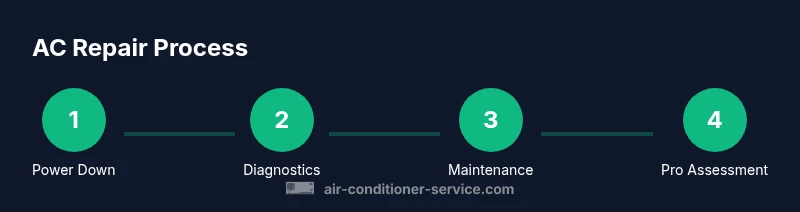
- Power down completely: switch off the thermostat, outdoor disconnect, and if accessible, unplug the unit from its electrical outlet.
- Verify power with a non-contact tester before proceeding.
- Wear protective gear: safety glasses and nitrile gloves protect against sharp edges and minor shocks.
- Keep children and pets away from the work area.
- If you smell gas, see oil around joints, or notice oil residue on lines, stop and call a pro.
If you’re unsure about any step, skip it and contact Air Conditioner Service for a professional assessment in Atlanta GA. Remember: DIY safety is not a substitute for professional refrigerant handling or major electrical work.
Quick diagnostic checklist
Use this before you start any deeper work. Start with the simplest explanations for why your AC isn’t performing as expected:
- Thermostat set correctly and calling for cooling.
- Breaker panel: check for tripped breakers and reset if safe.
- Air filter clean or replaced; check for restricted airflow.
- Outdoor unit: clear debris and verify the fan spins by hand only when power is off.
- Indications of leaks: oily residue at joints or hissing sounds require professional evaluation.
- Listen for unusual noises and note when the unit cycles on/off.
If the unit still fails to perform after these checks, proceed to safe maintenance steps or schedule a service call.
Basic maintenance you can perform
Regular maintenance keeps Atlanta homes comfortable and reduces the likelihood of surprise failures. Focus on non-invasive cleaning and filter replacement:
- Replace or clean air filters; use the correct size and type for your system.
- Gently vacuum dust from the blower compartment and accessible ductwork.
- Clean the outdoor condenser coil from debris using a soft brush; avoid high-pressure water that can bend fins.
- Inspect the outdoor fan for wobble or bent blades; if damaged, do not attempt to straighten it—call a pro.
- Check the condensate pan for standing water and ensure the drain line is clear.
These steps improve airflow and efficiency and are generally safe for a confident homeowner to perform.
Troubleshooting common problems
Not cooling, warm air, or odd noises have common causes:
- Not cooling: air filter clogged or low refrigerant charge; do not attempt to recharge refrigerant yourself.
- Weak airflow: dirty filter, blocked supply vents, or a failing blower motor.
- Ice formation on coils: restricted airflow or low refrigerant; turn off unit and call a pro if it persists.
- Unusual noises: grinding or banging may indicate mechanical wear; have a technician inspect bearings, motor mounts, and fan assembly.
- Leaks: refrigerant leaks require a licensed technician; do not repair with sealants.
When to call a licensed technician in Georgia
Certain tasks require professional licensing and equipment. If you encounter any of the following, schedule a service in Atlanta:
- Repeated breakers trips or electrical hot spots.
- Persistent ice on evaporator or outdoor coil after cleaning.
- Suspected refrigerant leaks or oily residues on lines.
- Loud mechanical noises or failure to start on simple thermostat calls.
- Inability to restore cooling after non-invasive maintenance.
Air conditioning repair in Georgia often benefits from a licensed specialist who can test refrigerant pressure, inspect electrical components safely, and provide a warranty-friendly repair.
Preparing for a service visit
To speed up the repair and reduce cost, gather essential information:
- Model and serial numbers, location, and symptoms (what happened, when, and how often).
- A clear description of what you have tried already.
- Photos of the outdoor unit and control panel, if possible.
- A list of all power-related steps you have taken.
With these details, a technician can diagnose faster, confirm whether a safety concern exists, and prepare the necessary parts.
Post-repair care and energy efficiency
After a successful repair, take steps to maintain performance:
- Reset timers and thermostats as needed; consider a programmable thermostat for precise control.
- Schedule a preventive maintenance visit at least once a year.
- Monitor energy usage and comfort levels to catch early signs of trouble.
- Document maintenance tasks and keep records for future service calls.
A proactive plan helps you enjoy reliable cooling during Atlanta summers and reduces the chance of repeat breakdowns.
Next steps and additional resources
If you want a professional evaluation or hands-on repair, Air Conditioner Service offers Georgia services and expert troubleshooting. You can contact us for a diagnostic check, a repair plan, and a transparent estimate. Additionally, consult local guidelines and manufacturer manuals for your specific unit.
Tools & Materials
- Screwdriver set (Phillips and flat-head)(Include Phillips #2 and flat-head #3 for common panels)
- Digital multimeter(Low voltage testing only; ensure the unit is powered off when measuring)
- Nitrile gloves(Protect hands when handling sharp edges or electrical components)
- Safety glasses(Shield eyes from debris)
- Soft microfiber cloths(For wiping coils and condensate pan)
- Vacuum with narrow nozzle(Remove dust from indoor blower compartments)
- Fin comb(Straighten bent fins on outdoor coil)
- Replacement air filters (as needed)(Choose correct size and MERV rating)
- Non-abrasive coil cleaner spray (optional)(For heavy coil grime; follow label directions)
- Thermostat screwdriver or small nut driver(For thermostat/wiring access)
Steps
Estimated time: 60-90 minutes
- 1
Power down and safety check
Turn off the thermostat and, if accessible, unplug the unit. Verify there is no power at the disconnect box or outdoor unit before touching any wiring. This step prevents electric shock and equipment damage.
Tip: Always test for voltage with a non-contact tester before you touch wires. - 2
Check breakers and electrical connections
Inspect the main panel for a tripped breaker and reset it if safe to do so. Look at contact points on the disconnect and inside the service panel for signs of burn marks or loose connections.
Tip: If you see melted insulation or a burnt smell, stop and call a licensed technician. - 3
Inspect air filter and blower housing
Remove and inspect the air filter; replace if dirty or clogged. Gently vacuum the blower housing to remove dust that can reduce airflow.
Tip: Replace filters regularly and ensure you use the correct size. - 4
Examine outdoor condenser and fan
Clear debris from the condenser fins and confirm the fan spins freely when power is off. Check for bent blades and signs of corrosion; do not force or bend metal.
Tip: Do not spray high-pressure water on fins as it can bend them. - 5
Assess refrigerant lines and leaks
Look for oily residue around connections and lines. Do not attempt to recharge or seal refrigerant leaks yourself.
Tip: Réfrigerant work must be performed by a licensed technician. - 6
Clear condensate drain line
Inspect the drain line for blockages and flush with water or a gentle cleaning solution if recommended by the manufacturer.
Tip: A clogged drain can cause water damage and humidity issues inside the home. - 7
Test thermostat and controls
Reconnect power and test the thermostat’s cooling call. Ensure the outdoor unit engages and the fan runs when cooling is requested.
Tip: If the unit cycles erratically, there may be wiring or control board issues. - 8
Document results and plan next steps
Note what you found, what you cleaned, and whether performance improved. Decide if you can continue with at-home steps or if a pro is needed.
Tip: Having a written checklist speeds up service calls and improves diagnosis. - 9
Reassemble and perform final safety check
Replace all panels securely, ensure there are no loose components, and power the system back on. Observe for normal operation and airflow.
Tip: Close the access panel fully to protect wiring and components.
Common Questions
Can I fix my AC myself, and when should I call a professional?
Basic safety checks and non-refrigerant maintenance can be done by homeowners. If issues involve refrigerant, electrical components, leaks, or persistent failure, contact a licensed technician.
You can handle basic safety checks and routine maintenance, but refrigerant or major electrical problems require a pro.
What signals I need professional service in Atlanta?
Repeated breaker trips, persistent ice on coils, refrigerant leaks, loud mechanical noises, or failure to restore cooling after non-invasive steps all warrant professional service.
If you notice repeated trips or unusual noises, get a professional assessment.
Are monthly or seasonal maintenance checks worth it?
Yes. Regular maintenance reduces the risk of unexpected breakdowns and helps sustain energy efficiency in hot, humid climates like Atlanta.
Regular maintenance helps you avoid surprise breakdowns and keeps efficiency high.
Should I replace filters every month?
Follow the manufacturer’s guidance and your usage. If airflow seems restricted or you have pets or dusty conditions, check more often.
Check your filter and replace when airflow seems reduced.
What costs can I expect for professional repair?
Costs vary based on the issue, parts, and service call. Ask for a written estimate before work begins.
Ask for an estimate before the technician starts.
Will DIY repairs void my warranty?
Warranty terms vary. Check your warranty and consult the manufacturer or retailer before performing non-trivial repairs.
Check your warranty terms before attempting major DIY repairs.
Watch Video
The Essentials
- Always power down before touching electrical components.
- Regular maintenance improves airflow and efficiency.
- Refrigerant work requires a licensed professional.
- Document symptoms and actions for faster service.
- Keep the outdoor area clean to prevent performance issues.