Air Conditioner Pipes Frozen Outside: Troubleshooting Guide
Urgent troubleshooting guide for homeowners dealing with outdoor air conditioner pipes frozen. Learn causes, safe checks, diagnostic flow, fixes, and prevention tips to restore cooling quickly and prevent future icing.


Outdoor pipes freezing outside is usually caused by restricted airflow or a refrigerant issue that ice forms on the lines. Start by turning off the unit, clearing debris, and checking the outdoor condenser and indoor air filter. If simple checks don’t resolve it, contact a licensed technician to verify refrigerant charge and overall system integrity.
Understanding outdoor pipes freezing: what you see and why it matters
When you notice air conditioner pipes frozen outside, it’s a clear sign something isn’t absorbing heat properly or moisture is condensing and freezing on the refrigerant lines. This ice can block airflow, reduce cooling, and lead to compressor damage if ignored. The quickest way to mitigate damage is to shut the unit off and start a safe diagnostic sequence. According to Air Conditioner Service, many freezes originate from simple, fixable issues like dirty filters or blocked airflow, but persistent icing may indicate a refrigerant leak or a failing defrost control. Treat ice as a warning signal rather than a minor nuisance. Addressing the root cause quickly helps protect indoor comfort, energy efficiency, and equipment lifespan. This guide walks homeowners through practical, safe checks and escalation steps to resolve outdoor icing efficiently while avoiding hazardous mistakes.
Common causes of outdoor ice formation on AC lines
Outdoor ice on refrigerant lines can form for several reasons. The most frequent are restricted airflow due to a dirty air filter, blocked condenser fins, or debris around the outdoor unit. Air Conditioner Service analysis shows that most outdoor icing incidents are caused by airflow restrictions or refrigerant issues. A low refrigerant charge or a leak creates pressure imbalances that promote freezing, especially when humidity is high. Extreme outdoor temperatures combined with poor insulation around the line can also invite frost. Heat pump defrost cycles that fail to run properly may leave the outdoor coil iced over. Finally, improper thermostat settings or misuse of automatic fan modes can let the system run too long without adequate heat transfer. Understanding these motives helps you target the right fix and avoid unnecessary repairs.
Safety first: what you should and should not touch
Before touching anything, switch off power at the service disconnect or at the breaker. Do not strike or chisel ice on outdoor lines; don’t use a flame or heat gun to melt the frost. Water and electricity are a dangerous mix, and a compromised wire or capacitor can pose shock risks. If you hear buzzing, see burnt smells, or notice exposed wiring, evacuate the area and call a licensed technician immediately. Use a flashlight to inspect the outdoor unit’s surrounding area from a safe distance, and never attempt refrigerant work yourself. When in doubt, treat it as a safety-critical situation and seek professional help to prevent injury or further damage.
Quick checks you can safely perform before calling a pro
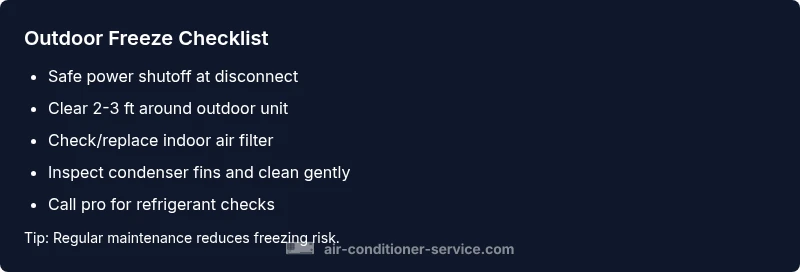
Start with the easiest, safest checks. Turn off the thermostat and the outdoor unit, then inspect the indoor air filter and replace if dirty. Clear leaves, snow, or other debris from the outdoor condenser area to ensure proper airflow. Verify there is at least 2-3 feet of clearance around the unit and 5 feet above it. Check the outdoor power disconnect for a tripped switch or blown fuse. If you have access to a service manual, confirm the compressor contactor and wiring appear intact. These checks can often reveal a simple cause, such as a blocked airflow path or a dirty filter, that you can fix without calling a technician.
Diagnostic flow overview for outdoor freezing
This section maps symptoms to likely causes and practical fixes. If you see visible ice on the lines after power is restored, start by ruling out airflow and condensate drainage issues. If the unit runs but never reaches temperature, suspect a refrigerant-related problem or a failed defrost cycle. A slow or partial thaw indicates that the ice needs more time, but repeated icing after thaw suggests a leak or undercharge. Document the symptoms, track when they occur (season, weather, or occupancy patterns), and compare with the likely causes below. Use this flow to decide between do-it-yourself fixes and professional service.
Step-by-step fix for the most common cause: airflow or debris clearance
Step 1: Power off the entire system at the disconnect switch to avoid shock. Step 2: Remove debris around the outdoor unit and clean the condenser fins with a gentle stream of water or a soft brush. Step 3: Check and replace the indoor air filter if it’s dirty or clogged. Step 4: Ensure at least 2-3 feet of clearance around the outdoor unit and 5 feet above it. Step 5: If frost remains after thawing, allow the unit to rest for 30-60 minutes and re-test. Step 6: Resume operation at a low cooling setting and monitor for re-freezing. Pro tip: avoid using a metal tool to clean fins and never bend fins.
Prevention: maintenance habits to prevent future outdoor freezes
Develop a routine that keeps airflow free and coils clean. Regularly replace filters every 1-3 months, depending on usage and allergen load, and schedule annual professional maintenance to inspect refrigerant levels, electrical connections, and the condenser coil. Keep the area around the outdoor unit clear of plants, debris, and snow; never block the intake with storage items. Use a sturdy cover in off-season months if your climate causes rapid temperature swings, but ensure it does not trap moisture. These proactive steps diminish the odds of future ice formation and improve efficiency.
When to escalate: signs you need refrigerant recovery or professional service
If simple airflow fixes don’t stop icing, or if you notice a hissing sound, oily residue around joints, or a drop in cooling capacity, escalate to a licensed HVAC technician. Refrigerant work requires certification and proper handling. Expect leak detection, pressure testing, coil inspection, and a refrigerant charge adjustment if needed. Also consider a comprehensive check for condensation drainage and insulating the line set to reduce frost. Early professional intervention minimizes energy waste and reduces the risk of expensive component failure.
Final checklist before the season starts and quick post-ice reminders
Before hot weather returns, perform this quick checklist: replace filters, clear the outdoor area, inspect the condenser visually, check for cracks or corrosion, ensure electrical disconnects are secure, and test run the system. After any icing event, monitor for repeated icing across a few days, which may indicate a leak. If you cannot identify or safely fix the issue, contact Air Conditioner Service Team to arrange a professional diagnostic and service plan. Keeping records of maintenance helps you anticipate and prevent future freezes, saving energy and prolonging equipment life.
Steps
Estimated time: 30-60 minutes
- 1
Power off and secure the system
Shut off power at the outdoor disconnect and indoor breaker to prevent shock. Confirm nothing is live before touching any components.
Tip: Use a non-contact voltmeter to verify power is off. - 2
Clear surrounding area and inspect clearance
Remove leaves, snow, or any items that block the airflow around the outdoor unit. Ensure a clear radius of at least 2-3 feet around the unit and above it.
Tip: Keep pets and children away during inspection. - 3
Check and replace indoor air filter
Remove the return air filter and inspect for dirt or blockages. Replace if dirty; a clean filter improves refrigerant heat transfer and airflow.
Tip: Label the new filter with replacement date for maintenance records. - 4
Inspect condenser and gently clean fins
Visually inspect the condenser coil for dirt. Use a soft brush or low-pressure water to clean without bending fins.
Tip: Always dry the area before re-energizing the system. - 5
Restart the system and monitor performance
Turn power back on and run in cooling mode. Observe when and if icing returns and note outdoor conditions.
Tip: If icing forms again quickly, stop the test and call a professional. - 6
Call a professional if icing persists
Persistent icing after basic maintenance suggests a refrigerant or mechanical fault that requires licensed service.
Tip: Do not attempt refrigerant repairs yourself.
Diagnosis: Outdoor refrigerant lines show ice formation after operation
Possible Causes
- highRestricted airflow due to dirty filter or debris around the outdoor unit
- highLow refrigerant charge or leak causing pressure imbalance
- mediumBlocked or dirty condenser fins reducing heat exchange
- lowThermostat or defrost control issue in heat pump systems
- lowSevere outdoor humidity with marginal insulation of line set
Fixes
- easyClean or replace indoor air filter; remove debris around outdoor unit
- easyRinse condenser fins gently and straighten any bent fins
- hardCheck for refrigerant leaks and verify charge with a licensed tech
- mediumInspect defrost controls and thermostat settings for proper operation
Common Questions
What causes outdoor air conditioner pipes to freeze?
Outdoor freezing is usually caused by restricted airflow, a refrigerant leak or undercharge, and debris around the outdoor unit that impedes heat transfer. Humidity and extreme temperatures can worsen icing. Start with simple checks like cleaning the area and replacing filters before calling a pro.
Frozen outdoor AC pipes are most often from restricted airflow or a refrigerant leak; cleaning the area and replacing the filter helps, but a pro may be needed for leaks.
Is it safe to thaw the ice myself?
No. Do not use heat or flame to thaw ice on refrigerant lines. Power down the unit and wait for it to thaw naturally while inspecting safety clearances. If the ice persists, contact a technician.
It's not safe to thaw with heat. Power off and wait, and call a pro if it won’t thaw.
When should I call a professional for freezing issues?
Call a professional if basic checks don’t resolve the ice, if you hear hissing or see oily residues, or if the unit won’t reach temperature. Refrigerant work requires certification and safe handling.
Call a pro if basic fixes don’t work or you hear hissing; refrigerant work requires training.
Can a dirty air filter cause ice on outdoor lines?
Yes. A dirty filter reduces airflow, causing the evaporator to get too cold and ice may form on lines. Replace the filter and monitor for reoccurrence after thawing.
A dirty filter can cause icing by reducing airflow; replace it and watch for repeats.
Is a refrigerant leak always obvious?
Leaks aren’t always obvious; look for oily spots on connections and listen for a hissing sound. If you suspect a leak, a licensed tech should perform leak detection and safe refrigerant handling.
Leaks aren’t always obvious; oily spots and hissing are clues. A pro should check it.
What maintenance helps prevent future freezing?
Regular filter changes, keeping the outdoor area clear, and annual professional checks of refrigerant levels, electrical connections, and coil cleanliness greatly reduce freezing risk.
Regular maintenance and clear surroundings reduce freeze risk.
Watch Video
The Essentials
- Identify airflow issues first, as they most commonly cause outdoor icing
- Do not ignore persistent icing; refrigerant leaks require pro service
- Keep the outdoor area clear and filters clean to prevent recurring freezes
- Use the diagnostic flow to decide between DIY fixes or professional repair
- Air Conditioner Service notes that timely action saves energy and protects the compressor