Air Conditioner Frozen Outside: Urgent Troubleshooting Guide
Urgent troubleshooting guide to fix an air conditioner frozen outside. Quick airflow checks, safe thaw steps, and when to call a pro to restore cooling fast.


Most often, an outdoor unit freezes when airflow is blocked—dirty filters, clogged coils, or debris around the condenser—especially in hot, humid weather. Quick fix: turn the system off at the thermostat or breaker, let the ice thaw, and remove any debris around the outdoor unit. Replace the indoor filter, check that vents aren’t blocked, and restart. If the problem persists, call a professional promptly.
What causes air conditioner frozen outside
According to Air Conditioner Service, the air conditioner frozen outside is most often caused by restricted airflow—dirty filter, blocked returns, or debris around the condenser—especially in hot, humid weather. When warm, moist air hits a cold coil, ice forms and worsens as the compressor continues to run. Understanding this helps you act quickly to thaw and prevent further damage. In many homes, a quick check of the indoor filter and the outdoor surroundings reveals the root cause within minutes.
Immediate safety steps to take now
Before you touch any electrical components, switch off power to the unit at the thermostat and the outdoor disconnect or breaker. Do not attempt to chip away thick ice with metal tools—this can damage the coils. Keep pets and children away from the unit, and avoid standing water around exposed electrical connections. Let ice thaw naturally if safe to do so, and prepare to inspect airflow paths once the unit is de-energized.
Diagnostic flow overview: symptom → diagnosis → fixes
This flow helps you determine the cause of the air conditioner frozen outside and pick safe, effective fixes. Start with the simplest explanations: airflow blockages trump refrigerant issues because ice usually forms at the outdoor coil when air can't reach it. If the unit shows signs of electrical fault, stop and call a pro. Use this flow to decide whether you can fix it yourself or need professional help.
Home fixes you can perform today (step-by-step checks)
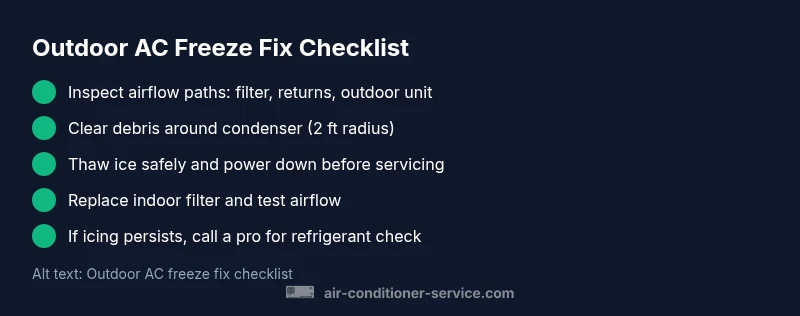
- Check the indoor air filter: a clogged filter reduces airflow, causing frost formation on the evaporator or outdoor coil. Replace if dirty. - Inspect the outdoor unit clearance: remove leaves, grass clippings, and debris within 2 feet of the condenser; ensure the fan can pull air freely. - Clear the area around the condenser: trim shrubs, remove snow or ice, and ensure the unit is level. - Inspect refrigerant lines for obvious frost near the service valves; if you suspect a refrigerant issue, do not tamper. - Power down and thaw ice: after clearing debris, give the system time to thaw before restarting. - Reassemble, then test: turn the thermostat to auto and monitor cooling. - If ice returns, skip to professional service to check refrigerant charge and coil condition.
When to call a professional and what to expect
If ice re-forms after thawing, or you notice oily residue around refrigerant lines, or the outdoor coil remains frosted after several hours, contact a licensed HVAC technician. They will check refrigerant charge, inspect for leaks, verify airflow, and test the defrost control and thermostat. A pro can safely recover any charge and prevent compressor damage. Quick note: most homeowner fixes focus on airflow and thawing; persistent freezing requires expert evaluation.
Prevention: how to reduce future occurrences of air conditioner frozen outside
Regular maintenance can significantly reduce ice buildup. Change the indoor filter every 1-3 months, clean the outdoor condenser annually, and keep the area around the unit clear. In winter, cover the outdoor unit if your climate allows, but never cover with a solid seal that traps moisture. Ensure the fan operates properly by listening for unusual sounds during starts. In humid months, schedule a professional inspection to assess refrigerant integrity and coil cleanliness.
Common mistakes to avoid
Avoid using a metal tool to remove ice, never run the unit with a visibly damaged coil, and don’t rely on a quick thaw with a heat gun or open flame; those methods risk damaging components. Also, avoid turning the thermostat to a heat setting that causes rapid cycling, which can worsen ice buildup if airflow is blocked.
Steps
Estimated time: 60-90 minutes
- 1
Power down and assess safety
Turn off the unit at the thermostat and at the outdoor disconnect or breaker. Confirm there is no standing water near electrical components, then locate obvious hazards before you touch anything.
Tip: De-energizing before inspection prevents shocks and compressor damage. - 2
Check airflow sources
Inspect the indoor filter and ensure all supply vents are open and unobstructed. Clear any objects near the return air path that could restrict airflow.
Tip: A dirty filter is the most common cause of restricted airflow. - 3
Clear outdoor area and clearance
Remove debris or vegetation within 2 feet of the condenser. Ensure the unit has at least 2 feet of side clearance and 5 feet of clearance above for proper airflow.
Tip: Even small shrubs can block air intake and cause icing. - 4
Thaw the ice safely
Allow ice to melt naturally after removing debris if it is safe to do so. Do not use sharp tools or heat sources. Collect melt water away from electrical components.
Tip: Melt time varies with outdoor temperature and humidity. - 5
Inspect coils and refrigerant lines
Look for obvious frost on refrigerant lines and the outdoor coil. Do not attempt to recharge refrigerant yourself; refrigerant work requires a licensed tech.
Tip: Frozen lines may indicate a leak or severe airflow issue. - 6
Reconnect and test
After thawing and confirming airflow, power the system back on and set the thermostat to Auto. Observe whether cycling remains smooth and check for any ice re-accumulation.
Tip: Use the defrost/auto setting to minimize cycling strain. - 7
When to call a professional
If ice returns after thaw or you notice leaks, an unusual odor, or reduced cooling, contact a licensed HVAC technician for a full diagnosis and refrigerant service.
Tip: Have recent symptoms ready for the technician to diagnose quickly.
Diagnosis: Outdoor air conditioner coil is frozen
Possible Causes
- highRestricted airflow from a dirty filter, blocked return air, or debris around the condenser
- mediumLow refrigerant charge due to a leak
- lowThermostat or defrost control issue causing improper cycling
Fixes
- easyThaw ice by powering down and clearing airflow; ensure the outdoor unit has proper clearance and airflow
- easyReplace or clean the indoor air filter; verify that supply vents are open and unobstructed
- easyClear debris around the outdoor unit; ensure at least 2 feet of clearance and unobstructed airflow; check for damaged fins
- mediumIf ice persists or you suspect a refrigerant leak, contact a licensed HVAC tech to check refrigerant charge and system integrity
Common Questions
Why does my outdoor AC freeze more in humid weather?
Humid air increases moisture that can freeze on cold coils when airflow is restricted. Clear obstructions and ensure filters are clean to reduce icing.
Humidity can worsen freezing when airflow is blocked, so focus on airflow and filter health.
Should I turn off the AC if it freezes?
Yes. Power down to thaw the ice and inspect for airflow issues before restarting. Do not run it while iced.
Turn it off to thaw and check airflow before using it again.
Can low refrigerant cause the outdoor unit to freeze?
Low refrigerant can cause icing on the evaporator coil inside, but outdoor coil icing usually points to airflow problems. A pro should verify refrigerant health.
Low refrigerant can cause issues, but outdoor icing is usually airflow-related.
How long does it take ice to thaw?
Thaw time varies with outdoor conditions, but ice typically melts within a few hours after safe power down and proper airflow restoration.
It can take a few hours to thaw, depending on the weather.
Can a dirty filter cause my AC to freeze?
Yes—a dirty filter reduces airflow and can lead to frost on coils. Replace the filter and monitor for recurrences.
Dirty filters cut airflow and can cause freezing. Replace them regularly.
When is professional help necessary?
If icing recurs after thaw or you notice leaks, call a licensed technician for refrigerant checks and coil inspection.
If it keeps freezing or you see leaks, get a pro.
Watch Video
The Essentials
- Thaw ice safely and power down first
- Prioritize airflow: filter, returns, and outdoor clearance
- Replace dirty filters and clear debris to prevent recurrence
- Call a pro for persistent icing or refrigerant concerns