How to Fix a Frozen Air Conditioner Coil
Learn how to diagnose and fix a frozen air conditioner coil quickly. This practical guide covers common causes, safe immediate steps, a diagnostic flow, step-by-step fixes, and prevention tips for homeowners and renters.


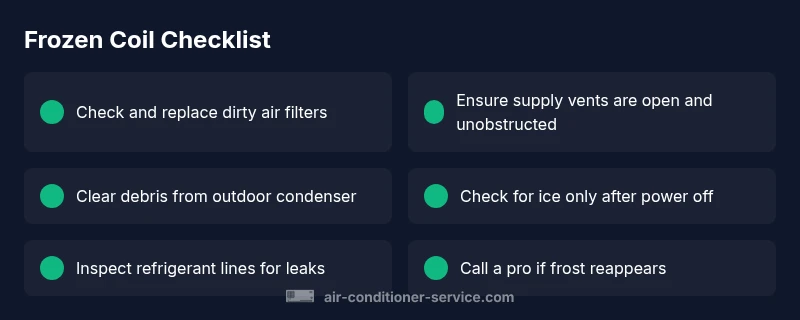
A frozen air conditioner coil is usually caused by restricted airflow or low refrigerant pressure. Start by turning the thermostat to OFF and setting the fan to ON to melt the ice, then check and replace a dirty filter, ensure outdoor coils are clear, and verify the condensate line isn’t blocked. If the ice persists, contact a licensed technician.
What the phrase air conditioner coil frozen means in practice
When the evaporator coil inside your indoor air handler gets colder than the surrounding air, ice forms on the coil. This ice blocks airflow and reduces cooling efficiency, sometimes causing a gritty or loud running sound and frost on nearby surfaces. According to Air Conditioner Service, a frozen coil is commonly a sign of airflow issues or refrigerant-related problems. Homeowners and renters should be prepared to perform safe, initial checks before calling a professional. This guide walks you through the practical steps to identify the cause, thaw the coil safely, and prevent future freezes. Understanding the root cause is essential not just for comfort, but to protect the compressor and overall system health over time.
Common causes of a frozen evaporator coil
Most coils freeze due to airflow restrictions or refrigerant behavior. Key culprits include a dirty air filter that chokes airflow, closed or blocked supply registers, and debris or vegetation around the outdoor condenser reducing heat rejection. A refrigerant leak or incorrect charge can also cause frost, especially if the unit runs continuously attempting to reach setpoint. Humidity and poor thermostat settings can exaggerate freezing, while a malfunctioning blower reduces airflow even further. While many issues are simple to fix, some require professional service to avoid damage. Regular maintenance can reduce the likelihood of recurring freezes.
Immediate safety steps you can take now
If you notice frost on the coil, turn the thermostat to OFF and switch the fan to ON to help melt the ice. Do not bang or poke at ice with tools. Check the indoor air filter and replace if dirty, and ensure vents aren’t blocked by furniture. Inspect the outdoor unit from a safe distance, removing debris and ensuring at least two feet of clearance around the condenser. Do not attempt to recharge refrigerant or disassemble sealed components yourself; refrigerant work should be handled by a licensed technician. Safety first prevents injuries and further equipment damage.
Diagnostic flow overview (symptom → diagnosis → solutions)
Step-by-step fixes for the most common issue (dirty filter / airflow)
Prevention and ongoing maintenance to avoid future freezes
When to call Air Conditioner Service and what to expect
Steps
Estimated time: 40-60 minutes
- 1
Power down and thaw safely
Turn the thermostat to OFF and switch the unit’s breaker if accessible. Set the fan to ON to circulate room air and help melt the ice without creating pressure buildup. Do not attempt to pry the ice or bypass safety switches.
Tip: Never use heat sources like hair dryers on the coil; that can damage components. - 2
Inspect and replace the air filter
Access the air filter and check for excessive dust or debris. If dirty, replace with a filter of the correct size and MERV rating for your system. A clean filter restores airflow and reduces frost risk.
Tip: Note the filter replacement schedule and set a reminder every 30–90 days depending on use. - 3
Check the outdoor unit and clear debris
Walk around the outdoor condenser and remove leaves, grass, and other obstructions. Ensure at least 2 feet of clearance on all sides and clean the grille to improve heat rejection.
Tip: Avoid using high-pressure water directly on the fins to prevent damage. - 4
Let the system dry and re-check coil visibility
After ice melts, reassemble any access panels and return power. Observe whether ice reforms within 24–48 hours. If frost recurs, deeper causes like refrigerant issues may be at play.
Tip: If you see oil residues around refrigerant lines, do not attempt to seal leaks; this requires a pro. - 5
Escalate if the problem persists
If frost returns after basic checks, schedule professional service. A qualified technician can verify refrigerant charge, check for leaks, and test electrical components.
Tip: Document symptoms and timing to help the tech diagnose faster.
Diagnosis: Air conditioner coil freezes after running for a period of time, leading to reduced cooling and frost on surfaces
Possible Causes
- highDirty or blocked air filter restricting airflow
- highClosed or blocked supply registers or furniture blocking vents
- highOutdoor condenser blocked by debris or poor airflow
- mediumLow refrigerant pressure due to a leak
- lowThermostat misset or malfunction causing improper cycling
Fixes
- easyReplace or clean the air filter; ensure all supply registers are open and unobstructed
- easyClear debris around the outdoor unit and ensure there is adequate clearance
- easyAllow the ice to melt by running with fan on and the unit off for a short period, then restart
- mediumIf ice persists after thaw, have a licensed HVAC tech check refrigerant, electrical connections, and humidity controls
Common Questions
What causes frost on the evaporator coil?
Frost forms when airflow is blocked or refrigerant conditions are off. Common causes include dirty filters, closed vents, blocked outdoor unit, or a refrigerant leak.
Frost on the evaporator coil usually happens when airflow is blocked or refrigerant conditions are off.
Is a frozen coil dangerous to the unit or home?
A frozen coil can reduce cooling, raise energy use, and strain the compressor. Prolonged freezing can lead to costly damage if the root cause isn’t addressed.
A frozen coil can stress the system and raise repair costs if not fixed promptly.
How do I thaw a frozen coil safely?
Power down the unit, run the fan to warm air around the coil, and allow ice to melt before inspecting the filter and outdoor unit. Do not use open flames or heat lamps.
Turn it off and let it melt with the fan on, then check for the root cause.
Can a dirty filter cause a frozen coil?
Yes. A dirty filter reduces airflow, which can cause the evaporator coil to frost over as moisture cannot exit efficiently.
A clogged filter can definitely cause icing by limiting airflow.
When should I call a professional?
If ice keeps reforming after cleaning or if you notice refrigerant signs (oil spots, hissing), contact a licensed HVAC technician.
Call a professional if the frost returns after basic checks or you suspect a refrigerant issue.
Will a frosted coil come back after thawing if I don’t fix the root cause?
Possibly. If the underlying issue isn’t corrected, the coil can freeze again, causing repeated energy waste and potential damage.
If the cause isn’t fixed, the ice may come back.
Watch Video
The Essentials
- Act quickly when you notice ice on the coil
- Prioritize airflow and filter maintenance
- Clear outdoor condenser area regularly
- Call a professional for refrigerant or electrical concerns