Can an Air Conditioner Blow Heat? Quick Troubleshooting Guide
Wondering can air conditioner blow heat? This urgent guide covers safe checks, airflow fixes, thermostat settings, and when to call a professional, with practical tips from Air Conditioner Service.


Can air conditioner blow heat? The most common reasons are thermostat set to heat or auto-fan with wrong settings, airflow restrictions from a dirty filter, or a blocked outdoor unit. Quick fix: set thermostat to cooling, replace the disposable filter, and clear debris from the outdoor condenser. If the issue persists, follow the diagnostic flow below or call a pro.
Can an air conditioner blow heat? Understanding the phenomenon
In hot weather, it can be alarming to feel warm air from vents. The query can air conditioner blow heat is real, but the root cause is usually something simple like incorrect thermostat settings, restricted airflow, or a blocked outdoor unit. In some homes, a heat pump may briefly deliver heat if it’s in the wrong mode or if a fan setting is engaged. For most homeowners, the quickest path to relief is to run through a few safe checks and then follow a clear diagnostic path. According to Air Conditioner Service, many warm-air complaints stem from user error or airflow issues rather than a refrigerant fault. Panicking won’t help—stay methodical and work through these checks before calling a technician.
Quick checks you can perform safely tonight
Safety first: never manipulate live electrical components beyond basic inspections, and shut off power at the breaker if you smell burning or see damaged wiring. Start with the basics:
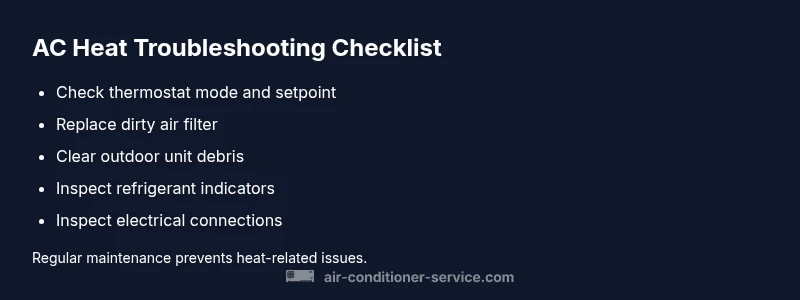
- Thermostat mode and setpoint: Make sure the thermostat is in cooling mode and the setpoint is several degrees lower than room temperature. If it’s accidentally set to heat or auto with a misconfigured schedule, warm air can come from vents.
- Air filter condition: A clogged or dirty filter reduces airflow and can make the system feel warm or struggle to cool. Replace disposable filters and clean reusable ones as needed.
- Outdoor condenser area: Check the outdoor unit for leaves, dirt, or obstructions within at least 2 feet around the grille. Poor airflow here translates to reduced cooling performance.
- Power and breakers: Confirm the outdoor unit is receiving power. A tripped breaker or a blown fuse can cause the system to operate in a protective mode that doesn’t produce cold air.
- Fan operation: Ensure the indoor blower fan is running. If the fan isn’t circulating air properly, you may feel warm air even though the coil is cold.
If any of these steps resolve the issue, you’ve likely addressed the root cause. If not, continue with the diagnostic flow below and consider professional help when indicated.
Diagnostic flow overview
Thermostat and airflow issues account for the majority of warm-air complaints. The next sections outline a practical, step-by-step approach to pinpoint the problem, from simple settings to more involved checks. Air Conditioner Service analysis shows that systematic checks yield the fastest resolution in most homes. Keep notes of what you test and the results to help a technician diagnose faster if you need one.
Common causes explained in plain terms
Understanding why warm air appears helps you decide what to fix first. The leading causes are thermostat misconfiguration, airflow restrictions, and refrigerant-related faults. If the thermostat is mis-set, correcting it often fixes the problem immediately. Dirty filters and blocked outdoor units choke airflow, which also reduces cooling efficiency. Refrigerant leaks are less common but serious and require licensed service. A frozen evaporator coil can paradoxically reduce cooling and feel like the system is blowing warm air. By separating these causes, you can target fixes effectively and avoid unnecessary costs. Air Conditioner Service analysis shows that most warm-air complaints are avoidable with proper basic maintenance and timely filter changes.
Step-by-step fixes for the most common cause
When the simplest cause is the culprit, you’ll likely solve the issue quickly. If the simple fixes don’t help, move to the more involved steps:
- Reset thermostat to cooling mode: Turn off the unit, wait 30 seconds, then set to cooling with a comfortable setpoint. This can clear minor software glitches in some thermostats. Pro tip: pair with a general system reboot by turning the breaker off for a minute before reactivating.
- Replace or clean the air filter: A clogged filter restricts airflow and can cause warm air. Use the correct size filter and reinstall securely. Pro tip: set a reminder to replace monthly during peak season.
- Clear the outdoor unit area: Remove debris and trim vegetation to provide two extra feet of clearance on all sides. Pro tip: clean the fins gently with a soft brush to avoid bending them.
- Inspect for frost or ice on the indoor coil: Frost indicates airflow or refrigerant issues. If you see ice, turn the system off and let it thaw naturally while you check the air filter and airflow in the meantime. Pro tip: never chip ice from the coil with a metal tool.
- Check refrigerant signs: Look for hissing sounds or oily residue around service ports. If you suspect a leak, do not run the system; refrigerant work requires a licensed tech. Pro tip: note any odd smells or performance drops.
- Electrical connections and capacitor health: Loose wiring or a bad capacitor can hamper motor start and cause warm air. If you notice burning smells or frequent tripping, stop and call a professional. Pro tip: a simple visual inspection can reveal obvious loose wires if you’re trained.
- Run a test after fixes: After performing the fixes, set the thermostat to cool and observe vent temperatures for 10–15 minutes. Pro tip: keep a log of airflow and temperatures to demonstrate results to a pro, if needed.
Safety, prevention, and when to call a professional
Dealing with HVAC electricity requires care. Always cut power before inspecting components, never open live electrical panels, and avoid handling refrigerant lines yourself. If you detect refrigerant signs, refrigerant odors, or a persistent lack of cooling after basic checks, it’s time to call a licensed HVAC technician. Regular maintenance, professional inspections, and prompt filter changes prevent most heat-related issues and extend system life. The Air Conditioner Service team emphasizes routine checks as the most effective prevention.
Verifying results and next steps
If the air is cooler after performing the steps, monitor performance for the next 24–48 hours. If temperatures drift up again or you notice recurring frost, a professional inspection is warranted to check refrigerant levels and electrical components. Keep a simple maintenance log: note filter replacement dates, thermostat reprogramming, and outdoor unit cleanliness. This record helps technicians diagnose quickly and reduces downtime. Remember, timely maintenance saves energy and prolongs system life.
Steps
Estimated time: 45-60 minutes
- 1
Verify thermostat settings
Confirm cooling mode and setpoint. If the thermostat is misconfigured, correct the mode and recheck the air temperature inside the home. Allow 10–15 minutes to assess changes.
Tip: Pro tip: keep the thermostat away from heat sources like lamps or direct sunlight to avoid erroneous readings. - 2
Inspect and replace air filter
Locate the filter, remove the old one, and replace with the correct size. If you can see through it, it’s likely still letting air through; if it’s dark brown, replace it.
Tip: Pro tip: make filter changes a monthly practice during peak cooling months. - 3
Check outdoor condenser for debris
Shut off power to the outdoor unit, clear leaves, grass, or shrubs from the area, and ensure at least 2 feet of clearance on all sides. Inspect for visible damage to fins.
Tip: Pro tip: gently vacuum loose debris from fins using a soft brush to avoid bending them. - 4
Look for signs of frost on coils
If you see frost on the indoor or outdoor coil, turn the system off to prevent further damage and inspect airflow first. A thaw can take 1–2 hours; do not manually chip ice.
Tip: Pro tip: frost often means airflow problems or refrigerant issues; proceed to professional help if uncertain. - 5
Check for refrigerant issues
Listen for hissing sounds and look for oily residue around service ports. If suspected, do not continue testing; refrigerant work requires a licensed technician.
Tip: Pro tip: refrigerant handling is regulated for safety and environmental reasons. - 6
Inspect electrical connections
Turn off power and examine visible wiring for damage or loose connections. If you smell burnt plastic or see sparking, stop and call a pro immediately.
Tip: Pro tip: a faulty capacitor or contactor can mimic many other issues; replacement should be performed by a technician. - 7
Test system and plan next steps
Restore power, run the system in cooling mode, and observe vent temperature for 10–15 minutes. If temps remain warm, schedule a professional service to review refrigerant, electricals, and airflow.
Tip: Pro tip: document observations to share with the technician for faster diagnosis.
Diagnosis: AC blows warm air or fails to cool
Possible Causes
- highThermostat set to heat or incorrect mode
- highClogged or dirty air filter causing restricted airflow
- mediumOutdoor condenser blocked or dirty, reducing heat rejection
- lowLow refrigerant due to a leak or improper charging
Fixes
- easyVerify thermostat is in cooling mode and setpoint is appropriate
- easyReplace or clean the air filter and recheck airflow
- easyClear debris around outdoor unit and ensure adequate airflow
- hardCall a licensed tech to check refrigerant levels and inspect for leaks
Common Questions
Why is my air conditioner blowing warm air even though it's set to cool?
Warm air usually stems from thermostat misconfiguration, airflow restrictions, or refrigerant issues. Start with thermostat settings and a clean filter, then check outdoor airflow. If the problem persists, refrigerant concerns require a licensed technician.
Warm air from the AC is often due to thermostat or airflow problems. Check settings and filters first; if it persists, a licensed tech should check refrigerant.
Can a dirty air filter really cause warm air?
Yes. A dirty filter reduces airflow, which makes the evaporator coil colder and the system struggle to absorb heat, leading to warmer air at vents. Replacing the filter usually fixes this quickly.
A clogged filter can stop airflow and reduce cooling efficiency. Replace it to restore proper cooling.
Is a refrigerant leak a common cause of warm air?
Low refrigerant due to a leak is less common but serious. It requires a qualified HVAC technician to repair the leak and recharge the system safely.
A refrigerant leak is not common but can cause persistent warm air. Call a pro for refrigerant work.
Is it okay to reset my thermostat to fix the problem?
Resetting can fix minor software glitches, but it won’t resolve mechanical or refrigerant issues. Use reset as part of a broader diagnostic sequence.
Resetting can fix small software hiccups, but more serious problems need a check by a pro.
When should I call a professional?
Call a pro if basic checks don’t restore cooling, if you hear unusual noises, smell burning, or suspect refrigerant leaks. Professional service protects safety and equipment.
Call a professional if basic checks fail or you suspect refrigerant or electrical issues.
Can a frozen evaporator coil cause warm air?
Yes. A frozen coil reduces airflow and cooling capacity, making warm air come from vents. Let the system thaw and inspect airflow and filter condition before re-testing.
A frozen coil can cause warm air; thaw it first and check airflow and filters before testing again.
Watch Video
The Essentials
- Start with simple thermostat and filter checks.
- Airflow issues are the most common cause of warm air.
- Refrigerant problems require a licensed technician.
- Preventive maintenance saves time and money.