Air Conditioner Not Cooling: Urgent Troubleshooting
A practical, step-by-step guide to fix an air conditioner blowing but not cold. Learn common causes, safe DIY checks, and when to call a pro for urgent cooling repairs.


Most likely culprits for air conditioner blowing but not cold are restricted airflow or a refrigerant issue. Start by checking the air filter, thermostat settings, and outdoor unit clearance. If these basics don’t restore cold air, shut off the system and call a licensed technician for refrigerant or compressor problems.
Understanding the Symptoms of a Non-Cooling AC
When an air conditioner is blowing air that feels warm or room temperature instead of cold, it signals a problem beyond simple airflow. This scenario, commonly summarized as the unit blowing but not cooling, requires urgent attention. Homeowners should quickly assess safety, then move to practical checks that don’t require specialized tools. In many cases, the issue is due to airflow restrictions or a refrigerant-related fault. Recognize that refrigerant leaks or compressor problems are refrigerant and mechanical issues that typically require a licensed technician. The goal of this section is to help you quickly distinguish between simple DIY fixes and issues that demand professional intervention, without wasting time on ineffective attempts.
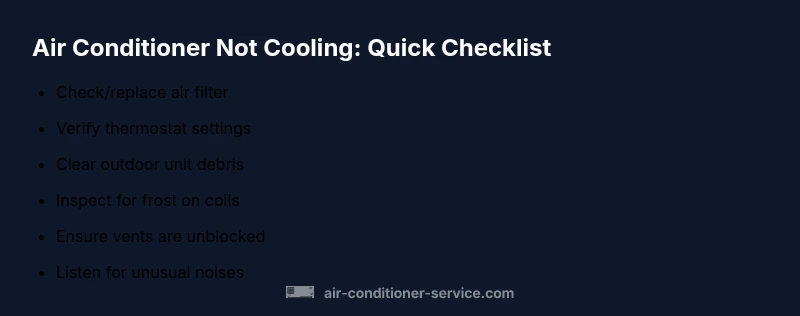
Immediate, Safe Checks You Can Do Right Now
  - Inspect the air filter: a clogged filter reduces airflow dramatically. If it looks dirty or discolored, replace it with a filter of the correct size.
  - Check indoor vents and registers: ensure they are open and not blocked by furniture or drapes.
  - Confirm thermostat settings: set to cool, ensure fan is on, and verify the temperature is not set higher than the room temperature.
  - Inspect the outdoor condenser unit: clear debris, leaves, and vegetation that could obstruct airflow. The area around the unit should be free of objects for at least 2 feet.
  - Listen for unusual sounds or vibrations: grinding or buzzing noises can indicate electrical or compressor issues that require a pro.
  - Look for visible frost or ice on copper lines or the evaporator coil: premature icing indicates a broader problem that needs attention.
Why Refrigerant-Related Issues Cause Warm Air
Refrigerant is the fluid that absorbs heat from your home. If the system is low on refrigerant due to a leak, the coils won’t reach the necessary cooling temperature, resulting in warm air. Refrigerant leaks are often not visible to the naked eye and require a licensed technician with proper tools to locate, repair, and recharge safely. Be mindful that attempting to recharge refrigerant yourself is dangerous and illegal in many jurisdictions. In addition to refrigerant faults, a malfunctioning compressor or a faulty expansion device can prevent proper cooling, which a professional should diagnose with manifold gauges and industry-standard procedures.
Common Airflow and Heat Exchange Issues Explained
A clogged filter or obstructed return air pathway can starve the evaporator coil of enough air, causing the coil to overheat or freeze later. A dirty evaporator coil can also reduce heat exchange efficiency. Thermostat miscalibration, improper refrigerant charge, or blocked condenser fins can all contribute to a lack of cooling. Understanding these components helps homeowners decide which fixes to attempt safely and which tasks require a technician.
Diagnostic-Flow Overview: From Symptom to Solution (Narrative)
Start with the simplest checks: air filter, vent placement, and thermostat. If airflow improves but cooling does not, inspect the outdoor unit and look for frost or ice on the evaporator coil. A visible leak or hissing sound points toward refrigerant issues that need a pro. If the unit cycles on and off frequently or never reaches setpoint, it may indicate thermostat or control board problems. When in doubt, prioritize safety and professional service to avoid further damage or refrigerant exposure.
Steps
Estimated time: 45-60 minutes
- 1
Power down safely
Turn off the thermostat and switch the outdoor unit’s breaker to the OFF position. This avoids shock and prevents compressor damage while you inspect basic components.
Tip: If you smell burning, leave the area and call a professional immediately. - 2
Check and replace the air filter
Locate the filter, remove it, and inspect for excessive dirt. If dirty, replace with a filter of the same size and type according to the manufacturer’s instructions.
Tip: Use a high-quality filter with the correct MERV rating for better performance. - 3
Verify thermostat and mode
Ensure the thermostat is set to COOL, the fan is ON, and the temperature is below room temperature. If it’s programmable, reset to a standard schedule.
Tip: If you recently changed the thermostat, re-sync it to your system. - 4
Inspect the outdoor unit and coils
Clear any debris around the condenser, and inspect fins for damage. Gently brush away dirt to improve airflow without bending fins.
Tip: Do not use high-pressure water directly on the coils; use a gentle spray. - 5
Look for frost on lines or coil
Check for frost or ice on copper lines or the evaporator coil. If frost is present, turn off the system and allow it to thaw before retesting.
Tip: Frozen coils indicate airflow or refrigerant issues that require professional diagnosis. - 6
Check electrical components
Inspect accessible capacitors and fuses for signs of wear or failure. Replace only with the correct rating and by a qualified technician if uncertain.
Tip: Capacitors store dangerous charge even when power is off; exercise caution. - 7
Test after reassembly
Turn the system back on and monitor for cooling performance. Listen for unusual noises and observe if the temperature drops to the setpoint.
Tip: If cooling remains weak, schedule a professional diagnostic.
Diagnosis: Air conditioner blowing air but not cold
Possible Causes
- highLow refrigerant charge due to a leak
- highRestricted airflow from a dirty filter or blocked vents
- mediumFrozen evaporator coil from airflow restriction or low refrigerant
- lowThermostat miscalibration or control wiring issue
Fixes
- hardIf a refrigerant leak is suspected, shut down the system and contact a licensed HVAC technician to locate, repair, and recharge refrigerant safely
- easyReplace dirty air filters, clear obstructed vents, and ensure the return path is unobstructed
- easyDefrost a potentially frozen coil by turning off the system and allowing the indoor coil to thaw, then recheck airflow
- mediumTest thermostat settings and wiring; recalibrate or replace faulty thermostats or control boards as needed
Common Questions
Why is my AC blowing warm air even though it’s set to cool?
Warm air usually means either restricted airflow, a refrigerant issue, or a malfunctioning compressor. Start with airflow checks, thermostat verification, and outdoor unit cleanliness. If the problem persists, professional inspection is advised.
Warm air usually means airflow or refrigerant issues; start with simple checks, then call a pro for refrigerant or compressor problems.
Can low refrigerant cause not-cooling, and is it safe to handle?
Yes, low refrigerant can prevent cooling. Handling refrigerant requires licensed technicians and special equipment due to health and environmental risks. Do not attempt to recharge the system yourself.
Low refrigerant stops cooling. Only a licensed technician should recharge it.
Should I recharge refrigerant myself if I suspect a leak?
No. Refrigerant handling is hazardous and illegal to perform without certification. A professional will locate leaks, repair them, and recharge the system with the correct mix.
Recharging refrigerant yourself is unsafe and illegal; a pro must do it.
How do I know if the compressor is failing?
Signs include unusual noises, frequent cycling, warm air with a functioning outdoor unit, and electrical faults. A technician will perform electrical tests and pressure checks to confirm.
Unusual noises or frequent cycling can signal a failing compressor; have a pro check it.
When should I call a professional for not-cooling issues?
Call a professional if basic checks don’t restore cooling, if you hear hissing, see frost on lines, or suspect refrigerant leaks. Early professional checks can prevent further damage and costly repairs.
If basic fixes don’t work or you suspect a leak, call a pro soon.
Can maintenance prevent not-cooling problems?
Regular maintenance reduces not-cooling incidents by keeping filters, coils, and components clean and properly charged. Schedule seasonal checks to catch issues early.
Regular maintenance helps prevent not-cooling by keeping the system healthy.
Watch Video
The Essentials
- Limit airflow restrictions to restore cooling quickly
- Avoid DIY refrigerant handling; call a pro
- Inspect filters and thermostat settings first
- If unsafe conditions exist, stop and seek professional help