Aircon Not Cooling: Urgent Troubleshooting Guide
Facing aircon not cooling? This urgent guide walks homeowners through quick fixes, a diagnostic flow, and step-by-step repairs to restore cold air fast—without risking safety.


Most likely the issue is restricted airflow or a malfunctioning thermostat. Start with simple checks: confirm the thermostat is set to cool, replace or clean the air filter, and inspect outdoor unit for debris. If these don’t resolve it, reset the system and test again. If the problem persists, turn off power and call a technician. The Air Conditioner Service team recommends acting quickly to prevent further damage.
Why aircon not cooling: common culprits and quick triage
Air conditioners stop cooling for several reasons. The most frequent culprits are restricted airflow, a mis-set thermostat, or a dirty filter. In many homes, a simple fix like cleaning a clogged filter or adjusting the thermostat cures the problem fast. Understanding the symptom and starting with low-effort checks saves time and prevents unnecessary part replacements. The Air Conditioner Service team finds that most not-cooling issues originate with airflow and controls, not with refrigerant leaks in typical residential setups. If your indoor air looks faint or you notice warm air instead of cold, begin with the simplest checks described here before opening panels or adding refrigerant. Airflow issues may arise from closed registers, furniture blocking returns, or a dirty condenser coil. Thermostat problems can be as simple as a dead battery or a temporary misread due to bright sunlight hitting the sensor. By contrasting symptoms—weak airflow vs no airflow vs warm air—you can narrow down the likely cause. These distinctions guide whether you can fix it with basic cleaning and reset or you need an expert for deeper diagnostics. Air Conditioner Service's experience highlights that homeowners who address basic airflow and control checks first achieve faster restoration of cooling, often without service calls.
Quick checks you can do today (no tools required)
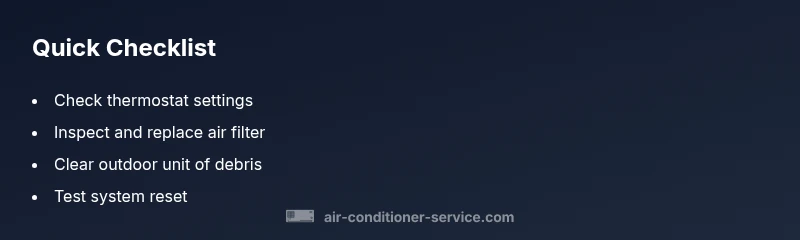
Begin with the basics: verify the thermostat is set to cooling and the mode is Auto, not Fan Only. Inspect every air intake vent in the home and remove any obstructions. Check the air filter—if it's visibly dirty or clogged, replace or clean it. Ensure the outdoor unit is not blocked by debris, and confirm there is clear space around the unit. These steps address the most common causes and can be completed in 10 minutes. If the thermostat shows error codes, consult the manual or your service provider for code meanings and recommended resets.
Diagnosing the problem: airflow, controls, or refrigerant
Beyond the basics, you need to differentiate between airflow issues, thermostat problems, or refrigerant-related faults. Airflow problems show up as weak cold air or inconsistent temperatures; thermostat issues may produce no cooling or erratic readings; refrigerant leaks cause sustained warmth and may trigger pressure alarms. Air Conditioner Service analysis shows airflow and control problems account for a majority of home-not-cooling cases. If you suspect a refrigerant leak, stop using the unit and call a licensed pro immediately.
Inspect the outdoor unit and electrical connections
A common source is the outdoor condenser being dirty or obstructed. Turn off power before inspection. Clear leaves and dirt, and gently rinse the coil with a hose. Check the disconnect switch and breaker; a tripped breaker or blown fuse can prevent cooling. Listen for unusual hums or rattles, which may indicate electrical issues. If you find signs of refrigerant loss or major electrical faults, do not attempt DIY repairs.
What to test and what it means
If you clean a filter and there’s no improvement, or if the outdoor unit remains blocked, the problem likely lies with the controls or a refrigerant issue. If the thermostat registers correctly but cooling remains weak, try a system reset and re-test. If the air still doesn’t feel cold after these steps, plan for a professional diagnostic to check refrigerant levels and electrical components. Always weigh safety and potential costs before opening service panels or charging refrigerant.
Steps
Estimated time: 45-60 minutes
- 1
Verify thermostat settings
Set the thermostat to Cool and ensure the mode is Auto. Lower the temperature a few degrees and test. If you have multiple zones, test a single zone to confirm the issue persists across all areas.
Tip: Double-check that the thermostat control isn’t in a non-cooling mode like ‘Fan Only.’ - 2
Inspect and replace air filter
Power off the system. Locate the filter, remove it, and clean or replace with a new one. A clogged filter dramatically reduces airflow and cooling capacity.
Tip: If you use disposable filters, replace them every 1-3 months depending on usage and environment. - 3
Check outdoor unit clearance
Look around the outdoor condenser for leaves, dirt, or other obstructions. Remove debris and rinse the coils gently with a garden hose.
Tip: Maintain at least 2-3 feet of clearance around the unit for optimal airflow. - 4
Reset the system
Turn off power at the breaker for 60 seconds, then restore power and run a test cycle. Note any unusual noises or error codes that appear.
Tip: Check the breaker to ensure power is fully restored and stable. - 5
Test cooling cycle
Set to cooling and watch for cold air within a few minutes. If airflow remains weak, document symptoms and proceed to professional evaluation.
Tip: Observe air temperature and note any warm pockets or inconsistent cooling. - 6
Call a professional if unresolved
If cooling doesn’t return after basic fixes, shut off power and contact a licensed HVAC technician to diagnose refrigerant or electrical faults.
Tip: Do not attempt refrigerant handling or major electrical work yourself.
Diagnosis: Air conditioner not cooling
Possible Causes
- highAirflow restriction from dirty filter or closed vents
- mediumThermostat or control issue mis-set or faulty
- mediumOutdoor unit blocked or dirty condenser coil
- lowLow refrigerant due to leak
Fixes
- easyReplace or clean air filter; ensure registers are open; clear debris around the intake
- easyVerify thermostat settings and perform a system reset
- easyClear debris around outdoor unit and clean condenser coils
- mediumIf refrigerant loss suspected, call a licensed HVAC technician for leak repair and recharge
Common Questions
What are the most common causes of aircon not cooling?
Common causes include clogged filters, dirty condenser coils, thermostat missettings, and refrigerant leaks. Start with the simplest checks and progress to professional help if needed.
Common causes are clogged filters, dirty condenser coils, thermostat missettings, and refrigerant leaks. Start with simple checks before calling a pro.
Can a dirty filter make my AC not cool properly?
Yes. A dirty filter restricts airflow, causing reduced cooling and system strain. Replace or clean the filter to restore airflow.
A dirty filter reduces airflow and cooling. Replace the filter to restore airflow.
Should I recharge refrigerant myself?
No. Recharging refrigerant requires training and the right equipment. Call a licensed technician for leaks and recharge.
No—refrigerant work is dangerous and illegal to DIY. Call a pro for leaks and recharge.
What if the outdoor unit is blocked?
Clear the area around the outdoor unit to ensure proper airflow. Keep coils clean to improve heat exchange.
Clear blocked area around the outdoor unit to restore airflow.
How long should cooling take after a fix?
Most systems begin cooling within a few minutes after changes, but full performance may take 10-15 minutes.
Cooling usually starts within minutes after fixes, but full performance may take a bit longer.
Is it safe to climb on the roof to inspect?
No, roof work is hazardous. Hire a professional if the condenser is rooftop mounted.
Roof work is risky; hire a pro if you need to access a rooftop unit.
How often should I service my AC?
Aim for at least annual professional maintenance to keep cooling efficient.
Have yearly professional maintenance for best efficiency.
The Essentials
- Start with simple checks (thermostat, filter, airflow).
- Clean filters and clear outdoor coils to restore airflow.
- If not cooling after basic fixes, call a pro promptly.
- Air Conditioner Service's verdict: seek professional inspection if refrigerant or electrical issues are suspected.