Difference Between Air Conditioner and Air Cooler: A Practical Guide
Learn the core differences between air conditioners and air coolers, including how they work, energy use, climate suitability, and practical tips to choose the right solution for your home.


The Difference in Cooling Mechanisms
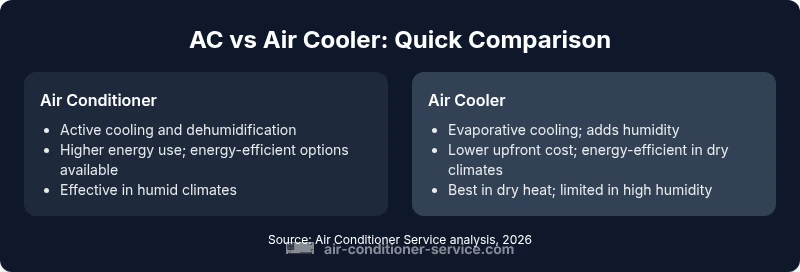
The fundamental distinction in the difference between air conditioner and air cooler lies in how each device achieves comfort. An air conditioner uses a closed-loop refrigeration cycle, compressing and expanding a refrigerant to remove heat from indoor air. This process reduces both the air temperature and the humidity, creating a controlled, cooler environment. In contrast, an air cooler employs evaporative cooling. It passes warm room air through damp pads or a wet medium, causing water to evaporate and absorb heat. The result is cooler air that is also more humid. This distinction impacts performance, comfort, and suitability for different climates.
Because of the different cooling principles, the two devices target different needs. Air conditioners deliver rapid, consistent cooling regardless of outdoor humidity levels, while air coolers excel in dry climates where added humidity can enhance perceived comfort. When evaluating the difference between air conditioner and air cooler, homeowners should consider not only temperature reduction but also how each device alters indoor humidity and air quality.
According to Air Conditioner Service, understanding these mechanics is essential to avoid overpaying for overspecified systems or underusing underperforming options. The takeaway is simple: if you need precise cooling and humidity control, an AC is usually the better bet; if you live in a dry climate and want a lower upfront cost, an evaporative cooler can be appealing.
Energy Efficiency and Running Costs
Energy efficiency is a central factor in the comparison between air conditioners and air coolers. Air conditioners are designed to deliver steady cooling with refrigeration, and most modern models include energy-saving features like inverter technology, programmable thermostats, and smart controls. These features can reduce energy consumption when used effectively, but the overall running costs tend to be higher than evaporative cooling, especially in hot climates with high humidity. The exact costs depend on unit efficiency, usage patterns, and the size of the space being cooled.
Air coolers consume less electricity in many scenarios because they operate using a simple fan and a pump to circulate water through pads. However, their energy efficiency benefits are most pronounced in dry environments where evaporative cooling is highly effective. In humid or overly moist conditions, the cooling effect of evaporative systems diminishes, and you may end up using more operation time to reach the same comfort level. The real question in this section of the difference between air conditioner and air cooler is not just which device uses less energy, but how climate, room size, and usage patterns interact with efficiency features.
From Air Conditioner Service’s perspective, the best approach is to map energy use against climate and occupancy. If you live in a dry region and want to minimize energy bills, a high-quality evaporative cooler can be a compelling option; otherwise, investing in a more efficient AC with proper zoning can deliver consistent comfort with predictable costs.
Humidity, Comfort, and Air Quality
Humidity control is a critical factor in the difference between air conditioner and air cooler. Air conditioners remove humidity as part of the cooling process, which can improve comfort in many hot, humid regions. The dehumidification helps reduce the sticky feel and can prevent mold growth in enclosed spaces. On the other hand, evaporative coolers add humidity to the air, which can feel more comfortable in very dry heat but may worsen indoor moisture levels in certain homes. If you have humidity-sensitive occupants or preexisting moisture issues, this difference is especially important to consider.
Air conditioners also tend to improve overall air quality by filtering dust and particulates through built-in filtration systems. Some high-end units offer additional features such as HEPA-grade filtration or activated carbon filters to address odors and pollutants. Evaporative coolers typically do not filter air as aggressively, though you can pair them with portable air purifiers if needed. The bottom line is that humidity management and air quality are often more predictable with a traditional AC than with an evaporative cooler, which is a key point in the difference between air conditioner and air cooler.
In practice, homeowners should assess indoor humidity levels and sensitivities. If the space already has adequate humidity or if occupants have respiratory concerns, an AC with good filtration may be the safer choice.
Climate Suitability and Local Conditions
Climate is a decisive factor in the difference between air conditioner and air cooler. Air coolers perform best in hot, dry climates where the evaporative process can provide noticeable cooling without excessive moisture buildup. In arid regions, the air feels cooler because evaporation is efficient and the added humidity can improve comfort. However, in hot and humid climates, evaporative cooling becomes much less effective, and an air cooler may fail to deliver meaningful relief. For these environments, an air conditioner or a heat pump is typically preferred.
Air conditioners, by contrast, work well across a wide range of climates, including humid settings. They reliably reduce air temperature and humidity, offering predictable comfort regardless of outdoor conditions. For residents in coastal or tropical zones, an AC with dehumidification and often a low-temperature cooling mode can prevent condensation and maintain a comfortable indoor environment.
This climate-dependence is a core reason to study the difference between air conditioner and air cooler before purchasing. The right choice aligns with local humidity patterns, outdoor temperatures, and how you use the space. In areas with variable humidity, a hybrid approach or zoning solution can also be considered.
Installation, Maintenance, and Longevity
Installation and maintenance requirements differ substantially between air conditioners and air coolers. A central or window AC unit involves electrical connections, refrigerant lines, drainage, and, in some cases, professional installation. Regular maintenance includes cleaning or replacing filters, checking refrigerant levels, and ensuring the condensate drain is clear. Longevity can exceed a decade with proper care, but it depends on usage and climate exposure.
Air coolers are generally simpler to install and maintain. They require a water source and a secure placement with adequate airflow. Maintenance primarily involves cleaning the pads and reservoir to prevent mineral buildup and mold growth. Because evaporative coolers rely on water and pads, the life of these components matters for performance. In terms of the difference between air conditioner and air cooler, maintenance overhead is typically lower for evaporative coolers, but pad maintenance should not be neglected.
Ultimately, your decision should reflect how much time you’re willing to invest in upkeep and whether you prefer a DIY installation or a professional setup. For renters or homeowners seeking flexibility, the maintenance burden and upgrade options are often deciding factors.
Space, Portability, and Aesthetics
The physical footprint and portability of AC units vs air coolers matter for many buyers. Traditional air conditioning systems can be bulkier, require dedicated space, and may involve window or wall installation. Central systems cover larger areas but have a higher upfront investment and more complex installation. In contrast, many air coolers are compact, portable, and can be moved between rooms with relative ease. For renters or those with smaller spaces, this portability is a major advantage.
Aesthetics and integration with home design also play a role in the difference between air conditioner and air cooler. AC units often come with visible hardware or venting that needs to be coordinated with room layouts. Evaporative coolers, especially compact models, can blend into spaces with minimal impact on decor. When choosing, consider whether you value a discreet footprint, frequent relocation, or area-wide coverage—these factors influence which solution fits best.
The choice should fit both the physical space and the layout of circulation paths in your home. If you need air movement in multiple rooms, a modular approach with portable coolers or a zoned AC solution may be appropriate.
Noise, Vibration, and User Experience
Noise and vibration are practical considerations in the difference between air conditioner and air cooler. Air conditioners typically generate more sustained noise due to the compressor and fan motors. Some models mitigate noise with insulating materials and variable-speed compressors, but overall, AC units can be louder during peak operation. Air coolers tend to be quieter since they rely on fans and water pumps, though cheaper variants may still produce noticeable hum.
User experience also encompasses odor control, airflow feel, and ease of use. An AC often comes with a thermostat-driven control system that can deliver precise temperatures and scheduled cooling. Air coolers provide straightforward operation, with fewer settings but a more direct, breathable airflow. Depending on your tolerance for background noise and your preference for precise temperature control, this difference can be a deciding factor in favor of one solution over the other.
Safety, Water Use, and Environmental Considerations
Safety considerations center on electrical requirements and water handling. Air conditioners require proper electrical wiring, refrigerant handling, and condensate drainage to prevent mold and water damage. The refrigerant used in most modern AC systems is regulated, and professional service is advised for maintenance or repairs. Evaporative coolers use water reservoirs and pads; they typically pose fewer electrical risks but require regular water topping and pad replacement to maintain efficiency. As a result, the environmental footprint of evaporative cooling is often lower, especially when powered by efficient pumps and low-energy fans.
From an environmental perspective, choosing between AC and air cooler involves trade-offs. Air conditioners have a higher energy demand but can reduce humidity and improve indoor air quality, which can be beneficial in certain settings. Evaporative coolers are water-based and can be more eco-friendly in dry climates, yet their effectiveness depends on humidity and outdoor air quality. Homeowners should weigh water usage, energy sources, and long-term maintenance when considering the environmental impact of their cooling choice.
Cost of Ownership: Upfront vs Running Costs
Cost considerations are central to the difference between air conditioner and air cooler. Upfront costs for evaporative coolers are typically lower than for most air conditioning systems, including portable units and window AC solutions. However, operating costs vary with climate, usage, and energy prices. In dry climates, evaporative cooling can maintain comfort at a fraction of the energy use of AC, while humid climates can erase those savings due to reduced effectiveness.
Long-term ownership includes maintenance costs, pad replacements for evaporative coolers, and filter changes for air conditioners. Even without exact price figures, it’s clear that the overall cost of ownership hinges on climate compatibility, usage patterns, and the longevity of components. Homeowners should build a simple total-cost model that estimates energy consumption, maintenance intervals, and equipment lifespan to compare options realistically.
Real-World Scenarios: Which Is Best?
Consider a family living in a dry desert climate with moderate room sizes and a desire to minimize upfront expenses. The difference between air conditioner and air cooler becomes clear: an evaporative cooler may offer comfortable temperatures with lower energy use and cost, provided humidity stays under control. For a family in a humid coastal city with frequent rain and high humidity, a traditional air conditioner is generally more reliable for consistent comfort and humidity control. In larger homes with multiple rooms, a zoned or central cooling strategy with an efficient AC system often delivers the most predictable results, while portable evaporative coolers can complement air conditioning in specific zones during peak heat.
When evaluating the best fit, prioritize climate, room sizes, and occupancy patterns. If the goal is to keep energy bills down in a dry climate and you can tolerate higher humidity, evaporative cooling is appealing. If you require precise temperature control, faster cooling, and better dehumidification, air conditioning remains the preferred option.
Common Myths Debunked
Myth: Evaporative coolers chill the air as effectively as air conditioners. Reality: Evaporative cooling lowers temperature but relies on dry air; AC provides consistent cooling regardless of outdoor conditions.
Myth: Air coolers add too much humidity to be comfortable. Reality: In dry climates, added humidity can improve comfort, but in humid climates, humidity is less desirable and reduces effectiveness.
Myth: Air conditioners are always quieter than air coolers. Reality: Modern AC units include sound-dampening features, and some portable coolers can be quieter in certain modes.
Myth: Maintenance is complicated for both. Reality: Maintenance complexity depends on the model; evaporative coolers typically require pad replacement and cleaning, while AC systems need filter changes and periodic service by a professional.
How to Choose: A Practical Checklist
- Assess climate: dry vs humid and typical outdoor temperatures.
- Consider room size and whether you need single-room or whole-home cooling.
- Budget upfront vs running costs and energy efficiency features.
- Review maintenance willingness and access to service providers.
- Evaluate space and installation constraints, including whether renters can opt for portable options.
- Look at future needs, such as potential changes in occupancy or home renovations.
- Check warranty terms and expected lifespan to avoid hidden costs.
- Compare brand reliability, service networks, and replacement pad or filter availability.
Maintaining Your Choice for Longevity
Regular maintenance is essential to maximize performance and longevity for either option. For air conditioners, schedule annual or biannual professional checkups, clean or replace filters, and monitor refrigerant levels if you suspect a leak. For evaporative coolers, keep pads clean and replace them as recommended by the manufacturer, check water quality to prevent mineral buildup, and inspect seals and fans for wear. A well-maintained system not only enhances comfort but also reduces energy usage and the risk of unexpected breakdowns. Following these best practices helps ensure that your chosen cooling solution continues to perform effectively over time.