Air Conditioner or Heat Pump: A Practical Side-by-Side Comparison
Compare air conditioners and heat pumps to decide which cooling/heating solution fits your home. This analytical guide covers efficiency, costs, climate suitability, and installation considerations.


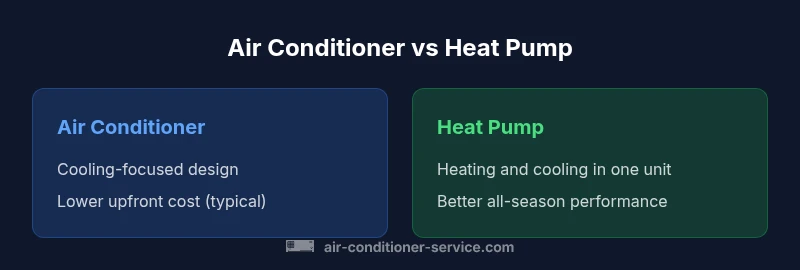
Air conditioners cool spaces efficiently, while heat pumps provide both cooling and heating. In moderate climates, a heat pump offers versatile comfort and potential energy savings; in extreme heat or cold, a dedicated cooling solution or auxiliary heat may be wiser. This quick comparison helps you decide which system fits your home.
What is an air conditioner vs a heat pump?
When you compare an air conditioner or heat pump, the core difference is heating capability. An air conditioner cools a room by removing heat from the indoor air and transferring it outside. A heat pump uses the same refrigerant cycle for cooling, but can also reverse the flow to move heat from outdoors into your home. This means a heat pump can serve as both a cooling system and an indoor heating system, reducing the need for a separate furnace in many homes. Understanding these fundamentals helps homeowners choose a system that matches climate, home design, and electricity pricing. According to Air Conditioner Service, focusing on heating needs and year-round comfort is essential for making the right choice.
How heat pumps differ from conventional air conditioners in operation
In cooling mode, a heat pump behaves like a standard air conditioner: it absorbs indoor heat, transfers it outside, and circulates cooled air. In heating mode, it extracts heat from the outdoor air (even in cool weather) and deposits it inside your home. The efficiency advantages come from the reversible cycle and the larger temperature differential a heat pump can handle with proper sizing. This section clarifies how the same hardware can deliver year-round comfort, while also noting that some models require auxiliary heat in very cold climates. Air Conditioner Service notes climate and usage patterns to determine the better fit.
Energy efficiency and operating costs: cooling vs heating costs
Energy efficiency for cooling and heating is described with metrics such as SEER and HSPF, but the exact numbers vary by model and region. Broadly speaking, heat pumps are designed to optimize both cooling and heating cycles, which can translate to lower annual energy use in moderate climates. However, electricity pricing and heating requirements influence the cost picture. For homeowners, the comparison should include not just sticker price but expected monthly energy bills and maintenance implications. Air Conditioner Service analysis shows that choosing a system with appropriate efficiency ratings for your climate yields the best long-term value, even if upfront costs are higher.
Climate suitability and use-case scenarios
Hot, humid climates with modest heating needs often favor traditional air conditioners for maximum cooling efficiency and reliability. In temperate regions with cold nights or seasonal heating, heat pumps offer a compelling all-season option, especially when paired with a supplemental heat source during peak cold spells. In extremely cold areas, a dual-system approach or a heat pump with an appropriate backup heater can be more practical than relying solely on cooling equipment. The decision should align with how you use your space, insulation quality, and your tolerance for upfront investment versus long-term energy costs.
Installation considerations and upfront cost
Installation cost and complexity vary between air conditioners and heat pumps. A simple central A/C often requires ductwork, a condensate line, and outdoor condenser placement. A heat pump adds heating functionality, which may require a larger outdoor unit, refrigerant line sets, and sometimes ground work for geothermal variants. In some homes, ductless mini-split heat pumps offer an alternative that minimizes duct modification. Remember that incentives and local labor costs can shift the economics significantly. Air Conditioner Service suggests obtaining multiple quotes and verifying system sizing to avoid oversized components that waste energy and money.
Maintenance and reliability overview
Both systems depend on a clean, well-maintained refrigerant loop, filters, and coil cleanliness for efficiency and reliability. A heat pump’s heating operation introduces additional components—defrost cycles, auxiliary heat elements, and reversing valves—that require periodic checks. Routine maintenance includes filter changes, coil cleaning, and refrigerant inspections when there is a suspected leak. With proper care, both systems offer long operating life, but heat pumps may incur higher service costs if auxiliary heating is frequently used in cold climates. Regular professional inspections help maximize efficiency.
Noise, space, and comfort considerations
Outdoor units contribute most to perceived noise. In many homes, modern air conditioners are quieter during cooling cycles, while heat pumps may generate more noticeable noise during heating in colder conditions due to the compressor cycling during defrost. Space requirements vary by model: air conditioners typically need space for the condenser plus ductwork, and heat pumps demand adequate outdoor footprint for both cooling and heating operation. For sensitive spaces, consider installation location and how it affects comfort during peak season operations.
Environmental impact and refrigerants
Both cooling and heating rely on refrigerants that impact the environment. Replacements and progressive refrigerant standards have reduced ozone-depleting substances and improved global warming potential. Selecting a model that uses a refrigerant with lower environmental impact is a practical environmental decision. In addition, heat pumps promote electric-powered heating, aligning with decarbonization goals in regions where the electricity grid is cleaner. Discuss refrigerant choices with your installer to minimize environmental impact without sacrificing efficiency.
Practical decision framework and a quick checklist
To decide between your options, use this framework:
- Climate: Do you experience cold snaps, or is it mostly hot?
- Heating needs: Is a backup heating source acceptable?
- Energy prices: Are heating costs a major concern?
- Installation: Can your home accommodate duct modifications or ductless options?
- Maintenance: Are you prepared for year-round service needs? This checklist helps translate qualitative considerations into a recommended direction.
Common myths and misperceptions
Myth: Heat pumps only work in mild climates. Reality: Modern heat pumps perform across a wider temperature range when sized correctly. Myth: A heat pump is always more expensive to operate. Reality: Operating costs depend on climate, usage, and electricity rates; a heat pump may save money in many regions. Myth: Ductwork is always required. Reality: Ductless options exist that can fit homes without duct systems.
From decision to installation: a practical action plan
Start by assessing your home’s insulation and air sealing. Obtain a few quotes from qualified contractors who specialize in HVAC sizing, ductwork, and refrigerant handling. Request a load calculation to determine proper equipment size and avoid oversizing. Review warranty terms and maintenance plans. Finally, plan for seasonal efficiency improvements, such as smart thermostats and proper airflow management, to maximize the selected system’s performance.
Real-world scenario guides: 3 homeowner profiles
- Suburban home in a temperate climate: A heat pump with a back-up heater can offer year-round comfort with moderate heating needs. Depending on insulation, this is often the best all-season choice.
- Hot climate with rare cold events: A traditional air conditioner with a separate heating option or electric resistance backup can be cost-effective and reliable.
- Older home with ductwork limitations: A ductless mini-split heat pump or a high-quality central air system with minimal ductwork adjustment may be more practical. Each scenario demonstrates how climate, energy costs, and building design drive the recommendation.
Comparison
| Feature | Air Conditioner | Heat Pump |
|---|---|---|
| Heating capability | Cooling-only | Heating and cooling |
| Cooling efficiency | Strong cooling efficiency | Strong cooling efficiency with heating optimization |
| Upfront cost | Lower upfront cost | Higher upfront cost |
| Installation complexity | Typically simpler with existing ductwork | May require additional ducting or outdoor unit for heating |
| Climate suitability | Hot climates with minimal heating | Moderate to cold climates with heating needs |
| Year-round comfort | Cooling-focused comfort | All-season comfort with heating |
| Maintenance needs | Standard maintenance | Similar maintenance with additional heat-mode components |
Strengths
- Helps compare critical factors side-by-side
- Clarifies heating capability and cooling efficiency
- Highlights installation and long-term energy costs
- Identifies best-use scenarios for each option
The Bad
- Requires climate and home design data for personalization
- Incentives and local costs vary by region
Heat pump is generally the more versatile all-season option in temperate climates; traditional air conditioners excel in hot regions with limited heating needs.
Choose based on climate, insulation, and electricity costs. A heat pump offers heating and cooling, while a dedicated air conditioner excels in cooling-only scenarios.
Common Questions
What is the main difference between an air conditioner and a heat pump?
An air conditioner cools a space by removing heat from indoors and transferring it outside. A heat pump can cool and heat, making it a year-round solution in many homes.
Air conditioners cool, heat pumps both heat and cool.
Can a heat pump replace a furnace?
In many homes, a heat pump can replace a furnace, especially in moderate climates. In very cold areas, a backup heat source may still be necessary.
Heat pumps can replace furnaces in milder climates, with possible backup heat in cold areas.
Are heat pumps effective in cold weather?
Modern heat pumps perform well in cool conditions, particularly models designed for cold climates. Efficiency varies by model and climate.
They work in cold weather, but performance improves with models built for cold climates.
Do I need ductwork for a heat pump?
Most central systems use ducts, but ductless mini-split heat pumps fit homes without ductwork. Consider existing infrastructure when choosing.
Most homes need ducts, but ductless options exist.
What about maintenance costs between the two?
Maintenance is similar, focusing on filters, coils, and refrigerant checks. Heat pumps may involve extra checks for heating mode.
Maintenance is similar, with some extra checks for heat-pump components.
Are there incentives for upgrading to heat pumps?
Many regions offer incentives for heat pumps; check local programs. Air conditioners may qualify in some areas as well.
There are often incentives for heat pumps; check local programs.
The Essentials
- Assess climate before choosing
- Consider heating needs in addition to cooling
- Factor upfront costs against long-term energy use
- Review local incentives and service availability
- Plan for installation requirements