Difference Between Air Conditioner and Heat Pump: A Practical Home Guide
Learn the key differences between air conditioners and heat pumps, how they work, climate considerations, costs, and practical tips to choose the right system for your home.


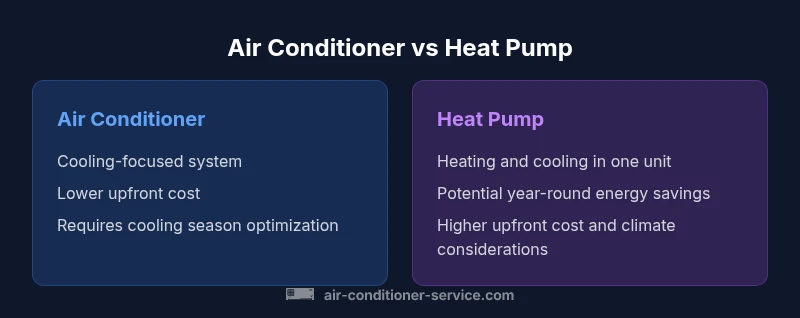
The difference between air conditioner and heat pump centers on heating capability, efficiency, and climate suitability. An air conditioner cools effectively with a lower upfront cost, while a heat pump provides both cooling and heating by reversing the refrigerant cycle, delivering year‑round comfort in moderate climates but sometimes requiring auxiliary heat in very cold conditions. This quick comparison helps homeowners decide which system fits their climate and budget.
The difference between air conditioner and heat pump: What this guide covers
Understanding the difference between air conditioner and heat pump technologies is essential for homeowners and renters planning a replacement or upgrade. This block-based guide dives into how each system works, their respective strengths in cooling and heating, climate suitability, cost implications, maintenance needs, and practical steps to choose wisely. Throughout, we reference practical considerations like installation complexity, ductwork, and controls to help you avoid overpaying for features you don’t need. By the end, you should be able to align your choice with climate, energy goals, and budget, rather than chasing a trend. According to Air Conditioner Service, your decision should balance year-round comfort with long-term value.
wordCount": 0
Comparison
| Feature | Air Conditioner | Heat Pump |
|---|---|---|
| Heating capability | Cooling-focused operation; relies on auxiliary heat for cold days in some setups | Heats by reversing the refrigerant cycle; efficient in moderate climates but may need backup heat in very cold weather |
| Cooling capability | Strong, established cooling performance | Excellent cooling capability; same cooling performance as dedicated AC when in cooling mode |
| Energy efficiency (heating vs cooling) | Efficiency mainly through cooling performance; heating efficiency can vary by climate | Often higher seasonal efficiency due to two-way operation; benefits most in moderate winter conditions |
| Climate suitability | Best in hot to warm climates or where auxiliary heat is available | Best in moderate climates; very cold regions may require supplemental heat or dual-fuel setups |
| Upfront cost | Typically lower initial cost for cooling-only setups | Higher upfront cost due to heating capability and reverse-cycle components |
| Installation considerations | Can be simpler if replacing a similar cooling system; ductwork requirements vary | Often needs more careful sizing, electrical upgrades, and potential duct adjustments |
| Maintenance needs | Standard AC maintenance: filter changes, coil cleaning, refrigerant checks | Annual checks for refrigerant and refrigerant lines, defrost cycles in cold weather, and thermostat checks |
| Long-term value | Lower upfront cost with solid cooling performance | Potentially higher ROI due to heating capability and year-round comfort |
Strengths
- Heat pumps provide year-round heating and cooling with a single system
- Potential energy savings in moderate climates due to efficient heating
- Fewer cold-starts and changes in interior climate when sized correctly
- Eliminates the need for separate furnace in many homes
- Possible eligibility for energy-efficiency rebates or incentives
The Bad
- Higher upfront cost compared to basic cooling systems
- Heating performance can decline in very cold climates without supplemental heat
- Defrost cycles and outdoor unit exposure can affect winter efficiency
- Sizing and installation quality are critical to avoid comfort gaps
Heat pumps generally offer better year‑round comfort and efficiency in moderate climates; in very cold regions or when upfront cost is a priority, a traditional air conditioner with auxiliary heat can be more appropriate.
Choose a heat pump if you live in a climate with mild to moderate winters and want integrated heating. If you’re in a very cold area or need to keep initial costs low, an air conditioner with supplemental heating may be the wiser choice. Proper sizing and professional installation are critical for either option.
Common Questions
What is the primary difference between an air conditioner and a heat pump?
The primary difference is heating capability. An air conditioner cools well but does not provide efficient heating, while a heat pump can both cool and heat by reversing its refrigerant cycle. This dual functionality makes heat pumps more versatile in moderate climates.
The key difference is heating capability: heat pumps heat as well as cool, while air conditioners only cool (with some auxiliary heat options).
Can a heat pump replace a furnace in colder climates?
A heat pump can replace a furnace in some homes, but very cold climates may require supplemental heating or a dual-fuel setup. Properly sized equipment and professional assessment are essential to ensure reliable heating.
It can replace a furnace in milder winters, but in very cold places you may still need backup heat.
Are heat pumps less efficient for cooling than traditional air conditioners?
In cooling mode, heat pumps can perform on par with dedicated air conditioners. The overall efficiency for cooling depends on SEER ratings and system design, just like a traditional AC unit.
In cooling mode, heat pumps are typically as efficient as air conditioners if properly sized and maintained.
What costs should I expect when choosing between the two?
Upfront costs for heat pumps are generally higher due to heating components, but long-term energy savings can offset this in suitable climates. Air conditioners usually cost less upfront, with savings relying mainly on cooling efficiency.
Heat pumps usually cost more up front but can save on energy bills if heating is part of your needs.
What should guide my decision for a new system?
Key factors include climate, heating and cooling needs, energy prices, existing ductwork, and budget. A professional assessment will translate these into a recommended system and sizing plan.
Climate, needs, and budget should drive the choice; a pro assessment helps finalize the decision.
How important is system sizing and professional installation?
Sizing accuracy and proper installation are critical for performance and efficiency in either system. An undersized unit can underperform, while an oversized one wastes energy and reduces comfort.
Sizing and proper installation are essential for comfort and efficiency.
The Essentials
- Assess your climate first to guide system choice
- Heat pumps offer heating and cooling in one package
- Upfront costs vs long-term savings must be weighed
- Proper sizing and installation are essential
- Consult an HVAC pro for a personalized assessment