What to Clean Air Conditioner Coils With: A Practical Guide
Learn what to clean air conditioner coils with, safe cleaners, tools, and a step-by-step routine to keep coils efficient and prolong system life.


By the end of this quick guide you’ll know exactly what to clean air conditioner coils with, why certain cleaners are safer, and how to perform a safe, effective cleaning. You’ll also learn prep steps, protective gear, how to avoid common mistakes, and when it’s wiser to call a professional.
Why Clean Air Conditioner Coils
Coils are the heart of your AC's heat exchange. Over time, dust, pollen, mold, and mineral deposits cling to the fins. Indoor evaporator coils collect more dust; outdoor condenser coils contend with environmental grime. Dirty coils reduce heat transfer, forcing the system to work harder and use more energy. The buildup can lower cooling capacity and shorten equipment life. According to Air Conditioner Service, regular coil cleaning helps maintain efficiency and prolong compressor life when done safely. Before you reach for cleaners, it helps to understand what to clean them with and what to avoid.
In this section we distinguish evaporator coils (inside the air handler) from condenser coils (outdoor unit). You’ll learn what kind of grime is typical for each and why even small build-ups matter. We also cover signs your coils need attention, such as longer runtimes, warmer air, and reduced airflow. With coils in good condition, your system moves heat more efficiently, uses less energy, and maintains comfortable temperatures.
What to Clean Coils With: Safe Cleaners and Tools
The core question 'what to clean air conditioner coils with' has a practical answer: use gentle, non-abrasive cleaners and the right tools. For many households, warm water with a few drops of mild dish soap is enough to loosen surface grime. A diluted mixture of white vinegar can provide additional cleaning power, but only if the cleaner label confirms it’s safe for aluminum fins. For tougher grime, use a coil-safe cleaner designed for aluminum fins, and follow the product directions carefully. Avoid bleach, ammonia, solvents, or acidic cleaners that can corrode metal or strip protective coatings. Never use a high-pressure washer or metal tools that can bend fins. See the safety notes below for details on protecting your equipment.
Tools you’ll want: soft-bristle brush or nylon brush, spray bottle, garden hose with adjustable nozzle on a gentle setting, nitrile gloves, safety glasses, towels or rags, and (optionally) a fin comb for straightening bent fins. Label any cleaners to keep them away from pets and children. When possible, perform coil cleaning during mild weather to reduce the risk of rapid evaporation and to ensure cleaners have time to work.
Preparing Your Unit for Cleaning
Preparation reduces risk and improves results. Start by turning off power to the unit at the service disconnect or main breaker—this is essential to prevent electric shock or compressor damage. Remove the outdoor access panel or service door on the condenser and clear loose debris such as leaves and twigs. If you must remove components, take photos first so you can reassemble correctly. Place towels to catch drips and protect surrounding surfaces. If you have a condensate drain line, have a bucket handy to collect any overflow. Keep children and pets away from the workspace. Ensure the area is well-ventilated, and avoid cleaning on very hot days when metal fins can be more easily damaged. Do not attempt to service refrigerant lines; coil cleaning is separate and should be done within the limits of your skill.
The Cleaning Process: Overview and Planning
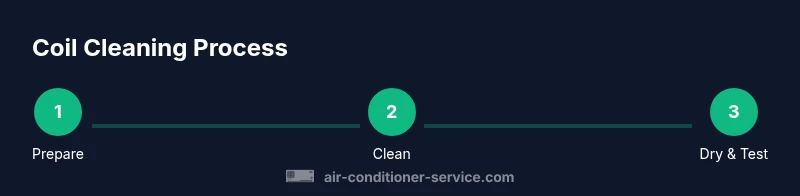
With safety in mind, here's a high-level overview of the steps involved in cleaning AC coils. Start by applying cleaner to the coil surface, allowing it to sit briefly to loosen grime, then rinse from the top down with a gentle spray. Brush between fins to dislodge stubborn dirt—be careful not to bend the fins. If you’re using a dedicated coil cleaner, follow the label directions for dwell time and dilution. Finally, rinse again to remove all residue and let the coil dry completely before powering the unit back up. The goal is to remove film and debris while preserving the integrity of fins and coatings. For reference, you can consult diagrams in reliable guides or manufacturer manuals. The process should be part of a broader maintenance routine, not a one-off fix.
Common Mistakes and Safety Warnings
Common mistakes include using high-pressure water that can damage fins, using metal tools that bend fins, letting cleaners sit too long on coatings, and skipping the power-off step. Never spray cleaners directly into electrical components or the fan motor; keep cleaners away from the contactors and wiring. Always wear gloves and safety glasses, and work slowly to avoid bending fins. If you notice signs of damage, corrosion, or refrigerant issues, stop and seek professional advice. Air Conditioner Service analysis indicates that following a careful, methodical approach yields better outcomes than rushing a job. The key is patient, controlled cleaning and verification of proper airflow after cleaning.
Aftercare and Performance Check
Reassemble any panels, reconnect power, and run the system for a short test. Check for unusual noises, vibration, or reduced airflow; if anything seems off, turn off the power and re-evaluate. After cleaning, you should observe improved airflow and a return toward normal cooling performance. Inspect the condensate drain and ensure it flows freely; clear any blockages. Keep a maintenance log and schedule a seasonal inspection to maintain coil cleanliness. The Air Conditioner Service team recommends establishing a simple maintenance routine to protect efficiency and prolong coil life.
Tools & Materials
- Gloves (nitrile or rubber)(Protect hands from cleaners and sharp fins)
- Safety glasses(Protect eyes from splashes)
- Mild dish soap(Dilute in warm water)
- White vinegar (optional)(Dilute and test on a small area)
- Non-abrasive coil cleaner(Follow label directions; safe for aluminum fins)
- Soft-bristle brush(Gentle brushing between fins)
- Nylon coil-safe brush(Use for tight spaces if needed)
- Spray bottle(For applying cleaner evenly)
- Garden hose with adjustable nozzle(Low to medium pressure)
- Towels or absorbent rags(Mop spills and protect surfaces)
- Fin comb (plastic preferred)(Gently straighten bent fins)
Steps
Estimated time: 45-60 minutes
- 1
Power down and prep
Turn off the unit at the breaker or service disconnect and unplug if possible. Gather safety gear and tools, and set up a clean, dry workspace.
Tip: Always ensure power is completely off before touching any wiring. - 2
Access coils and inspect fins
Remove the outer panel to reach the coils. Visually inspect fins for damage and debris; identify areas needing extra care.
Tip: Take photos to help with reassembly and reference any damaged areas. - 3
Apply cleaner and loosen grime
Apply a diluted cleaner to the coil surface and allow it to dwell briefly to loosen grime. Avoid contact with motors or wiring.
Tip: Do not mix cleaners; incompatibilities can damage coatings. - 4
Rinse and brush gently
Rinse using a gentle spray from top to bottom. Use a soft brush to dislodge dirt between fins without bending them.
Tip: Keep water away from electrical components and use low pressure. - 5
Dry, reassemble, and test
Dry thoroughly, reattach panels, and restore power. Run a short test to verify airflow and cooling performance.
Tip: If you hear unusual noises, power down and inspect before continuing.
Common Questions
Do I need to turn off the power before cleaning coils?
Yes. Always switch off the power at the breaker or disconnect before starting coil cleaning to prevent electric shock and equipment damage.
Yes—power it off at the breaker before you start cleaning.
Can I use bleach to clean coils?
Bleach can corrode aluminum fins and damage coatings; avoid it. Use milder cleaners unless the label specifically allows it.
No, bleach isn't recommended for AC coils.
How often should I clean coils?
There isn't a universal schedule. Inspect seasonally and clean if you notice dirt buildup or reduced cooling performance.
There isn't a fixed schedule; check them seasonally.
What tools are essential for coil cleaning?
Gloves, safety glasses, mild dish soap, water, soft brush, nylon brush, spray bottle, and a low-pressure hose are typical essentials.
Gloves, glasses, soap and water, soft brushes, and a spray bottle.
What if coils look severely corroded or damaged?
Severe corrosion or physical damage usually requires professional evaluation and potential coil replacement.
If it’s badly corroded, call a pro.
Is vinegar safe to use on coils?
Diluted vinegar can be used in some cases if the cleaner’s label confirms it’s safe for aluminum fins. Always follow the product instructions.
Diluted vinegar can be used if the label allows it.
Watch Video
The Essentials
- Use gentle cleaners and non-abrasive brushes.
- Power off and protect electrical parts before cleaning.
- Rinse thoroughly and allow coils to dry completely.
- Document results and schedule regular coil maintenance.