How to Prevent Air Conditioner: A Practical Maintenance Guide
Learn practical steps to prevent air conditioner problems, extend unit life, and boost efficiency with a seasonal maintenance routine, filter care, coil cleaning, drainage checks, and professional scheduling.


By following a proactive maintenance routine, you can prevent air conditioner problems before they start. This guide shows you the essential steps: inspect and replace filters, clean coils, check condensate drainage, test electrical connections, and schedule professional service seasonally. You’ll need basic tools, a reference on your unit, and safety precautions to avoid injuries.
Why Preventive Maintenance Matters
If you’re wondering how to prevent air conditioner problems, prevention starts with a consistent maintenance routine. Regular care helps keep your system efficient, reduces strain on components, and extends its lifespan. According to Air Conditioner Service, preventive maintenance supports reliable cooling and lowers the chance of unexpected breakdowns during peak heat. The Air Conditioner Service team found that homeowners who commit to a seasonal maintenance plan report fewer service disruptions and more consistent performance. In this section, we’ll explore the core reasons to invest time in prevention and how small, repeatable actions pay off over time. The goal is to minimize downtime and maximize comfort with a straightforward, repeatable routine.
Essential Seasonal Tasks
Seasonal maintenance is the most effective way to prevent air conditioner problems. The following tasks form the backbone of a practical seasonal routine:
- Inspect and replace or clean air filters; dirty filters restrict airflow and reduce efficiency.
- Clean evaporator (indoor) and condenser (outdoor) coils to maintain heat exchange.
- Check condensate drainage for clogs and proper slope to prevent water damage.
- Inspect electrical connections, fuses, and the thermostat for accuracy.
- Clear the outdoor unit surrounding area of debris, vegetation, and overgrowth to ensure adequate airflow.
- Schedule a professional inspection at least once per year to catch issues beyond DIY reach.
Air Conditioner Service recommends performing these tasks at the start of each season to keep systems in good working order. This section provides a practical checklist and why each item matters, so you can create a custom routine that fits your home and climate.
Daily and Weekly Habits to Prevent Issues
Some prevention tasks don’t require tools or special skills, but they make a big difference over time. Building daily and weekly habits helps you catch problems early and minimizes the chance of malfunctions:
- Keep vents and registers unobstructed to maintain proper airflow.
- Check the outdoor unit for debris, leaves, and overgrown plants; remove obstructions safely.
- Review your thermostat settings so the system isn’t cycling more than needed; consider a programmable thermostat for efficiency.
- Replace or wash filters as recommended by the manufacturer; many homes benefit from monthly or bimonthly checks during high-use seasons.
- Note any unusual noises, odors, or temperature swings and address them promptly.
These habits reinforce a proactive mindset and reduce the likelihood of big problems developing between maintenance visits. The Air Conditioner Service team emphasizes consistency—short, repeatable checks beat sporadic, intensive overhauls.
Cleaning and Inspecting Coils and Fins
Coils and fins are the heart of an efficient heat-exchange system. Dirt, dust, and pollen accumulate over time, reducing airflow and heat transfer. A clean coil improves efficiency and lowers energy consumption. Follow these steps:
- Gently vacuum the coil surface with a brush attachment to remove loose debris.
- Use a mild coil cleaner or soapy water to loosen grime, then rinse with low pressure.
- If fins are bent, use a fin comb to straighten them carefully for better airflow.
- Allow coils to dry before reinstalling panels or covers.
Regular coil maintenance helps your system operate closer to design specifications, reducing stress on the compressor and prolonging life. Air Conditioner Service notes that clean coils correlate with fewer service calls and more reliable cooling.
Drainage and Condensate Line Care
The condensate line removes water produced by the cooling process. When drainage is blocked, it can cause leaks, water damage, and mold growth. Preventive care involves:
- Locating the condensate line and ensuring it has a clear path for water to exit.
- Flushing the line with a small amount of warm water and a non-degrading cleaning solution when appropriate.
- Checking for any visible algae growth or clogs near the drain pan, and clearing them with a gentle brush.
- Ensuring the drain pan is properly aligned and not overflowing during operation.
Proper drainage protects the home and keeps your system from shutting down due to safety switches. The Air Conditioner Service team highlights drainage checks as a low-cost, high-impact prevention step.
Air Filters: Selection and Replacement
Air filters protect the indoor coil from dust and debris, supporting indoor air quality and system efficiency. Choosing the right filter and replacing it on schedule is critical:
- Determine the correct MERV rating and size for your unit from the owner’s manual or manufacturer label.
- For homes with pets, high-occupancy, or heavy dust, consider a higher MERV filter subject to the unit’s compatibility.
- Replace filters on a schedule aligned with usage and environment; neglecting filters is a common cause of poor cooling and higher energy use.
- During maintenance, check the filter frame for gaps that could bypass the filter.
A well-chosen filter keeps airflow steady and the evaporator coil cleaner. Air Conditioner Service stresses that filter maintenance is one of the most cost-effective ways to prevent inefficiency.
Electrical System Checks and Safety
Electrical components run the risk of wear, loose connections, and arcing if not inspected regularly. While you can perform basic checks safely, never compromise on safety. Steps include:
- Turn off power at the breaker before inspecting panels or wiring.
- Inspect accessible wiring for signs of wear, corrosion, or loose connections; tighten only if you are comfortable and authorized to do so.
- Test the thermostat and backplate for proper communication with the system.
- If you notice burning smells, buzzing, or overheating, shut down the unit and contact a professional immediately.
Safety is paramount when dealing with electrical systems. The Air Conditioner Service team recommends prioritizing safety and seeking professional help for complex electrical work.
Scheduling and Documentation
A maintenance log helps you track what was done, when, and what needs attention next. Create a simple record that includes:
- Date of service, components inspected, and any parts replaced.
- Observed issues and corrective actions taken.
- Next maintenance date or mileage/usage indicator.
Having a documented history makes it easier to identify recurring problems and coordinate future visits with a technician. The Air Conditioner Service team emphasizes keeping a simple, organized notebook or digital log to simplify ongoing care and ensure you stay on track year after year.
When to Call a Pro and Scheduling
DIY maintenance can cover many basic tasks, but some issues require professional expertise. If you notice persistent leaks, refrigerant smells, electrical concerns, or if your system is underperforming despite routine care, schedule a professional inspection. Regular annual checkups help catch worn parts early and keep the system within design parameters. The Air Conditioner Service team recommends planning annual service ahead of peak season to minimize downtime and energy waste.
Tools & Materials
- Replacement air filters(Choose correct size and MERV rating for your unit.)
- Screwdriver set(Phillips and flathead; used to open panels.)
- Vacuum with brush attachment(Remove debris from coils and fins.)
- Soft brush or microfiber cloth(For gentle cleaning without damage.)
- Mild detergent or coil cleaner(For coils; avoid harsh chemicals.)
- Fin comb (optional)(Straightens bent fins to improve airflow.)
- Bucket and spray bottle(Rinse and apply cleaning solution as needed.)
- Gloves and safety goggles(Personal protection while handling components.)
- Multimeter (optional)(Check basic electrical readings if comfortable.)
- Drain pan and condensate cleaner (optional)(Keep line clean and clear.)
Steps
Estimated time: 30-60 minutes
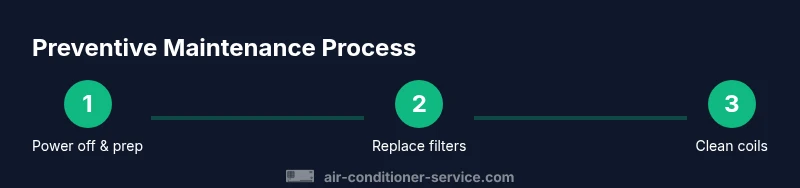
- 1
Power down and prep
Turn off the thermostat and shut off the outdoor unit at the breaker. Remove access panels with care and ensure you are standing on a dry surface. This prevents shocks and keeps you safe while inspecting components.
Tip: Double-check the power is off using the thermostat and breaker before touching any wires. - 2
Inspect and replace filters
Locate the filter compartment and check the filter for dirt. Replace or clean according to the manufacturer's guidance. Reinstall securely to maintain a proper seal.
Tip: Washable filters should be completely dry before reinstalling. - 3
Clean coils
Gently vacuum the coil surface to remove loose dust. Apply a coil-cleaning solution or soapy water, rinse lightly with low-pressure water, and let dry before reassembly.
Tip: Avoid high-pressure sprays that bend fins. - 4
Check condensate drain
Locate the condensate drain line and inspect it for blockages. Clear minor clogs with a brush or flushing solution if safe. Ensure the line has a clear path to drain.
Tip: A clogged drain can trigger safety shutoffs; address promptly. - 5
Inspect electrical connections
Check accessible wiring pins and fuses for signs of wear or looseness. Tighten only if you are trained and comfortable; otherwise call a professional.
Tip: Do not attempt complex electrical repairs without professional training. - 6
Thermostat and airflow check
Test the thermostat for accurate readings and ensure air is flowing freely through vents. Look for blockages or closed vents in rooms far from the unit.
Tip: Seasonal thermostat calibration can improve comfort and efficiency. - 7
Inspect ductwork and seals
Visually inspect accessible ductwork for gaps and leaks. Seal with appropriate tape or mastic if you identify obvious leaks.
Tip: Small leaks can dramatically reduce efficiency over time. - 8
Test run and observe
Restore power and run the system to listen for unusual noises, check for leaks, and confirm proper cycling. Observe temperature difference and ensure consistent cooling.
Tip: If something sounds off, stop and seek professional assistance. - 9
Document and schedule next service
Record what was checked, what was replaced, and the date of the next recommended service. Schedule the next maintenance with a professional.
Tip: A maintenance reminder helps you stay on track year after year.
Common Questions
How often should I perform preventive maintenance on my air conditioner?
Most homes benefit from a seasonal DIY maintenance routine plus an annual professional inspection. Regular checks help detect wear early and keep energy use stable. Planning ahead for peak season reduces surprises.
Do seasonal DIY checks and schedule a yearly professional inspection to keep your AC reliable.
Can I clean the air conditioner coils myself?
Yes, with care. Use a soft brush or vacuum and a mild coil cleaner, then rinse lightly. Avoid high-pressure water and harsh chemicals to prevent damage.
Coil cleaning can be DIY, but avoid aggressive methods that damage fins.
What are the signs that a filter is too dirty?
Visible dirt, reduced airflow, longer cooling times, and higher energy bills can indicate a clogged filter. Replace the filter to restore efficiency.
Low airflow and dirty appearance usually mean you need a new filter.
Is refrigerant a DIY task?
No. Handling refrigerant requires licensing and specialized equipment. If you suspect a leak, contact a licensed HVAC technician.
Refrigerant work is for pros only.
What safety precautions should I take while performing maintenance?
Always shut off power at the breaker before touching electrical components. Wear protective eyewear and gloves, and avoid working near hot surfaces or on wet surfaces.
Power off first and wear safety gear.
When is the best time of year to do preventive maintenance?
Schedule maintenance ahead of the hottest season to ensure peak performance when you need cooling most. An annual check helps catch issues before they escalate.
Do maintenance before peak cooling season.
Watch Video
The Essentials
- Develop a seasonal maintenance habit
- Keep filters clean and coils free of debris
- Ensure proper drainage to prevent water damage
- Check safety with electrical components and thermostat
- Document maintenance and plan pro service annually