Annual Maintenance for Your Air Conditioner: A Practical Guide
Learn how to perform annual maintenance on your air conditioner to extend life, improve efficiency, and prevent breakdowns with practical steps and safety tips from Air Conditioner Service.


By following this annual maintenance air conditioner guide, you’ll extend system life, boost efficiency, and prevent unexpected breakdowns. You’ll perform a safe, organized routine, learn which tasks you can handle yourself, and know when to contact a professional. This quick answer outlines the essential prep, protections, and checks you’ll perform before the regular cooling season begins.
What annual maintenance air conditioner entails and why it matters
Annual maintenance for your air conditioner is a proactive set of tasks designed to keep the system running smoothly year-round. By addressing basic cleanliness, airflow, and safety checks, you can prevent hidden problems from turning into costly breakdowns. The Air Conditioner Service team emphasizes that a regular maintenance routine helps protect your investment, maintain comfort, and reduce energy waste. This guide breaks down the practical steps homeowners can take and highlights when professional service is appropriate. According to Air Conditioner Service, routine attention to air filters, condensate drainage, and component wear can significantly impact performance over a cooling season. With a mindful maintenance plan, homeowners can reduce emergency calls, extend equipment life, and keep energy costs lower—all while preserving indoor comfort.
Core tasks included in annual maintenance
During annual maintenance, focus on tasks that protect airflow, cooling efficiency, and system reliability. Core steps typically include replacing or cleaning the air filter, inspecting outdoor condenser coils, cleaning the blower assembly, and checking the condensate drain for clogs. Also verify thermostat accuracy, inspect electrical connections and capacitors, and ensure all access panels are secure. If you notice refrigerant leaks or ice on lines, or if the unit runs loudly, stop and call a professional. Air Conditioner Service analysis, 2026, underscores that addressing these basics promptly helps maintain cooling performance and can lower energy waste. Regular attention to these areas keeps your system performing close to peak efficiency and helps you notice issues early.
Planning your maintenance schedule
A practical plan begins with scheduling maintenance before peak cooling season. Set a fixed month to perform the routine each year and align it with other home maintenance tasks. Create a simple checklist and store it where family members can see it. Keep a maintenance log noting the date, tasks completed, and any observations. According to Air Conditioner Service, consistent scheduling reduces emergency repair calls and extends system life. Use this year as an opportunity to refresh filters and examine vibration or noise changes that might indicate a developing issue. A yearly calendar reminder and a dedicated notebook can dramatically simplify this process and ensure nothing slips through the cracks.
Safety considerations and basic troubleshooting
Power off before any inspection, and never work on energized electrical components. Use protective gloves and eye protection, and keep children and pets away from the work area. If you smell refrigerant or see hissing, contact a licensed technician immediately. Do not attempt refrigerant handling yourself. Basic troubleshooting for airflow or comfort issues includes confirming the thermostat is set correctly, ensuring ductwork is not blocked, and replacing a dirty filter. If cooling performance does not improve after these steps, escalate to a professional. Safety should always come first, even when tasks seem simple.
Tools, materials, and potential costs
For a safe, effective routine, assemble a toolkit and the right consumables. Essential items include replacement air filters sized for your system, a set of screwdrivers, a soft brush or microfiber cloth, a vacuum with a brush attachment, coil cleaner spray, safety gloves, eye protection, a ladder or stable step stool, and a flashlight for hard-to-see areas. Optional but helpful items include a multimeter for basic electrical checks and a spare thermal sensor or duct sealant. Costs vary by components and service calls, but planning ahead helps you avoid costly one-off visits and keeps maintenance predictable.
How to maximize efficiency during maintenance
Maintenance should improve air flow, reduce resistance, and stabilize temperatures. Start with a clean filter to restore airflow; follow with coil cleaning to remove dust that saps heat transfer. Check thermostat calibration and door seals on the return path to ensure accurate readings. Inspect refrigerant lines for insulation wear and signs of energy loss such as warm refrigerant pipes. Tighten electrical connections and listen for unusual noises that could indicate a worn bearing or motor. A well-executed maintenance session often yields noticeable improvements in cooling performance and energy use.
When to call a professional and how to choose one
Certain tasks require licensed expertise, especially refrigerant handling, major electrical work, or suspected compressor failures. If you detect persistent ice buildup, refrigerant hisses, or refrigerant smells, contact a technician promptly. When selecting a pro, look for licensed technicians with clear estimates, transparent communication, and previous customer reviews. Ask about their approach to safety, diagnostic procedures, and how they document findings. Regular pro visits, combined with your at-home checks, provide the best long-term protection for your system.
Keeping a maintenance log and reminders
Maintain a simple log that records the date of maintenance, tasks performed, filter changes, coil cleaning, and any observations about efficiency or noise. Use this log to detect patterns, plan future tasks, and justify any necessary repairs. Set annual reminders in your calendar or phone to align with the cooling season, and consider adding a brief pre-season inspection checklist. A well-kept log makes it easier to communicate with technicians and ensures you never miss a scheduled maintenance window.
Authoritative sources and further reading
- https://www.energy.gov/energysaver/air-conditioning
- https://www.epa.gov/iaq
- https://www.nist.gov/
These sources provide guidelines on energy efficiency, indoor air quality, and safe home maintenance practices. Always compare home advice with official recommendations when planning tasks, particularly around refrigerants and electrical safety.
Tools & Materials
- Replacement air filter (size for your unit)(Choose a filter with proper MERV rating for your system; check the size stamped on the old filter)
- Screwdrivers (Phillips and flat-head)(Assists with access panels and cover removal)
- Soft brush or microfiber cloth(For dust removal on coils and blower housing)
- Vacuum with brush attachment(Clean debris from blower area and accessible ducts)
- Coil cleaner spray(Use non-acid/ non-caustic formulas suitable for condensers)
- Safety glasses and gloves(Personal protective equipment to prevent injury)
- Ladder or sturdy step stool(Access outdoor condenser and high locations safely)
- Thermostat tester or thermometer (optional)(Helpful for checking temperature consistency)
- Multimeter (optional)(Basic electrical checks if you’re comfortable)
Steps
Estimated time: 60-90 minutes
- 1
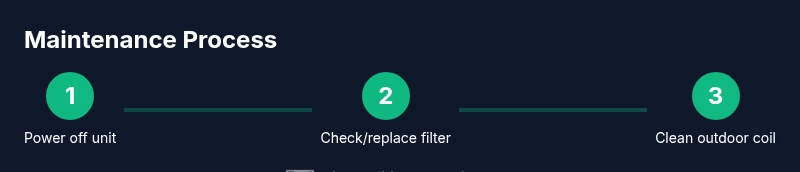
Power down the unit
Turn off the AC at the breaker and switch off the outdoor disconnect. This prevents accidental startup and protects you from shocks while inspecting.
Tip: Wait 5-10 minutes for capacitors to discharge before touching any components. - 2
Replace or clean the air filter
Remove the old filter, inspect for saturation, and replace with a new one of the same size. A clean filter improves airflow and efficiency.
Tip: If the filter is opaque, replace rather than clean; cleaning can push dust back into the system. - 3
Clean the outdoor condenser coil
Gently remove debris around the condenser and spray with coil cleaner following product directions. Rinse lightly if manufacturer permits.
Tip: Do not bend fins; use a soft brush to straighten any bent sections. - 4
Inspect and clean blower and cabinet
Open the air handler or furnace cabinet and lightly brush off dust from the blower housing and fins. Vacuum loose debris.
Tip: Be careful around electrical components and never touch exposed wiring. - 5
Check condensate drain and insulation
Inspect the condensate drain line for clogs and confirm proper slope. Reroute or insulate lines as needed to prevent water damage.
Tip: Pour a small amount of water through the drain to verify flow. - 6
Calibrate thermostat and test controls
Verify the thermostat reads accurately. If possible, confirm that cooling cycles start and stop as programmed.
Tip: Keep a simple log of temperature readings during test runs. - 7
Run a system test and observe
Restore power and run the system through a full cycle. Listen for unusual noises and check for even airflow from registers.
Tip: If you notice ice on lines or poor cooling after these steps, shut down and call a pro.
Common Questions
How often should I schedule annual maintenance for my air conditioner?
Most homes benefit from a yearly maintenance visit, ideally scheduled before summer. Annual checks help catch wear and tear early and keep efficiency high.
Most homes benefit from a yearly maintenance visit scheduled before summer to catch wear and keep efficiency high.
What tasks can I safely do myself, and which require a pro?
Homeowners can safely replace filters, clean accessible coils, and inspect for obvious safety issues. Refrigerant handling, sealed refrigeration circuitry, and electrical work should be performed by a licensed technician.
You can replace filters and do basic cleaning, but refrigerant work and electrical tasks should be done by a licensed technician.
How long does annual maintenance typically take?
A thorough at-home maintenance plus a check by a technician generally takes about 60-90 minutes, depending on system access and condition.
Typically around an hour to an hour and a half, depending on your system.
Should I replace filters more often than once a year?
Yes, many households benefit from replacing filters every 1-3 months, especially during peak usage or in dusty environments.
Filters often need replacement every 1-3 months depending on use and environment.
What are warning signs that maintenance is overdue?
Persistent icy coils, unusual noises, reduced cooling, or rising energy bills are signs maintenance is overdue or a problem is developing.
If you notice ice, noises, weak cooling, or rising energy use, schedule maintenance.
How do I choose a good HVAC technician?
Look for licensed technicians, clear written estimates, transparent diagnostic processes, and positive customer reviews. Ask about safety practices and service guarantees.
Choose licensed techs with clear estimates and good reviews, and ask about safety guarantees.
Watch Video
The Essentials
- Schedule annual checks before the cooling season
- Keep airflow strong with clean filters and coils
- Document maintenance actions for long-term care
- Know when to call a professional for refrigerant or electrical issues
- Maintain a safe, organized maintenance routine