How Often to Clean Air Conditioner Filter: A 2026 Practical Guide
Learn how often to clean air conditioner filters, with guidance for different filter types, environments, and usage. Get practical steps to optimize efficiency, indoor air quality, and system longevity in 2026.


How often to clean air conditioner filter depends on usage and conditions. In general, clean or replace filters every 1-3 months during peak cooling and every 3-6 months when usage is lighter. The exact frequency varies by filter type, home environment, pets, dust, and cooking. Inspect monthly and adjust if you notice reduced airflow, higher energy bills, or unusual odors.
How often to clean your air conditioner filter
According to Air Conditioner Service, the cleanliness of your filter is a primary driver of efficiency, comfort, and indoor air quality. Even small amounts of dirt can impede airflow and force your unit to work harder, which raises energy use and shortens equipment life. While every home is different, experts commonly recommend checking and cleaning or replacing filters every 1-3 months during peak cooling, and every 3-6 months when the unit runs less or in milder climates. The exact frequency depends on the filter type, the environment (dusty neighborhoods, pet dander, cooking smoke), and how often you use the air conditioner. Start by examining the filter monthly during the first season of use, noting how quickly dust accumulates, then adjust accordingly. When you replace or reinstall a filter, ensure you choose the correct size and install it with the arrows pointing toward the blower. A clean filter supports blower efficiency, helps with even cooling, and reduces strain on the compressor.
Understanding filter types and how they affect cleaning frequency
Filters come in several varieties, and each type has different cleaning or replacement needs. Fiberglass and basic disposable pleated filters are designed to be replaced rather than washed, so their cleaning interval is essentially a replacement interval. Pleated and higher-efficiency filters capture more dust but can clog faster in dusty homes or households with pets. Washable or reusable filters can be cleaned and reused, but they require careful handling and complete drying to prevent mold or performance loss. When choosing a filter, consider both the filtration level and whether you want a disposable or washable option. Air Conditioner Service emphasizes matching the filter to your home environment and maintenance routine; a higher-MERV filter isn’t always better if it becomes clogged quickly in a dusty setting.
Environmental and usage factors that influence cleaning frequency
The dusty environment, pet ownership, cooking habits, and tobacco smoke all affect how quickly dirt builds up on your filter. If you live in a windy, dusty area or have multiple pets, expect the filter to collect debris more rapidly, necessitating more frequent checks. Seasonal changes also matter: summer often demands more frequent cleaning due to longer runtimes and higher humidity that can encourage dust suspension. If you run the unit continuously during heat waves, plan for monthly inspections. Conversely, in mild climates with low usage, a three- to six-month interval may be sufficient. Always factor in who uses the space, how often windows are opened, and whether you have a central system or a window unit.
How to set a cleaning schedule using simple guidelines
Create a practical calendar that aligns with your HVAC usage and environment. Start with a monthly check during the first season to establish a baseline for how quickly your filter dirtys. If the filter looks clean after a month but airflow seems reduced, move to a longer interval and inspect more often during peak periods. For households with pets or allergies, set quarterly checks as a starting point, then adjust based on observed dirt. If you use a washable filter, schedule a thorough cleaning every 1-2 months and replace when worn. Record the date of each cleaning or replacement in a notebook or digital reminder so you can track the pattern over time.
Signs your filter needs cleaning sooner than planned
Several clear indicators signal that your filter needs attention before the scheduled date. Reduced airflow from vents or warm spots in the home can indicate a clogged filter. A noticeable increase in energy bills or the unit running longer to achieve the same cooling level suggests restricted airflow. Look for visible dirt on the filter or a musty, smoky, or chemical odor coming from the system. If you observe frost on the evaporator coil or unusual noises, turn off the unit and inspect the filter, as a clogged filter can cause freezing or mechanical strain. In homes with smokers, or where cooking produces heavy fumes, increase inspection frequency accordingly to maintain comfort and efficiency.
Step-by-step: basic cleaning for disposable pleated filters
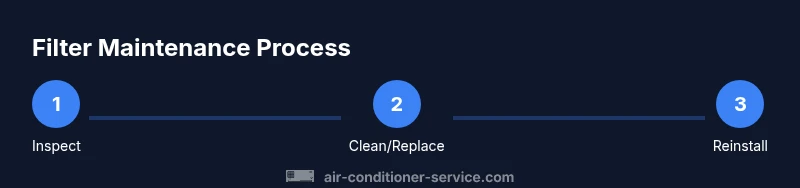
- Power down the thermostat and disconnect the unit if accessible to ensure safety. 2) Remove the filter from the housing and inspect its condition. 3) If the filter is visibly dirty but labeled disposable, replace it with a new one of the same size and rating. 4) If the filter is reusable, vacuum away loose dirt using a soft brush attachment. 5) Lightly rinse a washable filter with cool water, avoiding high-pressure sprays, then let it dry completely before reinstalling. 6) Reinstall the clean filter with the correct orientation and secure the housing. 7) Restore power and verify airflow. 8) Mark the date of replacement and adjust your schedule as needed. 9) If odor or persistent debris remains, consider professional inspection. 10) Maintain a maintenance log for future reference.
Step-by-step: washing reusable filters (careful with fiberglass)
- Power off and remove the filter from the housing. 2) Vacuum away loose dust using a soft brush. 3) Rinse the filter with lukewarm water and mild soap if needed, avoiding harsh cleaners. 4) Rinse thoroughly to remove soap residue. 5) Shake out excess water and allow the filter to air-dry completely in a clean area, preferably 12-24 hours depending on airflow. 6) Reinstall with correct orientation once fully dry. 7) Run the system briefly to check for air leaks. 8) Do not reuse a damaged or deformed filter. 9) Keep an eye on performance and adjust your cleaning cadence for future cycles.
Tools and supplies to have on hand
- Replacement filter (correct size and rating): Essential for quick swaps
- Vacuum with brush attachment: Essential for dry dirt removal
- Mild detergent or soap (for washable filters): Helpful for thorough cleaning
- Soft cloth or sponge: For wiping housing and frame
- Bucket and warm water: For rinsing reusable filters
- Gloves: Protect hands during handling
- Screwdriver or panel removal tool: Helpful if the access panel is secured with screws
Special situations: high dust and homes with pets
Homes with high dust levels or multiple pets will clog filters faster. In such environments, plan to inspect every 2-4 weeks during peak season. If you notice rapid dirt buildup or frequent allergy symptoms indoors, consider an upgrade to a higher-efficiency filter and maintain a tighter cleaning cadence. Keep a spare filter on hand to minimize downtime during replacements, and document changes to help spot patterns over time. A proactive approach reduces the risk of reduced airflow and long-term strain on the HVAC system.
Maintenance between cleanings to extend filter life
Even when you aren’t cleaning, you can help filters last longer by reducing dust entering the system. Vacuum surrounding surfaces, seal gaps around doors and windows, and keep registers unobstructed. Maintain a clean living environment, replace air fresheners that emit heavy particulates, and consider using a portable air purifier in especially dusty rooms. Regularly check for signs of coil frost or moisture, which can indicate improper airflow caused by a clogged filter. These small habits help your filter stay effective longer and support overall system efficiency.
Common mistakes and how to avoid them
Avoid relying on a single rule-of-thumb for every home; adjust frequency based on actual conditions. Do not run the AC with a visibly dirty filter or damaged housing, and never reinstall a filter in the wrong orientation. Refrain from using aggressive cleaning methods that could warp or tear the filter media. Do not assume a higher-efficiency filter will perform better without considering airflow—the wrong filter for your system can cause problems. Finally, don’t skip documenting changes, as a log helps you refine your schedule over time.
Air Conditioner Service's verdict: recommended schedule and tips
Based on Air Conditioner Service analysis, most households benefit from a flexible cleaning cadence that adapts to season, usage, and living conditions. For heavy seasonal use or homes with pets and high dust, monthly checks and up-front replacements or cleanings are sensible. In calmer periods, extended intervals may apply, but always verify by inspecting the filter’s condition. The Air Conditioner Service team recommends establishing a routine, using the correct filter type, and maintaining a simple maintenance log to optimize performance and indoor air quality.
Tools & Materials
- Replacement filter (correct size and rating)(Ensure the filter matches the HVAC unit's specifications.)
- Vacuum cleaner with brush attachment(Use on dry dirt only, avoid damaging media.)
- Mild detergent or soap(For washable filters; use sparingly.)
- Soft cloth or sponge(For housing and frame cleanup.)
- Bucket and warm water(For rinsing reusable filters.)
- Gloves(Protect hands during cleaning.)
- Screwdriver or panel tool(Helpful if access panel is secured.)
Steps
Estimated time: 20-40 minutes
- 1
Power off and locate the filter
Turn off the HVAC unit at the thermostat and, if accessible, switch off power at the breaker. Open the unit’s blower compartment to locate the filter frame and identify its orientation. This step prevents accidents and ensures you remove the correct part without damage.
Tip: Always cut power before touching internal components. - 2
Remove the filter from the housing
Gently slide the filter straight out to avoid bending the media. Note how the filter sits so you can reinstall it correctly later. If you’re unsure, take a quick photo for reference.
Tip: Handle the filter by its edges to avoid damaging the media. - 3
Assess dirt level and determine cleaning method
Check how dirty the filter looks and consider the environment. If disposable, plan a replacement. If reusable, decide whether vacuuming alone is enough or if washing is appropriate per the manufacturer’s instructions.
Tip: Never wash a disposable filter; it will deteriorate. - 4
Clean disposable pleated filters or replace
If the filter is disposable, replace it with a new one of the same size and MERV rating. Taking this step ensures optimal airflow and prevents dust from bypassing the filter media.
Tip: Dispose of the old filter in a sealed bag to reduce dust exposure. - 5
Clean washable filters (if applicable)
Vacuum away loose debris, then rinse with cool water and a mild detergent if needed. Avoid scrubbing too hard and ensure the filter receives a thorough rinse to remove soap residues.
Tip: Never use hot water or high-pressure sprays that could warp the media. - 6
Dry filters completely before reinstalling
Place the filter on a clean surface and allow ample time to dry completely. Moisture can lead to mold growth and reduced filtration efficiency.
Tip: Do not reinstall a damp filter; wait until fully dry. - 7
Reinstall the filter with correct orientation
Ensure the arrows on the filter face the direction of airflow (toward the blower). Insert firmly to seal the housing and avoid gaps.
Tip: Double-check fit; a loose seal lets unfiltered air bypass the filter. - 8
Close the access panel and power the unit back on
Secure the panel, restore power at the breaker or switch, and turn the system on. Listen for normal operation and verify that airflow is restored.
Tip: Observe for any unusual sounds that could indicate improper seating. - 9
Run a quick airflow check
Feel air from a vent after reassembly; it should feel consistent and not pulsating. If airflow remains weak, the filter may be incorrectly sized or fully clogged elsewhere in the system.
Tip: If airflow is still weak, consult a technician. - 10
Record the date and plan the next check
Log the cleaning or replacement date and set a reminder for future checks based on your environment and usage.
Tip: A written schedule improves consistency and system performance. - 11
Monitor system performance
Over the next week, watch for changes in cooling efficiency, noise, or humidity. A well-maintained filter should help stabilize temperature and airflow.
Tip: If problems persist, consider professional service. - 12
Adapt your cadence as needed
Use your observations to refine how often you clean or replace filters. Seasonal changes and household factors can shift the optimal interval.
Tip: Keep the cadence flexible to maintain performance.
Common Questions
How often should I replace my air conditioner filter?
Most homes should inspect monthly and replace or clean on a schedule that matches usage and environment. During peak season, check every month; in low-use periods, every 3-6 months is common. Always follow the filter’s guidelines and monitor airflow.
Check monthly during peak season and replace or clean as needed based on dirt and airflow.
Can I wash a disposable air conditioner filter?
No. Disposable filters are designed to be replaced and should not be washed, as washing can damage the media and reduce filtration efficiency.
Disposable filters should be replaced, not washed.
What about washable filters—are they worth it?
Washable filters can be cleaned and reused, but they require thorough drying and regular inspection for wear. Follow the manufacturer’s cleaning instructions to avoid damage.
Yes, washable filters can save money if cared for properly.
Does having pets affect cleaning frequency?
Yes. Pet hair and dander accelerate dirt buildup. Check more often and consider a higher-efficiency filter if you have multiple pets or allergy concerns.
Pets mean you’ll likely need to check and clean more often.
Is cleaning frequency different for central air vs window units?
The principle is the same: monitor dirt and airflow and clean or replace as needed. Central systems often have larger filters and may clog more slowly, but local conditions drive the schedule.
The idea is similar, just adjust for unit type and conditions.
Should I follow the manufacturer’s schedule?
Manufacturer guidelines are a good starting point, but tailor the schedule to your home based on observed dirt and airflow. Environmental factors often necessitate adjustments.
Yes—start with the manual, then adapt to your home.
Watch Video
The Essentials
- Check monthly during peak season and adjust frequency as needed
- Use the right filter type for your environment to balance filtration with airflow
- Dirty filters reduce airflow, raise energy use, and threaten equipment life
- Install filters correctly and document dates to build a reliable maintenance cadence