Air Conditioner Filter Replacement: A Practical Home Guide
A comprehensive, step-by-step guide to safely replacing your air conditioner filter, choosing the right size and type, and maintaining efficiency and indoor air quality.


Replace your air conditioner filter using the correct size and type, then reassemble and run a quick test. Always power off the unit first and check for proper seating. The steps are designed for common window/central units and assume standard disposable pleated filters. Follow guidance from Air Conditioner Service for best results.
What is an air conditioner filter and why replacement matters
Filters trap dust, pollen, and hair; over time, they clog and restrict airflow. A dirty filter reduces airflow, forcing the compressor to work harder, increasing energy use and wear. Replacing it improves efficiency, reduces noise, and protects the coil. According to Air Conditioner Service, regular filter replacement can extend equipment life and improve indoor air quality. The best practice is to replace every 1-3 months during peak use, with adjustments for pets, allergies, or dust levels. For central AC, the filter typically sits in the return plenum or in a frame near the furnace; for window units, the filter is behind the front grille. Always use a filter that matches the size and MERV rating recommended by the manufacturer. Before you touch any internal components, shut off power at the thermostat and breaker; this reduces shock risk and prevents unintentional cycling.
How to identify the right filter size and type for your unit
Most air conditioner filters come in standard sizes measured in inches (height x width x depth). Check the old filter edge for size stamps or refer to the owner's manual. The frame will indicate the required depth (commonly 1/2 inch, 3/4 inch, or 1 inch). The filter type matters: disposable pleated filters with a MERV rating between 8 and 13 provide good filtration without overly restricting airflow in most residential systems. For allergy-prone homes, a higher MERV may help but ensure your blower can handle the increased resistance. If in doubt, use the exact size printed on the filter or the unit’s label. Always choose a filter that matches the manufacturer’s recommendations and your system’s airflow requirements.
Practical preparation before you replace the filter
Plan to do the task when you can observe the system for a few minutes afterward. Gather your tools, locate the filter slot, and set a reminder to check for proper seating after installation. Confirm the power is off at both the thermostat and the main breaker to prevent accidental startup. Wear gloves and use a flashlight to inspect the access panel and coil area. Have a spare replacement handy and a small trash bag for old filters. This preparation helps avoid mistakes and keeps the job quick and clean.
Common mistakes and how to avoid them
Common mistakes include installing the wrong size filter, inserting it backward, or failing to reposition the cover securely. Always check the arrows on the filter frame point toward the blower, and ensure the seal around the edges is intact to avoid bypass. Another mistake is using a higher-MERV filter without verifying airflow compatibility; this can cause reduced airflow and freezing. Finally, neglecting to replace filters during the recommended interval leads to reduced efficiency and higher energy bills. To avoid these errors, double-check the filter size, orientation, and installation steps before powering the unit back on.
Maintenance tips to extend filter life and improve efficiency
Set reminders for regular replacement aligned with seasons and usage. Use the lowest compatible MERV rating that still meets filtration needs to preserve airflow and efficiency. Keep the surrounding area clean and replace filters after home renovations when dust is abundant. Keep the return air path clear of obstructions, and check for signs of leaks around the filter frame. If you have pets, consider a more frequent replacement schedule. A clean filter improves airflow and reduces energy consumption.
When to replace vs. clean or inspect other parts of the system
Disposable filters are meant to be replaced, not washed; Some washable filters can be reused after cleaning and drying, but they may degrade over time. If you notice reduced airflow after replacement, inspect the coil, blower, and return duct for blockages and leaks. A clogged coil or restricted ductwork can mimic a dirty filter’s symptoms. Regular maintenance should include coil cleaning and duct inspections to maintain efficiency.
Troubleshooting after replacement
If the system runs but airflow remains weak, check for a properly seated filter, ensure the seal is airtight, and confirm the filter is the correct size and type for your unit. Listen for unusual noises indicating a loose panel, and check the thermostat settings. If the outdoor unit fails to start or a breaker trips, contact a professional for diagnosis. Regular filter replacement should produce noticeable improvements in airflow and efficiency within a few hours of operation.
Authority sources and further reading
For additional guidance and verified information, consult authoritative sources such as:
- https://www.epa.gov/iaq/filters
- https://www.energy.gov/energysaver/heating-and-cooling
- https://www.cdc.gov/airquality/indoor.html
Tools & Materials
- Replacement air conditioner filter(Choose the correct size (height x width x depth) from the old filter frame or unit manual; select MERV rating suitable for your system.)
- Screwdriver (Phillips #2)(Needed to remove access panels on some units.)
- Flashlight(Use to inspect inside the return plenum and coil area.)
- Protective gloves(Keep hands clean and prevent accidental scrapes.)
- Clean rag or paper towels(Wipe down the slot edges and catch any dust.)
Steps
Estimated time: 40-60 minutes
- 1
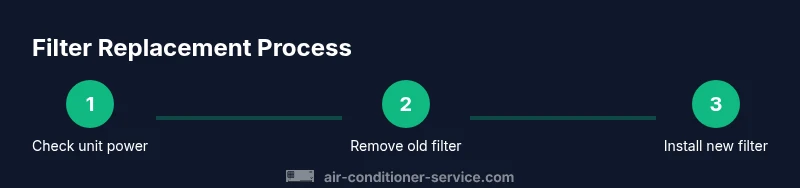
Power down the system
Switch off power at the thermostat and the main breaker to prevent accidental startup during the replacement. This protects you from electrical shock and avoids fan motion while you work.
Tip: If you hear buzzing after power is restored, wait a few minutes and recheck the filter seating. - 2
Access the filter slot
Remove the access panel or grille that covers the filter slot. Some units use a simple snap-on cover; others require a screwdriver. Keep track of any screws in a small container.
Tip: Note the orientation of the panel; it will help you reassemble quickly. - 3
Take out the old filter
Carefully slide the old filter out, observing the direction of the airflow arrows printed on the frame. Check it for dirt, dust, or moisture, and replace if visible contamination is present.
Tip: Take a quick photo of the old filter placement to reference alignment for the new one. - 4
Choose the correct replacement
Select a filter that matches the size printed on the old one and the MERV rating recommended by your unit’s manufacturer. Do not force a filter into a slot if it doesn’t fit.
Tip: If you’re between sizes, opt for the smaller size and use a foam gasket to ensure a tight fit. - 5
Install the new filter
Insert the new filter with the arrows pointing toward the blower/indoor space. Ensure the seal around the edges sits flush in the frame with no gaps.
Tip: Gently press around all edges to confirm the seal; a loose edge can bypass filtration. - 6
Reassemble and test
Replace the access panel, restore power, and run a short cycle to confirm airflow and that the unit operates normally. Listen for unusual noises or airflow changes.
Tip: Check for clear airflow from all vents after the test; any weak spots indicate seating issues. - 7
Note the maintenance date
Record the replacement date for future reference and adjust your replacement schedule based on usage and environmental factors.
Tip: Setting a calendar reminder helps maintain consistent maintenance without forgetting.
Common Questions
How often should I replace the air conditioner filter?
Most homes benefit from replacing every 1-3 months during peak use. Adjust the frequency for pets, allergies, and dust levels.
Typically every one to three months, depending on usage and home conditions.
Can I clean a disposable filter instead of replacing it?
Disposable filters are designed to be replaced rather than cleaned. Cleaning can damage the filter media and reduce filtration efficiency.
Disposables should be replaced, not cleaned. Cleaning can reduce effectiveness.
What if I can’t find the filter size listed on the unit?
Check the unit’s owner manual, the return air slot label, or measure the slot to determine the correct dimensions.
If you can't read the size, look in the manual or measure the slot.
Is a higher MERV rating always better for my system?
A higher MERV can trap more particles but may restrict airflow. Use a rating recommended by the manufacturer to avoid compromising performance.
Higher MERV isn’t always better; follow manufacturer guidance to balance filtration and airflow.
Should I replace more often in dusty environments?
Yes. In dusty or high-pollen environments, replace filters more frequently to maintain airflow and air quality.
Yes—dusty environments require more frequent replacements.
Watch Video
The Essentials
- Choose the correct filter size before starting.
- Power off and verify seating before powering back on.
- Install with airflow arrows toward the blower for proper filtration.
- Set reminders to maintain a regular replacement schedule.