How Many Years Can an Air Conditioner Last? A Practical Lifespan Guide
Learn how many years an air conditioner lasts, what affects its lifespan, and practical tips to extend life for central, window, and portable units in 2026.


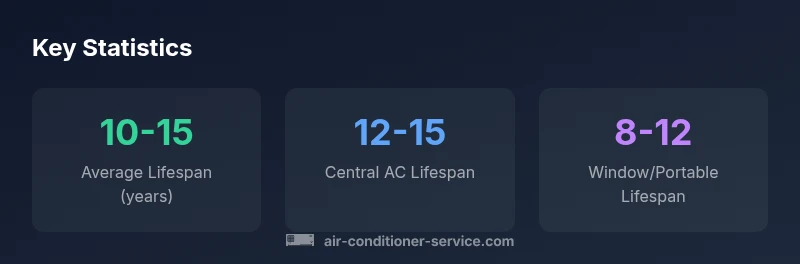
Most air conditioners last about 10–15 years in typical residential use. Central air systems commonly reach 12–15 years, while window or portable units tend toward 8–12 years. With proactive maintenance—seasonal inspections, coil cleaning, proper refrigerant charging, and timely component replacements—a unit may push toward the upper end of these ranges. Air Conditioner Service Analysis, 2026, notes lifespan is highly variable by use, climate, and service history.
How many years air conditioner last
Understanding how many years air conditioner last is more than curiosity; it guides maintenance planning, budget cycles, and replacement timing. In practical terms, most residential units endure about 10 to 15 years under normal use. Central air systems tend to fall in the 12 to 15-year range, while smaller window units and portable models often span 8 to 12 years. However, actual lifespan hinges on a mix of usage patterns, climate, and the quality of regular care. A unit that runs constantly during a hot summer without professional tune-ups will age faster than one that receives routine maintenance and prompt component replacements. The goal is not to chase a hard deadline but to recognize when performance declines, efficiency drops, or repair costs rise relative to the value of continuing operation. With that frame, the remainder of this guide explains how to estimate your unit’s life expectancy, what you can do to extend it, and when replacement becomes the wiser choice.
Major factors that influence lifespan
Lifespan is not a single number—it’s the result of several interacting factors. First, installation quality and system type matter: proper refrigerant charge, sealed ductwork, and correct sizing reduce strain on components. Second, climate and usage shape wear patterns: hot, humid summers and long runtimes accelerate normal aging. Third, maintenance habits are decisive: regular filter changes, coil cleaning, and annual professional tune-ups reduce unnecessary stress. Fourth, component health—compressor, capacitor, fan motors, and outdoor unit corrosion—can abruptly shorten life if neglected. Finally, refrigerant health and duct cleanliness influence efficiency and heat exchange, indirectly affecting longevity. Understanding these factors helps homeowners prioritize care and detect early warning signs before costly failures occur.
Maintenance strategies to maximize lifespan
Maintenance is the cheapest form of life-extension for an air conditioner. Start with simple, recurring tasks: replace or clean filters every 1–3 months depending on usage, keep outdoor coils clear of debris, and check condensate drainage for blockages. Schedule a professional inspection at least once a year, ideally twice for homes with heavy cooling demands. A technician should verify refrigerant levels, inspect electrical connections, test the thermostat, and clean the condenser and evaporator coils. Regular coil cleaning significantly improves heat transfer efficiency, which reduces strain on the compressor. While DIY can cover basic upkeep, many longevity risks—refrigerant leaks, capacitor failure, and compressor wear—require trained hands. In practice, a disciplined maintenance plan can help your unit approach the upper end of its expected lifespan.
Choosing between repair and replacement
As an air conditioner ages, decision points emerge: when a repair cost approaches or exceeds the value of a new unit, or when reliability and efficiency decline, replacement becomes sensible. Consider factors such as the system’s age (older models commonly miss newer energy-efficiency standards), the frequency of breakdowns, and the availability of parts. Financing options and incentives for high-efficiency models may tilt the balance toward replacement. A proactive approach includes estimating future energy costs of staying with the old unit versus investing in new equipment that uses less energy and provides better cooling performance. The goal is to minimize downtime while maximizing comfort and efficiency.
System type comparisons: central, window, portable
Central air conditioners generally offer the longest potential lifespan due to larger, sturdier components, but they also incur higher replacement costs. Window units are cheaper upfront and easier to replace, with shorter lifespans that hinge on window integrity and sealing. Portable units are the most flexible but typically have the shortest lifespans due to mobility stress and smaller compressors. Across all types, installation quality, regular maintenance, and proper usage significantly influence outcomes. When selecting a system, homeowners should weigh initial cost against long-term maintenance, efficiency, and expected life to align with long-term plans.
Common misconceptions and troubleshooting tips
A common myth is that all ACs last at least 15 years without any decline. Reality shows that lifespan depends on climate, maintenance, and usage. Another misconception is that bigger is always better; oversized systems cool quickly but cycle less efficiently, increasing wear. Regular diagnostic checks by a qualified technician can catch issues early—such as refrigerant leaks, capacitor faults, or dirty coils—before they cause major failures. For troubleshooting, keep filters clean, listen for unusual noises, and monitor thermostat readings. If you notice hot air or poor cooling, address the issue promptly rather than postponing care, since small problems can escalate into costly replacements.
Authority sources consulted for lifespan guidance
| Source | URL | Notes |
|---|---|---|
| Air Conditioner Service Analysis, 2026 | https://www.energy.gov/energysaver/air-conditioning | DOE guidance on efficiency and maintenance |
| Air Conditioner Service Analysis, 2026 | https://www.epa.gov/iaq | EPA guidance on indoor air quality and appliance performance |
| Air Conditioner Service Analysis, 2026 | https://www.consumerreports.org/c-appliances/air-conditioners | Independent testing and lifespan considerations |
Common Questions
How long does a central air conditioner typically last?
Most central air conditioners last roughly 12–15 years with regular maintenance and timely part replacements. Older or poorly maintained systems may fail sooner, while well-kept units can push toward the upper end of the range.
Most central air conditioners last about a dozen to fifteen years with proper care.
Does maintenance really extend an AC’s life?
Yes. Routine maintenance—filters, coils, refrigerant checks, and professional tune-ups—reduces strain on components and helps sustain efficiency, potentially extending life by several years.
Regular maintenance can add several years to an AC’s life by keeping it efficient.
Repair or replace an aging unit?
Consider repair cost relative to replacement value, system age, and efficiency. If reliability is poor and energy use is high, replacement may be the wiser long-term choice.
If repairs are frequent or costly and efficiency is low, replacement is often better.
How does climate affect lifespan?
Hot, humid climates place greater load on components, potentially shortening life if maintenance is neglected. Regular service is especially important in harsh climates.
Hot, humid climates can shorten life without proactive maintenance.
What maintenance schedule should I follow?
Change filters every 1–3 months, clean coils as needed, and schedule a yearly professional inspection to verify refrigerant, electrical connections, and overall performance.
Keep filters clean and have a yearly technician checkup.
“Lifespan is a function of installation quality, regular maintenance, and climate. With proactive care, you can maximize your AC’s life and reliability.”
The Essentials
- Know lifespan ranges for each system type
- Maintain regularly to maximize life
- Repair vs replace should be financially and practically evaluated
- Climate and usage significantly influence aging