How to Filter Air Conditioner: Clean, Replace, and Maintain
Learn how to select, clean, and replace the filter air conditioner to boost efficiency, improve indoor air quality, and extend your unit's life. Step-by-step guidance for homeowners and renters from Air Conditioner Service.


By the end of this guide, you’ll know how to check, clean, and replace the filter air conditioner to improve airflow, reduce energy use, and boost indoor air quality. You’ll also learn how to choose the right filter, schedule maintenance, and avoid common mistakes. According to Air Conditioner Service, regular filter upkeep saves cost and protects your system.
Why filter air conditioner matters
Filters play a critical role in keeping your indoor air clean and your AC running efficiently. A dirty or missing filter air conditioner restricts airflow, causes the unit to work harder, and can shorten its life. Regularly checking and replacing the filter air conditioner is one of the simplest maintenance tasks homeowners can perform to protect health and comfort. According to Air Conditioner Service, a clean filter air conditioner reduces energy consumption and prolongs equipment life by preventing dirt buildup in the blower and coils. The Air Conditioner Service team found that many service calls stem from neglected filters that reduce efficiency and increase strain on the compressor. Keeping the filter air conditioner clean also helps prevent dust from circulating in rooms, which is especially important for households with allergy sufferers or small children. In short, the filter is the first line of defense against wear, heat buildup, and poor air quality. Treat it as a routine maintenance item, not an afterthought, and you’ll see tangible benefits in comfort and reliability.
Types of air conditioner filters
Not all filters are created equal. Understanding the main types helps you pick the right one for your unit and environment. The simplest options are disposable fiberglass and pleated filters. Fiberglass filters are inexpensive but offer modest filtration; pleated filters capture more particles and are widely available in various thicknesses and frames. For households with pets, dust, or frequent cooking, a higher-grade pleated or electrostatic filter often provides noticeable improvements in air quality without overly restricting airflow. Reusable or washable filters can save money over time, but they require regular washing and thorough drying to maintain effectiveness. Some higher-end filters use composite media or even HEPA-grade filtration, which can dramatically improve particle capture but may require a high-efficiency blower or special installation. When choosing a filter air conditioner type, consider airflow needs, allergy risk, and cleaning frequency. Always verify compatibility with your equipment—size, thickness, and frame style matter as much as filtration efficiency. Air Conditioner Service recommends balancing filtration quality with system airflow to avoid undue strain on the blower and coils.
How to choose the right filter for your unit
Choosing the right filter air conditioner starts with a few practical checks. First, locate the existing filter size printed on the frame or in the manual. If the label is faded, measure the length, width, and thickness to determine the exact size. Next, confirm the filtration level that your system can handle by consulting the manual or the manufacturer’s website; some units perform best with medium-efficiency media, while others tolerate higher-efficiency pleated filters. Ensure the filter fits snugly without gaps, and check for proper orientation so the airflow arrows point toward the blower. Consider your environment: homes with pets or heavy dust generally benefit from filters that capture more particles, while spaces with limited airflow may require lower-density media to prevent pressure drops. Finally, choose a filter air conditioner with a reputable warranty or a proven track record of reliability. By matching size, fit, and filtration level, you maximize both air quality and equipment longevity.
Inspect and identify your filter size and rating
Identifying the correct size and rating is a key step in ensuring effective filtration. Start by removing the existing filter and inspecting its dimensions printed on the frame. If the size isn’t visible, measure the exact length, width, and thickness with a tape measure and note the results for future replacements. While you’re at it, check whether the filter is disposable or reusable and whether the media is paper, fiberglass, pleated fabric, or specialty material. Some filters also indicate a recommended rating or grade; if you’re unsure, use a filter with a similar performance class and physically fit. Improper size or an awkward fit can create air gaps that bypass the media, undermining filtration and stressing the blower. Finally, examine the unit’s airflow: a noticeable drop in airflow after a filter change often signals poor fit or the need for a higher grade that still maintains adequate airflow.
Cleaning vs replacing: when to do what
Not all filters are meant to be cleaned. Disposable filters should be replaced when dirty; attempting to wash them can deform the media and decrease effectiveness. Reusable filters, typically made of plastic or metal mesh, can be cleaned with a quick rinse or light brushing. After washing, ensure the filter is completely dry before reinstalling to prevent mold growth. If you notice persistent dust or reduced airflow despite cleaning or replacement, it could indicate a larger issue such as a dirty coil, clogged drain line, or blower problem. In those cases, a professional inspection is warranted. Remember, a dirty filter isn’t only about comfort—it directly affects energy efficiency and system longevity.
Maintenance scheduling for better efficiency and air quality
A simple maintenance cadence goes a long way. Inspect the filter air conditioner monthly, especially during peak usage seasons or in homes with pets or multiple occupants. Replace disposable filters every 1-3 months depending on filtration needs and household conditions; for washable filters, clean them according to the manufacturer’s instructions and ensure complete drying before reuse. Documenting dates helps establish a routine and makes it easier to track when the next replacement should occur. In addition to filter care, combine filter maintenance with a quick overall check of the indoor air handler area, ducts (where accessible), and the surrounding area for dust buildup. Building this habit reduces the likelihood of unexpected breakdowns and keeps your cooling system running smoothly.
When to call a professional and common mistakes
If you notice persistent airflow reduction after a filter change, unusual noises, ice on the coils, or refrigerant-related issues, stop DIY maintenance and contact a licensed technician. A professional can diagnose airflow restrictions caused by duct leaks, blower problems, or coil fouling. Common mistakes include using an ill-fitting filter, choosing a filter with too restrictive a media, or neglecting to ensure the filter is dry before reinstalling. Another frequent pitfall is neglecting the overall maintenance plan—filters are essential, but a clean system also depends on coil cleaning, drainage, and proper airflow. Air Conditioner Service emphasizes that routine filter maintenance should be part of a larger, proactive maintenance strategy to maximize efficiency and comfort.
AUTHORITY SOURCES
- https://www.epa.gov/iaq/filters
- https://www.energy.gov/energysaver/filters
- https://www.cdc.gov/airquality/indoor.html
Tools & Materials
- Correct-size air filter for your unit(Match exact length x width x thickness; keep a spare on hand)
- Screwdriver (Phillips or flat-head)(For opening access panels if needed)
- Vacuum with brush attachment(To remove dust around the filter slot)
- Mild detergent and water(For cleaning reusable filters only)
- Lint-free cloth or disposable towels(Wipe the slot and frame before reinstalling)
- Measuring tape(Helpful if the filter size is not labeled)
- Gloves and mask(Protect hands and reduce inhalation of dust)
Steps
Estimated time: 10-20 minutes
- 1
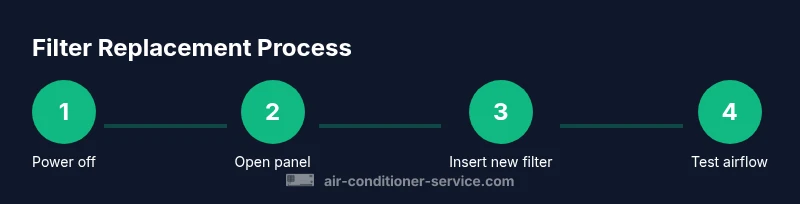
Power off the system
Turn off the thermostat or flip the breaker to ensure no fan motor starts during maintenance. This reduces the risk of electric shock and protects you while you handle the filter.
Tip: Always double-check the display or breaker status before touching any components. - 2
Open the filter access panel
Locate the access panel near the air handler or furnace and gently open it to reveal the filter slot. Some units use a clip or screw to secure the panel—remove it carefully without bending the frame.
Tip: Use a flashlight to better see inside the slot and avoid spilling dust. - 3
Remove the old filter
Carefully slide the old filter straight out to avoid dislodging dust. Note the orientation arrows on the frame so you reinstall the new filter correctly.
Tip: If the frame is brittle, wear gloves to prevent tears. - 4
Check size and rating
Check the size printed on the frame or measure accurately if label is worn. Decide on the filtration level based on your household needs and system compatibility.
Tip: Keep a record of the size and rating for easy replacements in the future. - 5
Install the new or cleaned filter
Insert the new filter with the arrows pointing toward the blower. Ensure a snug fit without any gaps around the edges.
Tip: Gently tap the filter to ensure it sits flat and fully seated. - 6
Close panel and test
Reattach the access panel, restore power, and run the system for a few minutes to confirm normal airflow and no unusual noises. Check the outlet and air diffuser for even distribution.
Tip: If you notice decreased airflow, re-check the fit or consider a different filter density.
Common Questions
How often should I replace my AC filter?
Most guidance suggests checking monthly and replacing every 1-3 months, depending on usage, pets, and dust levels. Higher-usage homes often need more frequent changes.
Most people check monthly and replace every one to three months, depending on use and household conditions.
Can I clean a disposable filter?
Disposable filters are not designed to be cleaned. Cleaning can reduce filtration efficiency and may damage the media. Replace with a new filter instead.
Disposable filters aren’t meant to be cleaned; replace them instead to keep filtration effective.
What size filter do I need?
Check the size printed on the existing filter frame or measure the slot if the label is missing. Ensure you match length, width, and thickness exactly for a proper fit.
Look for the size on the frame, or measure the slot so you buy the correct filter.
What is a MERV rating, and does it matter?
A higher filtration rating captures more particles but can restrict airflow if the system isn’t designed for it. Choose a filter that balances particle capture with your unit’s airflow needs.
Higher filtration catches more dust, but it can reduce airflow if your system isn’t built for it.
Are there risks with DIY filter maintenance?
DIY filter maintenance is low-risk when you shut off power and avoid touching electrical components. Always follow safety steps and consult a professional if you’re unsure.
DIY maintenance is usually safe if you power off first and follow safety steps.
When should I call Air Conditioner Service for filter issues?
If you notice persistent reduced airflow, unusual noises, or coil frost after filter changes, contact a licensed technician. Air Conditioner Service can diagnose duct and coil problems beyond simple filter changes.
If airflow stays weak or you hear odd noises after changing the filter, call a professional.
Watch Video
The Essentials
- Inspect filters monthly and replace as needed.
- Always verify size, orientation, and fit before reinstalling.
- Disposable filters should be replaced, not washed.
- Document replacement dates for reliable maintenance.
- Call a professional if airflow or noises persist after replacement.