Clean Air Filter for Air Conditioner: A Practical Guide
Learn to inspect, clean, or replace the air filter in your air conditioner to restore airflow, improve efficiency, and boost indoor air quality. This guide covers filter types, sizing, and safe steps for homeowners and renters.


Learn to inspect, clean, or replace the air filter in your air conditioner to restore airflow and efficiency. This quick guide covers identifying a dirty filter, choosing the right replacement, and performing a safe cleaning or swap. With basic tools and a little care, you can improve cooling performance and indoor air quality in under an hour.
Why cleaning the air filter matters
Regularly cleaning or replacing the air filter in your air conditioner is one of the simplest, most effective steps you can take to protect comfort and efficiency. A clean filter allows maximum airflow, helping the evaporator coil absorb heat more efficiently. When the filter is dirty, airflow is restricted, the system works harder, and energy consumption can creep upward. This is especially true in homes with pets, high dust levels, or during peak cooling season. Air Conditioner Service emphasizes that neglecting the filter can shorten equipment life and worsen indoor air quality. By establishing a straightforward routine, homeowners and renters can reduce the risk of coil frosting, unusual sounds, and uneven cooling. The essential takeaway: match the filter to your unit and commit to cleaning or replacing it on a regular schedule. In the rest of this guide, we’ll cover how to choose the right filter, how to tell when to clean versus replace, and how to perform a safe, effective maintenance check. According to Air Conditioner Service, maintaining a clean air filter is one of the simplest ways to protect your investment.
How filters affect efficiency and indoor air quality
Filters are the first line of defense for both your HVAC system and the indoor air you breathe. A clean filter minimizes resistance to airflow, enabling the blower to deliver designed capacity with less energy. Conversely, a clogged filter creates backpressure that reduces cooling effectiveness and can force the compressor to run longer. Over time, this not only raises utility bills but can accelerate wear on motors and fans. Cleaner air means fewer dust mites, pollutants, and allergens circulating through living spaces, which benefits everyone, especially children and people with allergies. Air Conditioner Service analysis shows that well-maintained filtration supports better humidity control and can contribute to a healthier home environment. Remember to check the filter size and type in your unit’s manual and to choose a filter that balances dirt-holding capacity with adequate airflow. Climate, pets, smoking, and occupancy all influence how often you should check and refresh the filter.
Types of filters used in residential air conditioners
Residential AC units typically use disposable fiberglass or pleated filters, along with washable metal or plastic varieties in some models. Fiberglass filters are inexpensive and catch larger particles, but their filtration efficiency is limited. Pleated filters offer greater surface area and better capture of fine dust without drastically restricting airflow. Some homeowners opt for reusable or washable filters, which require regular cleaning and thorough drying before reinsertion. In all cases, avoid filters that block too much airflow, as restricted air movement can cause the evaporator coil to ice up and the system to work harder. Check your service manual for recommended filter types and sizes, and avoid using filters that are not designed for your unit.
How to choose the right filter size and filtration level
Start with the exact size printed on the existing filter frame and in the owner’s manual. The right size fits snugly without gaps, ensuring consistent airflow. Filtration level is often described by a rating scale; higher ratings capture more particles but can restrict airflow if the frame isn’t powerful enough. Aim for a balance that your system is designed to handle; a filter that’s too restrictive can reduce cooling and raise energy use, while one that’s too open may not protect the coil adequately. If in doubt, consult the manufacturer’s specifications or a trusted HVAC technician. Remember to verify compatibility with your model’s airflow needs, whether you have a central system or a window unit.
When to clean instead of replace (and when to replace)
Reusable, washable filters can be cleaned and reused many times; disposable filters should be replaced when dirty. Clean filters by rinsing or brushing away loose dust and letting them dry completely before reinstall. Replace disposable filters with the exact size and rating specified by the manufacturer. If you notice visible mold, a persistent musty odor, or reduced airflow even after cleaning, it’s time to replace and inspect other air pathways for blockages. Keeping a spare set of filters makes this routine quick and convenient.
Cleaning steps for reusable filters
For reusable filters, a basic cleaning routine keeps performance up without frequent replacements. Remove the filter panel, take out the filter, and tap or brush away loose dust. Rinse under cool water if the manufacturer allows; avoid hot water or harsh detergents that can damage the filter media. Let the filter air-dry completely in a clean location before reinstall. Reattach with the correct orientation to seal the housing and restore proper airflow. Finally, power the unit back on and listen for smooth operation. Pro tip: do this cleaning in a well-ventilated area to minimize dust in your living space.
Replacing disposable filters and common mistakes
When in doubt, use the exact replacement size and grade specified by the unit’s manufacturer. Common mistakes include using a filter that’s too large or too small, installing with the wrong orientation, or trying to wash a disposable filter. Always power off the system before opening any panels, and avoid skipping the filter entirely. If you notice rapid dirt buildup, consider upgrading to a pleated or higher-efficiency filter that still allows the system to breathe. Proper disposal of old filters protects indoor air quality and the environment.
Maintenance scheduling for households and renters
Create a simple calendar for filter checks: monthly during peak cooling, and every 1–3 months in milder seasons. Renters may have less control over system specs, so keep a few spare filters on hand and record the filter type and replacement date in a note near the thermostat. In homes with pets, smokers, or high dust, increase the frequency of checks. Schedule a professional service annually or biannually to verify the overall system health and duct cleanliness.
Safety tips and common pitfalls
Always power off the AC unit before touching any internal components. Wear gloves to protect your hands from sharp edges and dust. Avoid using hot water or strong cleaners on filters that aren’t designed for it, and never operate the unit with the filter removed. Keep the area around the return vent clean to prevent reintroduction of dust. Remember that filters are a wear item; neglecting them can reduce efficiency and shorten the life of the system.
Authoritative sources and further reading
- Energy.gov: HVAC maintenance and filter guidance
- EPA: Indoor air quality and filtration basics
- NREL/academic resources on filtration and energy efficiency
These sources provide additional context and verify best practices for filter selection, sizing, and maintenance.
Tools & Materials
- Replacement filter (exact size and rating)(Check the unit manual or filter frame for size and MERV rating)
- Soft-bristled brush(Used to dislodge dust from pleated media)
- Vacuum with brush attachment(Cleans loose dust from the filter housing and surrounding area)
- Mild soap (optional, for washable filters)(Only use if the manufacturer approves cleaning with soap)
- Towel or rag(Dry surfaces and abrasives after cleaning)
- Gloves(Protect hands from dust and debris)
Steps
Estimated time: 25-40 minutes
- 1
Identify filter size and type
Locate the filter frame and read the size printed on the edge or frame. Match this size with the replacement filter or determine if a reusable option is appropriate. If you’re unsure, refer to the unit’s manual or contact support.
Tip: Make a note of the exact size and rating for future replacements. - 2
Power off and access the filter
Turn off the thermostat and unplug the unit if possible. Open the access panel and locate the filter housing. Avoid forcing panels if they feel stiff to prevent damage.
Tip: Lock in the position of any screws so you don’t lose them. - 3
Remove the filter
Carefully pull the filter straight out to avoid dislodging dust into the air. Note the direction of airflow arrows on the frame for proper reinstallation.
Tip: Place the removed filter on a clean surface to inspect for wear. - 4
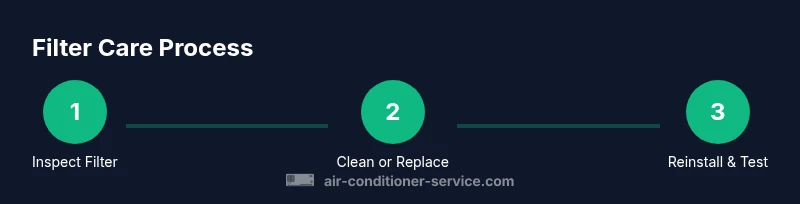
Decide whether to clean or replace
If the filter is washable, you can clean and reuse it after drying fully. If it shows tears, warping, or persistence of dirt after cleaning, replace with a new one.
Tip: When in doubt, replacing is safer for airflow and coil protection. - 5
Clean or replace
For reusable filters, rinse with cool water until clear, brush away residue, and allow complete air-dry. For disposable filters, install a new filter of the same size and rating.
Tip: Never install a damp filter; moisture encourages mold growth. - 6
Reinstall the filter
Insert the filter with the arrows pointing in the direction of airflow. Ensure a snug fit to prevent air leaks.
Tip: Check that the frame seats evenly and closes without gaps. - 7
Test the system
Power the unit back on and run for a few minutes to verify airflow and sound. If you notice unusual noises or reduced airflow, recheck the filter orientation and fit.
Tip: Record the date of maintenance to track future replacements.
Common Questions
How often should I clean or replace the air filter?
Most homes benefit from checking monthly during peak season, with replacement or cleaning every 1-3 months depending on use, pets, and environment. Always follow the manufacturer’s recommendations.
Check the filter every month during heavy usage and replace or clean as needed; follow your unit’s manual for the exact schedule.
Can I clean a disposable filter?
Disposable filters are designed to be replaced, not cleaned. Cleaning can damage the media and reduce filtration performance. If dirt is light, you can wipe the frame, but replacement is usually best.
Don’t clean disposable filters; replace them when dirty for best performance.
What happens if I run the AC with a dirty filter?
A dirty filter reduces airflow, increases energy use, and can cause coil icing or smells. It also strains the fan and compressor, which may lead to costly repairs over time.
A dirty filter wastes energy and can damage the system if ignored.
Is it safe to clean a window AC filter by myself?
Yes, cleaning a window unit’s filter follows the same principles as central systems: turn off power, remove the filter, clean or replace, dry completely, and reinstall. Follow the manufacturer’s directions for the best results.
Pretty safe to clean a window unit filter—just power down and dry before reusing.
Do I need professional maintenance for filter issues?
For most routine filter maintenance, DIY cleaning or replacement is sufficient. If you notice persistent airflow issues, strange noises, or mold, consult a licensed HVAC technician.
For odd airflow or mold, call in a pro; otherwise, you can handle filter care yourself.
How do I know the filter size is wrong?
If air leaks around the filter edge or the unit won’t seal properly after installation, recheck the size and ensure the frame is clean and undamaged.
If it doesn’t seal, it’s probably the wrong size or an improper fit.
Watch Video
The Essentials
- Inspect filters monthly during peak season
- Choose the right size and rating for your unit
- Clean reusable filters; replace disposable ones
- Reinstall correctly to seal the housing
- Schedule maintenance to sustain efficiency