Can You Use Air Conditioner in Winter: Practical Guide
Learn when and how to safely run your air conditioner in winter for comfort, humidity control, and energy efficiency. Practical tips, safety checks, and maintenance guidance from Air Conditioner Service.


Yes—it's possible to run an air conditioner in winter in many homes, but with caveats. You can use it for dehumidification or cooling on unseasonably warm days, and you should follow manufacturer guidance, temperature limits, and winterization tips.
Can You Use Air Conditioners in Winter? The Basics
Many homeowners ask can you use air conditioner in winter, especially in climates where the seasons bring high humidity or sudden warm spells. The short answer is yes for many systems, but with important caveats. An air conditioner is designed primarily to cool and dehumidify indoor air, not to heat it. In winter, you should not rely on the A/C to maintain comfort or to replace your heater. Instead, treat winter operation as a supplementary tool for humidity control and occasional cooling on days when outdoor temperatures rise above the unit’s safe operating threshold. Always check the equipment’s operating range in the owner's manual and adhere to any temperature limits set by the manufacturer. According to Air Conditioner Service, respecting these limits helps prevent frost formation on the outdoor coil, reduces strain on the compressor, and minimizes energy waste. This article explains when winter operation makes sense, how to do it safely, and which maintenance steps matter most for comfort, air quality, and efficiency.
How Different Systems Respond to Winter Conditions
The way winter changes your air conditioning experience depends heavily on whether you have a traditional AC-only system, a heat pump, or a window unit. A standard central air conditioner that lacks a heat pump is optimized for warm weather. In cold conditions, the outdoor coil can frost over if the unit continues to run cooling or dehumidification, which can damage components and increase energy use. Conversely, heat pumps are engineered to operate in winter and often include defrost cycles that remove frost and restore heating efficiency. If your home uses a window or through-the-wall unit, winter use is even more limited because these compact systems have higher vulnerability to cold-related issues and reduced performance. In many cases, you’ll find that the best approach is to reserve cooling for mild winter days or to switch to dehumidification mode if your goal is moisture control rather than temperature reduction. Keeping this distinction in mind helps you maximize comfort while protecting equipment.
Best Practices for Using AC in Winter
To safely use an air conditioner in winter, start with understanding your climate and the unit’s specifications. Air Conditioner Service analysis shows that the major winter benefit is humidity control; reducing excess moisture can prevent mold growth and condensation on walls and windows. Use dehumidification or a low cooling setting only when indoor humidity is high and outdoor temps are moderate. Set the thermostat to a comfortable level (for many homes around 68–72°F / 20–22°C) and avoid blasting cold air directly into living spaces. Always ensure the outdoor unit is clear of snow, ice, and debris, and never operate the condenser with a snowbank covering it. Regularly check and replace the indoor air filter to maintain airflow and cooling efficiency. In addition, schedule a service check-up before winter begins to verify refrigerant pressure, electrical connections, and capacitor health, which reduces the risk of mid-winter failures. By following these steps, you can enjoy improved comfort without compromising energy efficiency.
Winterizing Your Unit: Outdoor and Indoor Considerations
Outdoor components deserve attention in winter. Clear snow and debris from around the condenser to maintain airflow; keep at least two feet of clearance on all sides. If you expect freezing conditions, install a weather-resistant cover only when the unit is OFF and never while the system is powered, as covers can trap moisture and cause rust or mold. When you turn the system back on, remove the cover promptly. Inside, inspect and replace the air filter on schedule; a clogged filter reduces airflow and can cause the compressor to work harder. Inspect insulating ducts and attic or crawlspace connections to minimize heat loss; seal gaps and consider using a basic humidifier if humidity falls too low. Finally, drain lines and condensate traps should be checked to prevent backups that could lead to water damage or mold growth in winter. This proactive care helps sustain performance and longevity beyond the cooling season.
Winter Maintenance: Before and After Use
Preparation for winter begins with a thorough inspection. Replace or clean the HVAC filter; this is essential for both air quality and efficient operation. Inspect the outdoor unit’s cabinet for corrosion and ensure electrical connections are tight. If your system includes a heat pump, have the defrost control tested to confirm it engages correctly. Check refrigerant lines for signs of leakage and listen for unusual noises during a brief run cycle. Clean the outdoor coil with a soft brush, and remove accumulated dirt from around the fan to prevent overheating. After winter, schedule a professional service to recharge refrigerant if needed, recharge capacitors, and verify the overall condition of the compressor and motors. Regular maintenance reduces the risk of surprise breakdowns when you switch back to heating in spring.
When to Avoid Using AC in Winter
There are several red flags that indicate you should stop using the air conditioner in winter. If you observe frost buildup on the outdoor coil while the unit is running, turn it off and contact a technician. If the unit struggles to start, makes unusual noises, or blows weak airflow, don’t push it; these are signs of a potential fault that can worsen with continued use. Extremely cold outdoor temperatures (often below freezing) can cause insufficient lubrication and refrigerant pressure issues in non-heat-pump systems. In such cases, relying on the AC for climate control is typically inefficient and may damage components. If you experience high humidity without relief or see condensation on windows that recurs even after dehumidification, reassess whether cooling is warranted in winter and consider alternative moisture-management strategies like ventilation or a humidifier. In short, use winter cooling sparingly and prioritize heating and humidity control through appropriate systems.
Alternatives to Cooling in Winter and Energy Tips
Instead of relying on the air conditioner for comfort in winter, consider alternatives to reduce energy use and heat load. Use a humidifier to maintain comfortable humidity levels and minimize static electricity. Improve air circulation with ceiling fans on low speed to distribute warm air, which can reduce the need for cooling during mild spells. Use a programmable thermostat to maintain consistent temperatures and avoid sudden swings that waste energy. If you must cool occasionally, use the unit sparingly in mild weather and during off-peak hours when electricity costs are lower. Finally, ensure your insulation, windows, and ductwork are well-sealed to prevent heat loss, which dramatically improves winter comfort and energy efficiency. Air Conditioner Service recommends pairing these steps with regular maintenance to maximize performance and durability during winter.
Real-World Scenarios and Troubleshooting Quick References
This section provides practical scenarios you might encounter and concise actions to take. Scenario A: A humid, rainy day prompts persistent condensation on windows and a damp feeling indoors. Action: Employ the dehumidification function if available, crack a window slightly for ventilation, and verify that indoor humidity is around 40-50% for comfort. Scenario B: Outdoor coil frost appears after a cold night; action: Turn the unit to off and wait for above-freezing conditions before restarting, and consult your manual or a technician if frost returns. Scenario C: You notice weak airflow and noisy operation during a mild winter day. Action: Turn off immediately if you suspect ice formation or motor damage; arrange a service call. Scenario D: You have a heat pump and you’re using it primarily for heating; action: Use the built-in defrost cycle according to the manual and consult a professional if defrost cycles become longer than usual. For more details and troubleshooting references, see the full guide from Air Conditioner Service and trusted sources such as energy.gov and epa.gov.
Tools & Materials
- Owner's manual for your AC system(Check temperature and mode specifications before winter use)
- Thermometer (indoor/outdoor)(Verify temperatures and comfort setpoints)
- Soft brush or microfiber cloth(Clean dust from filters and coils)
- Replacement air filters(Have on hand for quick changes)
- Outdoor condenser cover (off-season use only)(Use only when unit is OFF; remove before restarting)
Steps
Estimated time: 1-2 hours
- 1
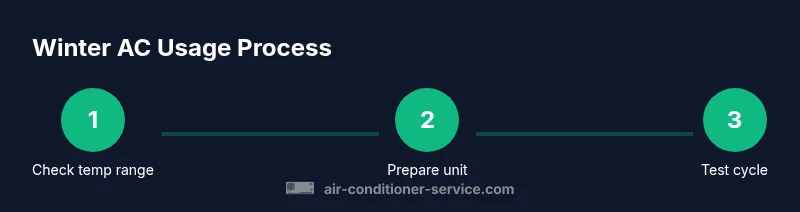
Check operating temperature range
Consult the owner's manual and confirm the unit's safe winter operating range before turning on cooling or dehumidification. If outdoor temperatures are below the recommended threshold, do not run cooling; instead plan for humidity control via ventilation or a separate dehumidifier.
Tip: If you’re unsure, contact a licensed technician to confirm limits for your exact model. - 2
Set thermostat and mode appropriately
Choose a winter-friendly setting, such as a dry/dehumidify mode or a low cooling setting, and avoid blasting cold air into living spaces. Keep indoor temperature stable to minimize humidity swings.
Tip: Avoid sudden, large thermostat changes which can stress the system. - 3
Prepare outdoor unit for winter
Clear snow and debris from around the condenser; ensure a two-foot clearance on all sides. Do not run the unit with snow covering the coil; this can cause frost buildup and reduced efficiency.
Tip: If snow accumulates, gently remove it with a brush; never use metal tools that can damage fins. - 4
Inspect and replace indoor air filter
A clean filter improves airflow and cooling/dehumidification efficiency, which is especially important in winter when humidity is checked.
Tip: Check monthly during winter and replace as needed. - 5
Run a brief test cycle
Turn on the unit for 5–10 minutes to observe airflow, noise, and any unusual vibrations. Verify that humidity and comfort levels respond to the settings.
Tip: Listen for grinding or hissing sounds; stop the test if you hear anything concerning. - 6
Monitor humidity and adjust as needed
Use a hygrometer or the unit’s built-in readings to keep indoor humidity around 40–50%. Adjust dehumidification or ventilation to maintain comfort without over-drying.
Tip: If humidity remains high despite dehumidification, consider a dedicated dehumidifier. - 7
Schedule professional winter maintenance
Even if everything seems fine, arrange a winter check with a licensed HVAC technician to inspect refrigerant, electrical components, and defrost controls (for heat pumps).
Tip: Book this before peak winter demand to avoid delays.
Common Questions
Is it safe to run an air conditioner in cold weather?
Yes, but only within the unit’s operating range and manufacturer guidelines. Frost risk and reduced efficiency can occur if used outside the recommended temperatures. If in doubt, switch to dehumidification or ventilation rather than cooling.
Yes, you can, but only within the unit’s limits. If you’re unsure, switch to humidity control instead of cooling.
Can I use a window air conditioner during winter?
Window units are generally not designed for extended winter operation. If you must, limit use to mild days and use dehumidification rather than cooling. Protect the unit from snow and ensure it’s not running when temperatures are below freezing.
Window units aren’t ideal in winter; use sparingly and keep temperatures mild.
Should I use the dehumidification mode in winter?
Yes, if indoor humidity is high. Dehumidification helps reduce moisture and prevent condensation, mold, and discomfort. Don’t rely on cooling to remove humidity; target humidity levels with dedicated controls or a dehumidifier as needed.
Yes, use dehumidification to manage moisture when needed.
What maintenance should I perform before winter?
Replace or clean filters, inspect the outdoor unit, check electrical connections, and test the unit briefly. A professional inspection before winter reduces the risk of mid-season failures and improves efficiency.
Do filter changes, check the outdoor unit, and have a pro inspect it before winter.
When should I stop using the AC in winter?
If you notice frost on the outdoor coil, unusual noises, weak airflow, or persistent high humidity, stop using the cooling function and consult a technician. These can indicate damage or unsafe conditions.
Stop if you see frost, noise, or poor airflow, and get a pro check.
Are heat pumps better for winter use?
Heat pumps are designed for winter operation and include defrost cycles. If you rely on cooling in winter, a heat pump can provide both heating and humidity control, but still follow the manufacturer’s guidance and schedule regular maintenance.
Heat pumps are built for winter and can handle heating and humidity control.
Watch Video
The Essentials
- Know your system’s winter operating limits before use
- Use dehumidification or mild cooling on warm days only
- Keep outdoor units clear of snow and debris
- Schedule annual professional maintenance for winter readiness
- Monitor humidity and energy use to optimize comfort