Air Conditioner Unit Filter Replacement: A Practical Guide for Homeowners
Learn how to replace your air conditioner unit filter safely and effectively. This step-by-step guide covers tools, steps, tips, and maintenance scheduling for better airflow and efficiency.


By replacing your air conditioner’s unit filter, you’ll improve airflow, reduce energy usage, and help prevent coil damage. The key is matching filter type to your system and performing replacements on a regular schedule. In most homes, a clean filter every 1–3 months during peak season works best, with more frequent checks if you have pets or smoke indoors.
Why regular air filter replacement matters
Regularly replacing the air conditioner unit filter is one of the simplest, most effective ways to protect your system and keep your home comfortable. A clean filter maintains proper airflow, reduces energy consumption, and minimizes strain on the blower motor. According to Air Conditioner Service, regular filter maintenance extends equipment life and reduces service calls. When filters become clogged, the system must work harder to pull air through, which can raise energy bills and shorten component life. In homes with pets, children with allergies, or heavy dust, filters can clog quickly, making prompt replacement especially important. This guide will help you identify the right filter, schedule replacements, and perform the swap safely with minimal tools.
Filter types and compatibility
Your air conditioner uses a filter in the return air path. Filters come in several forms: disposable panel filters, pleated filters, and washable/reusable types. Most residential units require a disposable pleated filter sized to the slot. Check the unit’s owner manual or the existing filter for size, MERV rating, and airflow direction indicators. Always insert the filter with the airflow arrows pointing toward the blower fan. If you are unsure about fit, measure the current filter (width x height x depth) and compare to replacement options. Wrong size or wrong type can restrict airflow, cause frost on the coil, or shorten system life. The goal is a clean barrier that allows good airflow while capturing dust and allergens.
How to choose the right filter for your unit
Start by locating the filter slot on your furnace or air handler. Read the label or manual to confirm the supported filter size and type. Most homeowners pick a pleated, disposable filter with an appropriate MERV rating for their environment. If you have pets, allergies, or a smoker in the home, you may want a higher efficiency filter, but be mindful of airflow requirements. Consider a filter that includes a frame to reduce warping and a gasket to seal gaps in the slot. In all cases, ensure the filter fits snugly with minimal resistance when you slide it in.
The replacement process at a glance
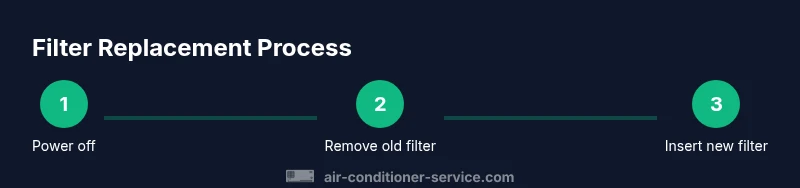
Replacing an AC filter is a straightforward, safe task when you follow the steps below. Start by powering down the system at the thermostat and, if accessible, at the service disconnect near the outdoor unit. Remove the old filter, inspect the housing for dirt or damage, and verify the replacement filter matches the slot size and intended airflow direction. Slide the new filter in firmly, ensuring the arrows align with the airflow. Clean any visible dust around the slot, then restore power and run the system for a few minutes to confirm proper airflow and no unusual noises.
Common mistakes and troubleshooting
Avoid using a filter that’s too small or too restrictive. A tight fit can cause air leaks and reduced performance. Do not reuse a dirty filter; replace it instead. If you notice reduced airflow after replacement, recheck the filter orientation, confirm the size, and inspect the return air duct for obstructions. If the blower runs but you still feel weak airflow, there may be a larger system issue that requires professional evaluation. Do not ignore unusual smells, visible mold, or water leaks around the air handler. The Air Conditioner Service team notes that proactive maintenance keeps your system resilient.
Maintenance scheduling and record-keeping
Create a simple replacement schedule based on your household conditions. In homes with pets, dust, or smoke, more frequent checks are wise. Keep a dated log on a small notepad or in a digital note so you can anticipate the next change. Some systems display a filter age on the thermostat or control panel—use that as a reminder. Periodic checks of the filter housing for cracks or moisture help prevent future issues and maintain indoor air quality.
Safety and disposal considerations
Always power off the equipment before removing the filter to avoid injury. Wear gloves to protect hands and avoid contact with duct dust. When disposing of a used disposable filter, place it in the trash following local guidelines. If you have a reusable filter that you wash, let it dry completely before reinserting. Keep children and pets away from the work area until you’re finished.
When to call a professional
If you notice persistent airflow problems after replacement, unusual noises, or ice forming on the coil, consult a licensed HVAC technician. Some issues stem from ducts, blower motors, or refrigerant circuits that require specialized tools and training. Regular filter replacement is a low-cost maintenance task, but it does not replace a comprehensive system check. The Air Conditioner Service team recommends scheduling a professional assessment if problems persist beyond routine maintenance.
Tools & Materials
- New air filter (correct size and type)(Check existing filter or manual for exact dimensions and MERV rating.)
- Owner’s manual or unit label(Contains exact filter size and type.)
- Gloves(Protect hands from dust and sharp edges.)
- Mask or eye protection(Helpful in dusty environments.)
- Trash bag or waste container(For disposing of old filter.)
- Measuring tool (tape measure)(To confirm filter dimensions if unsure.)
- Screwdriver ( Phillips or flathead )(May be needed to access the filter housing.)
Steps
Estimated time: 10-15 minutes
- 1
Identify filter location and power down
Locate the filter slot on the return duct, furnace, or air handler. Power down the system at the thermostat and, if accessible, at the service disconnect to prevent accidental startup during replacement.
Tip: Lockout/Tagout procedures protect you from unexpected energization. - 2
Remove the old filter
Open the access panel and slide the old filter straight out. Note the filter’s orientation and size so you can choose an exact replacement.
Tip: Take a quick look for dust buildup around the housing to assess overall cleanliness. - 3
Check replacement filter details
Confirm the replacement filter size, type, and direction arrows. If you are unsure, measure the slot and compare with the new filter.
Tip: If using a reusable filter, verify it’s still structurally sound and not bent. - 4
Insert the new filter correctly
Slide the new filter into the slot, ensuring the airflow arrows point toward the blower. It should sit firmly with no gaps.
Tip: Use a gentle push to seat the filter evenly and avoid bending the framing. - 5
Restore power and test
Replace the access panel, restore power at the thermostat or disconnect, and run the system for a few minutes. Check for smooth airflow and listen for unusual noises.
Tip: Feel for steady airflow at a supply register to confirm proper operation. - 6
Document and plan next replacement
Note the replacement date and schedule the next change based on environment and usage. If you have a thermostat with a filter age indicator, use it as a reminder.
Tip: Keep a simple log in your phone notes or a small notebook.
Common Questions
How often should I replace the air conditioner unit filter?
The frequency depends on use, environment, and filter type. In general, replace every 1-3 months during peak seasons, and more often with pets, allergies, or heavy dust. Tailor the schedule to observed airflow.
Most homes replace every one to three months based on usage and environment.
Can I clean a reusable filter instead of replacing it?
Yes, if the filter is designed to be washable. Follow the manufacturer’s cleaning instructions and ensure it is completely dry before reinserting.
Yes, if it’s washable; dry before reinstall.
What if I can't find the filter size?
Measure the current filter and check the unit manual to confirm supported sizes. If unsure, contact the manufacturer or a local HVAC supplier.
Measure the current filter and check the manual.
Is it safe to replace the filter with the unit running?
No. Always power off the system before removing or installing a filter to avoid injury.
No, always switch off first.
Do filters affect indoor air quality beyond comfort?
Yes. Dirty filters trap dust, pollen, and spores, reducing indoor air quality and potentially triggering allergies.
Dirty filters can worsen air quality.
How should I dispose of old filters?
Disposable filters go in regular trash. Reusable ones should be washed and dried before reuse; follow local guidelines.
Throw away disposable filters in trash.
Watch Video
The Essentials
- Choose the correct filter size and type for your unit.
- Replace on a regular schedule to maintain efficiency.
- Always power down before handling the filter.
- Dispose of disposable filters responsibly and keep a replacement log.