What Size Air Conditioner Do I Need? A Practical Guide
Discover how to size an air conditioner for comfort and efficiency with a practical, step-by-step approach that considers room size, insulation, climate, and occupancy.


To choose the right air conditioner size, start with a proper cooling load assessment that accounts for space, insulation, occupancy, sun exposure, and climate. This guide walks you through a step-by-step method to determine BTUs, compare unit sizes, and avoid common over- or under-sizing mistakes. You’ll also learn quick checks for comfort and efficiency.
Why the right AC size matters
Choosing the correct size for an air conditioner is essential for comfort, energy efficiency, and long-term reliability. If the unit is too small, you’ll struggle to cool rooms on hot days and the system will run continuously, wasting energy. If it’s too large, you’ll experience short cycling, uneven cooling, and higher humidity. Size affects comfort and energy bills more than any other single feature. According to Air Conditioner Service, the most accurate sizing starts with a proper cooling load assessment that accounts for space, insulation, occupancy, sun exposure, and climate. This article explains how to size a unit step by step, what data you’ll need, and how to verify your choice before you buy.
Understanding cooling load: BTUs, square footage, and climate
Cooling load is the amount of heat a space gains that an air conditioner must remove to keep a comfortable indoor temperature. This load is influenced by the size of the space, ceiling height, number of windows, insulation quality, air leakage, sun exposure, and how many people regularly occupy the room. BTU, or British thermal unit, measures the unit’s cooling capacity per hour. While BTU is a standard metric, the real challenge is translating room characteristics into an accurate BTU target. Climate also plays a role: hotter, sun-drenched rooms demand more cooling capacity, while well-insulated spaces stay cooler with less effort. Air Conditioner Service notes that climate zone, sun exposure, and insulation quality influence the cooling load, so no one-size-fits-all figure works for every home.
How cooling loads are calculated: BTUs and beyond
Most homes rely on a rough estimate to guide initial purchases, but the most reliable sizing comes from a formal load calculation. A load calculation considers the entire home or the zone to be cooled, accounting for windows, orientation, insulation, infiltration, occupant burden, and equipment efficiency. While professional load calculations (often called Manual J calculations) are the gold standard, you can start with a careful room-by-room assessment and a conservative margin to avoid under-sizing. Remember that ductwork, if present, also affects the effective cooling capacity of a system. A properly sized unit should balance peak cooling needs with sensible energy use, avoiding constant cycling and excessive operation.
Step-by-step: Prepare data for sizing (without yet selecting a model)
Begin by collecting data you’ll need to estimate cooling requirements. Measure each space to be cooled, note window areas and shading, assess insulation quality, and record typical occupancy. Keep a list of any ceiling fans or shading devices that reduce heat gain. Track current thermostat settings and how often rooms feel too warm versus comfortable, which helps identify problem zones. The goal is to create a data-driven baseline you can compare against unit size charts from manufacturers or a professional, ensuring you don’t overstate or understate cooling needs.
Common sizing pitfalls and how to avoid them
Two of the most frequent mistakes are over-sizing (which leads to short cycling, humidity problems, and higher installation costs) and under-sizing (which results in insufficient cooling and excessive energy use). Another pitfall is ignoring ductwork—leaky or undersized ducts can waste a significant share of a new unit’s capacity. Finally, relying on rough room-by-room estimates without considering climate, orientation, or insulation can still mislead you. A careful, documented approach reduces these risks and improves long-term comfort.
How to verify size with professional load calculations (Manual J)
A Manual J load calculation uses standardized methods to determine the exact cooling needs for a space. It includes measurements, construction details, and local climate data. While you can start with a guided DIY approach, a professional calculation is strongly recommended when renovations occur, windows are added, or several zones will be cooled independently. The result is a recommended BTU range and a set of unit sizes to compare, helping you choose a system that won’t waste energy or underperform.
Energy efficiency and comfort: why proper sizing matters for performance
Proper sizing improves both comfort and energy efficiency. An appropriately sized unit runs more consistently, maintains even temperatures, and operates for shorter periods at higher efficiency. This reduces wear on the compressor and improves SEER (Seasonal Energy Efficiency Ratio) ratings in real-world operation. Well-sized systems also work better with modern thermostats and zoning options, allowing you to tailor cooling by room or zone. The payoff is steadier comfort, lower utility bills, and longer equipment life.
Maintenance and calibration: keeping a properly sized system performing
Regular maintenance ensures the system operates at the intended capacity. Clean or replace filters, inspect ducts for leaks, verify refrigerant levels, and schedule annual professional checkups. If you notice changes in performance, recheck room measurements and occupancy patterns; shifts in home usage can alter cooling loads over time. A proactive approach helps you maintain the benefits of correct sizing and prevent efficiency losses.
How to proceed: a practical sizing workflow (no heavy math required)
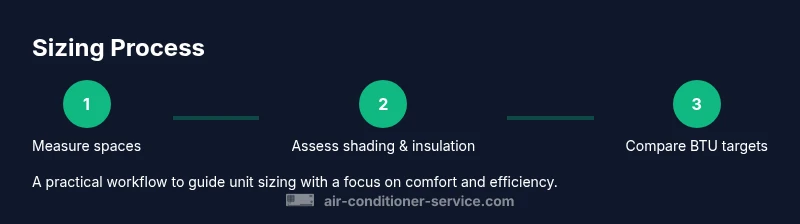
- Gather room dimensions and area data for all spaces to be cooled. 2) Note insulation quality, shading, and sun exposure. 3) Estimate occupancy patterns and any heat-generating appliances. 4) Use a BTU sizing chart as an initial reference, then refine with a professional load calculation if possible. 5) Compare the resulting BTU target to several unit sizes, selecting the smallest model that meets or modestly exceeds the target. 6) Plan for future needs, such as additional rooms or changes in occupancy, to avoid undersizing later.
The value of a proper size for your home and wallet
A correctly sized air conditioner reduces energy waste, enhances comfort, and minimizes repairs caused by overworking the system. It also makes it easier to maintain a consistent indoor temperature, even during peak heat waves. In the long run, you’ll likely save money on energy costs and enjoy a more comfortable living environment. The Air Conditioner Service team emphasizes that careful sizing is foundational to reliable, efficient cooling.
Tools & Materials
- Measuring tape (25 ft)(For room dimensions (L x W x H) and window areas)
- Vinyl tape or chalk(To mark measurement points and outline areas)
- Calculator(To compute volumes, roof area, and rough BTU estimates)
- Notepad or digital note app(Record dimensions, insulation, sun exposure, and assumptions)
- BTU sizing chart (print or digital)(Reference for unit sizes; not a substitute for formal calculations)
- Pen or pencil(Annotate results and jot observations)
- Thermometer (indoor/outdoor)(Assess temperature differential to gauge comfort levels)
- Access to professional load calculation (optional)(For exact Manual J calculations and zoning needs)
Steps
Estimated time: 20-40 minutes
- 1
Measure the space
Measure length, width, and height for each area to be cooled. Record the total volume and note any irregular shapes that may affect airflow.
Tip: Take measurements at several points to account for alcoves and bay windows. - 2
Document windows and shading
Calculate window area and document shading from trees or awnings. Sun-facing rooms gain more heat, which can increase cooling needs.
Tip: Include the impact of sun exposure across seasons when possible. - 3
Assess insulation and air leakage
Note attic and wall insulation quality, air leaks, and duct condition if present. Poor insulation raises cooling loads and reduces efficiency.
Tip: Tighten leaks and improve insulation where practical before sizing the unit. - 4
Record occupancy and heat sources
Account for typical occupancy levels and heat-generating appliances. Occupants add sensible heat that affects load.
Tip: Consider peak occupancy during hottest times to gauge max load. - 5
Create a room-by-room profile
Sum data for each zone to be cooled, identifying hot spots and comfort gaps.
Tip: Label each area clearly to simplify comparing unit sizes. - 6
Reference BTU guidance carefully
Use manufacturer charts as a starting point, then refine with a professional calculation if possible.
Tip: Don’t rely on a single number from a generic chart; adjust for your specifics. - 7
Select a target range and compare units
Identify a few units that meet or slightly exceed the computed target, and consider efficiency and features like zoning.
Tip: Prefer units that provide comfortable cooling without excessive cycling. - 8
Plan for future changes
If you anticipate renovations, additional rooms, or changes in occupancy, factor those into your sizing.
Tip: Better to size slightly larger now than to under-size after a remodel.
Common Questions
What does BTU mean in air conditioner sizing, and why does it matter?
BTU stands for British Thermal Unit and measures an air conditioner’s cooling capacity per hour. Matching BTU to room size and conditions helps maintain comfort and efficiency. Oversized or undersized units can waste energy and reduce comfort.
BTU is the unit of cooling power per hour. Matching BTU to your space keeps you comfortable and saves energy.
Is a bigger AC unit always better for a hot room?
No. An oversized unit cools quickly but often drives humidity up and causes short cycling. This wastes energy and reduces comfort. A properly sized unit runs more evenly and efficiently.
Big isn’t always better; an oversized unit can misbehave and waste energy.
How does ceiling height affect AC sizing?
Higher ceilings add more volume to cool, increasing cooling load. Sizing should account for vertical space, not just floor area, to avoid undercooling.
Tall ceilings raise the cooling load, so adjust BTU estimates accordingly.
Can I size my AC myself without a professional?
You can start with a DIY load assessment, but a professional Manual J calculation is recommended for accuracy, especially after renovations or when multiple zones are involved.
A DIY check helps, but a pro calculation is best for accuracy.
What should I do if my home has poor ductwork?
Fixing duct leaks and ensuring proper airflow can dramatically improve cooling effectiveness, sometimes more than upsizing the unit.
Seal leaks to improve efficiency and cooling reach.
How often should sizing be revisited?
Revisit sizing after major renovations, changes in occupancy, or new insulation upgrades to ensure the system still meets load.
Reassess sizing after renovations or insulation upgrades.
Watch Video
The Essentials
- Size matters for comfort and efficiency
- Use a cooling-load approach rather than rough guesses
- Avoid over- or under-sizing with careful data collection
- Consider future changes before finalizing unit size
- Verify results with a professional when possible