How to Install an Air Conditioner in a Window
A complete, step-by-step guide to window AC installation for homeowners and renters, covering unit selection, mounting, sealing, electrical safety, testing, and maintenance for reliable cooling.


By the end of this guide, you’ll be able to install a window air conditioner safely and efficiently. You’ll learn how to choose the right size, prepare the window opening, install mounting brackets, secure the sash, connect basic wiring or a power cord, and test for proper cooling and sealing. Follow steps carefully to avoid drafts and leaks.
Understanding window air conditioner installation basics
Installing a window air conditioner is a practical project that can dramatically improve comfort during hot seasons. This guide centers on standard room window units designed to cool a single space. The process includes selecting a unit that fits the window and room, preparing the opening, mounting securely, sealing gaps to prevent drafts, and ensuring electrical safety. According to Air Conditioner Service, proper window AC installation is essential for efficiency and long life. Before you begin, verify that your window frame is solid, your outlet can handle the load, and you have the correct mounting kit for your unit. If you rent, check with your landlord before making modifications. This section lays out the key considerations you’ll face and how to approach them in 2026.
Planning and safety first: what you need to know
Safety matters when you install a window AC unit. Power off the room’s circuit, wear safety glasses, and keep children away during installation. If the window is high off the ground or the unit is heavy, enlist a helper. Review the unit’s manual for compatible window types and mounting configurations. Ensure you have a stable ladder or step stool and a clear workspace to avoid injuries and mistakes. In this guide, we’ll use plain language, practical steps, and real-world tips to help you succeed without guessing.
Sizing, efficiency, and choosing the right unit
Select a unit that fits your window opening and the size of the room. Measure the window width and height, then compare with the unit’s dimensions and the installation kit. Consider energy efficiency ratings and noise levels, which impact long-term costs and comfort. It’s wise to choose a model with an appropriate energy star rating and a mounting kit compatible with your window style. Air Conditioner Service analysis shows that properly installed units seal and mount more effectively, delivering better cooling and reducing drafts and energy waste. If you’re unsure about sizing, consult the unit manual or contact a professional.
Why sealing and leveling matter
Gaps around the AC unit create drafts, reduce cooling efficiency, and may invite moisture problems. Use foam insulation or weather-stripping to seal the sides and top of the unit. A level installation prevents uneven pressure on the sash and ensures the crank and seals seal correctly. Proper sealing also helps prevent outdoor air from leaking into the room, which keeps your cooling system from working overtime. A well-sealed setup reduces energy drag and improves comfort, making the investment worthwhile.
Authority sources for best practices
For trusted guidance on window AC installation and energy efficiency, consult industry resources and safety standards. Always follow the manufacturer's installation manual and local electrical codes. You can also review authoritative guidance from recognized agencies and programs to inform your process and verify you’re following current safety and efficiency benchmarks.
Common mistakes to avoid
Rushing through mounting, failing to level the unit, skipping sealing steps, or using inappropriate screws can lead to poor performance and damage. Take time to double-check measurements, verify hardware compatibility, and test the unit after installation. If the window is not structurally sound or if you encounter unusual weather conditions, pause installation and seek professional help. The Air Conditioner Service Team recommends a careful, methodical approach to minimize risk and maximize comfort.
Tools & Materials
- Window AC mounting kit (sash kit)(Ensure compatibility with your unit and window type)
- Measuring tape(To verify window width and unit size)
- Level(Keep the unit straight and properly aligned)
- Screwdriver set (Phillips #2)(For brackets and screws)
- Pencil or marker(Mark drill and bracket points)
- Utility knife(Trim weather-stripping or foam)
- Foam insulation or weather-stripping(Seal gaps around the unit)
- Foil tape or duct tape(Optional for sealing gaps)
- Safety gloves and eye protection(Personal safety gear)
- GFCI-capable outlet (if required)(Check electrical requirements)
Steps
Estimated time: 60-90 minutes
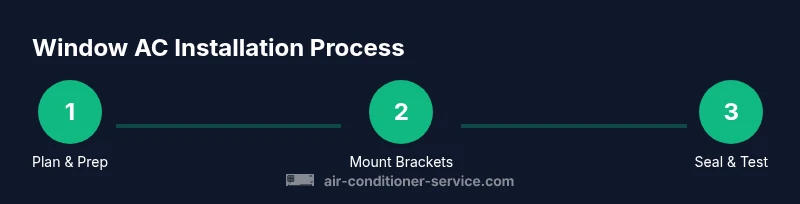
- 1
Verify window compatibility and plan
Measure the window opening and compare with the unit and mounting kit dimensions. Confirm the sash can support the weight and that the window type is compatible with the mounting hardware. This planning reduces later rework and ensures a secure fit.
Tip: Double-check kit compatibility in the unit’s manual before you begin. - 2
Install mounting brackets and hardware
Attach the mounting brackets to the window frame per the kit instructions, using the correct screws. Ensure brackets are level and securely anchored to support the unit’s weight. Misaligned brackets cause a crooked install and leaks.
Tip: Use a level during bracket installation to avoid tilt. - 3
Position the unit in the window
With a helper, lift the AC unit into the window opening and rest it on the brackets. Center the unit so the front is evenly extended. Check that the unit is not forcing the sash or causing the window to bind.
Tip: Keep your back straight and use proper lifting technique; do not lift alone if heavy. - 4
Secure the sash and seal sides
Lower the sash to hold the unit in place. Apply foam insulation along the sides and top to seal gaps. Use weather-stripping or foam to prevent drafts and moisture intrusion.
Tip: Do not over-compress foam; it should fill gaps without bowing the sash. - 5
Make electrical connections and test
Plug the unit into a properly rated outlet or connect to a dedicated circuit if required. Switch on the unit and verify cooling. If you notice tripping breakers or burning smells, power off and reassess the wiring.
Tip: If your unit requires hard-wiring, consult a licensed electrician. - 6
Check sealing and perform final test
Run the fan and cooling mode, listen for air leaks around the sash, and ensure the unit drains properly. Adjust insulation as needed for optimal sealing and comfort.
Tip: Run a quick leak test by feeling for drafts around the sides after sealing.
Common Questions
What size window AC do I need for my room?
Sizing depends on room size and climate. Use the unit’s manual or a reputable sizing guide, and consider consulting a professional if you’re unsure.
Size depends on the room; follow the manual or consult an HVAC pro.
Is it safe to install a window AC by myself?
Yes, when you follow the instructions, unplug power, and use proper safety gear. If the unit is very heavy or your window is unstable, seek help.
It can be safe with care and following the manual; get help if heavy or unstable.
Do I need a mounting kit?
Most units include a mounting kit; use the kit designed for your model to ensure a secure fit.
Yes, use the kit intended for your model to ensure proper mounting.
Can I install a window AC in a rental?
Check with your landlord and follow building rules. Avoid permanent modifications unless allowed.
Check with the landlord and follow building rules.
What maintenance is needed after installation?
Regularly clean or replace the filter, inspect seals, and keep the area around the unit clear.
Clean the filter, check seals, and keep the area clear.
Why is sealing around the unit important?
Sealing reduces drafts and energy loss, improving comfort and efficiency.
Sealing prevents drafts and helps your AC work efficiently.
Watch Video
The Essentials
- Choose the right unit and mounting kit for your window.
- Mount securely and level to prevent leaks and vibration.
- Seal gaps with foam insulation for efficiency.
- Test the unit safely and verify proper operation.
- For renters, obtain landlord approval prior to installation.