How to Get Air Conditioner: A Practical Guide for Homeowners
Discover how to get air conditioner that fits your space, budget, and energy goals. This step-by-step guide covers selecting the right type, sizing, installation options, and maintenance to keep you cool efficiently.


By following this guide, you’ll learn how to get air conditioner that perfectly fits your space, budget, and energy goals. You’ll identify the right type (window, portable, or split), size the unit for your room without over or under cooling, compare features, and decide between DIY installation or hiring a pro. Before you start, measure the space, verify electrical capacity, and check local codes for safe, efficient cooling.
Why getting the right air conditioner matters
According to Air Conditioner Service, choosing the wrong cooling solution can waste energy, reduce comfort, and lead to higher repair costs down the line. The right air conditioner balances room size, climate, and occupancy to deliver consistent comfort without excessive energy use. When you pick a unit that aligns with your needs, you’ll notice steadier temperatures, less humidity, and longer appliance life. The Air Conditioner Service team found that homes with correctly sized and installed units experience fewer temperature swings and lower monthly electricity bills. This section explains why precision matters and how to avoid common sizing mistakes that lead to overcooling or undercooling.
Key idea: every space has a sweet spot for cooling that depends on insulation, sun exposure, and daily use. Skipping sizing checks often means chasing comfort with higher energy costs.
How to choose the right type for your space
There are three mainstream paths to cooling a home: window units, portable ACs, and split-system configurations. Window units are usually the most affordable and easiest to install, making them popular for small rooms or rentals. Portable models offer flexibility if you move often or lack a dedicated installation space. Split systems provide quiet operation and higher efficiency for larger areas but require professional mounting and electrical work. When selecting, consider window access, wall space, existing wiring, noise tolerance, and whether you want a permanent or temporary solution. The goal is to match the unit to how you live in the space, not just how it cools.
Practical tip: measure both the room’s footprint and the window or wall space where the unit will go, and check if the outlet is rated for continuous use. Air Conditioner Service highlights that professional guidance is especially valuable for multi-room layouts or homes with unusual window configurations.
Sizing and load calculation basics
Sizing is more than choosing a number from a chart; it’s about understanding how your space gains and loses heat. General rules of thumb emphasize room size, ceiling height, orientation to sun, insulation quality, and occupant load. Rather than fixing on a single BTU value, use a space-to-cooling approach: evaluate the volume you want cooled and the expected heat load from sun, appliances, and people. This approach prevents oversized units that short-cycle and undersized units that never reach comfort. For most homes, aim for a balance between efficiency and effective cooling, and consult a guide or professional to translate room metrics into a practical specification. The Air Conditioner Service team stresses that professional sizing can lead to meaningful energy savings and improved comfort over time.
What to do next: document room dimensions, note sun exposure throughout the day, and list any heat-producing appliances in the space. This data informs the best type and capacity choice without relying solely on generic charts.
Installation options: DIY vs professional help
You can choose a DIY installation for simple window or portable units, or hire a licensed technician for more complex setups such as multi-room or split systems. DIY installation can save money upfront, but it requires careful attention to mounting stability, electrical safety, proper drainage, and seal integrity. Hiring a pro minimizes risk, ensures code compliance, and often yields better long-term performance through correct refrigerant handling, electrical connections, and system charging. If your home has existing wiring that isn’t up to par, or if you’re considering a central or multi-zone approach, a professional assessment is especially valuable. The decision should factor in your comfort level, local codes, and potential warranty implications.
Best practice: start with an on-site assessment from a qualified technician to verify space suitability, then decide if a DIY or professional path best serves your goals. Air Conditioner Service recommends professional installation for most non-trivial setups to maximize efficiency and safety.
Energy efficiency and long-term savings
Energy efficiency is not just about the upfront cost; it’s about the lifetime cost of ownership. Look for units with clear energy labels and features that reduce running time, such as smart thermostats, programmable schedules, and efficient compressor technology. While a more capable unit may cost more initially, it often pays for itself through lower energy bills and better cooling consistency. In addition, choosing energy-efficient models can improve indoor air quality by maintaining more stable temperatures and humidity. Air Conditioner Service notes that higher-efficiency models tend to deliver better performance in diverse climates and long-term reliability, making them a smart investment for many homes.
Maintenance and safety after installation
Once your unit is installed, ongoing maintenance is essential to sustain efficiency and safety. Regular filter cleaning or replacement, checking the condensate drain, and keeping the surrounding area free of obstructions helps units run cooler and quieter. Inspect exterior housings for cracks or openings that could allow moisture or dust ingress, and keep electrical outlets and cords in good condition. Schedule seasonal checkups with a qualified technician to verify refrigerant levels, seals, and airflow. The goal is to prevent common failure points before they impact comfort or safety. Air Conditioner Service emphasizes that routine maintenance can extend the life of your unit and maintain peak efficiency.
Quick safety checklist before turning on your new AC
- Inspect all mounting hardware or casings to ensure solid installation.
- Verify electrical connections are secure and that the circuit can handle the load.
- Confirm proper drainage to avoid standing water around the unit.
- Clean or replace filters before first operation and on a regular cycle thereafter.
- Test cooling modes on a mild day to ensure smooth operation and noise levels.
When in doubt, consult a licensed technician to perform the initial setup and safety verification. This prevents early issues and protects your investment. The Air Conditioner Service team recommends a professional inspection for complex installs to ensure safety and performance.
Tools & Materials
- Measuring tape(For room dimensions and window sizing)
- Notebook or calculator(For quick calculations and notes)
- Voltage tester(Check circuit capacity and outlet type)
- Screwdriver set (Phillips and flat-head)(Mounting screws and hardware)
- Cordless drill(Create mounting holes and secure screws)
- Level(Ensure unit is level for drainage and efficiency)
- Utility knife(Seal gaps around the unit once installed)
- Foam insulation or weatherstripping(Block drafts and improve seal)
- Safety gloves(Protect hands during handling and installation)
Steps
Estimated time: 2-4 hours
- 1
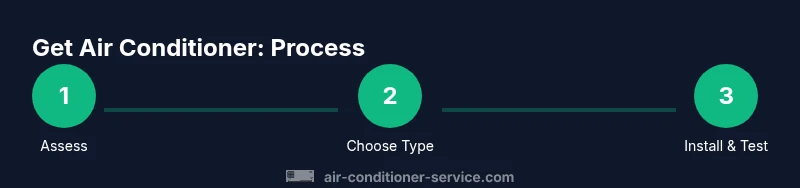
Assess space and cooling needs
Begin by measuring room dimensions and noting sun exposure, occupant load, and major heat sources. This step helps determine the appropriate type and perceived cooling load without relying on guesswork. Document any constraints such as window access or wall obstructions that could affect installation.
Tip: Measure twice, confirm orientation (north/south sun exposure), and write down findings for reference. - 2
Decide on the unit type
Choose among window, portable, or split-system options based on space, permanence, and noise tolerance. Window units are budget-friendly and easy to install; portable units offer flexibility; split systems deliver quiet operation but require professional mounting and refrigerant handling.
Tip: If you rent, check your lease terms; many building codes limit permanent installations. - 3
Check electrical and structural requirements
Confirm the outlet type, amperage, and circuit availability for the unit. Ensure the window or wall space can support mounting hardware and that there is room for proper airflow around the unit.
Tip: Avoid overloading a single circuit; plan for a dedicated outlet if needed. - 4
Estimate capacity and efficiency goals
Use the measurements and heat sources to guide capacity goals and look for energy-efficient features such as programmable schedules and smart thermostats. Avoid over-sizing, which wastes energy and causes short cycling.
Tip: Prioritize models with good seals and a reliable drain system. - 5
Decide on DIY versus professional installation
If you’re comfortable with basic carpentry, electrical checks, and sealing, a simple window unit can be DIY installed. For complex setups (multi-room, central, or refrigerant work), hire a licensed technician to ensure safety and code compliance.
Tip: When in doubt, obtain a written quote and installation plan from a pro. - 6
Prepare the installation site
Clear the area around the installation location, remove obstructions, and ensure a clean, dry surface. For window units, secure the mounting brackets and prepare the window opening for a snug fit.
Tip: Use weatherstripping to seal gaps and prevent drafts. - 7
Install the unit and seal gaps
Mount the unit according to the manufacturer’s instructions, level the unit, and seal any gaps with foam or weatherstripping to prevent air leaks. Connect power and test the unit in all modes.
Tip: Double-check drainage path to avoid water damage. - 8
Test, tune, and schedule maintenance
Run the unit for a complete cycle, check for leaks, noises, or vibration, and set a maintenance schedule for filter cleaning and seasonal checks. Record the model, serial number, and service dates for reference.
Tip: Keep a log for your future warranty claims.
Common Questions
What is the first step to get an air conditioner?
The first step is to assess your space and cooling goals. Measure room dimensions, note sun exposure, and count occupants and heat sources. This data guides the unit type and size and helps you avoid overspending on features you don’t need.
Start with measuring the room and noting heat sources so you can choose the right type and size.
How do I determine the correct size for my room?
Sizing should be based on room volume and heat load rather than a single rule. Consider room dimensions, ceiling height, insulation, and sunlight. A professional can translate these factors into a practical unit capacity, ensuring comfort without wasted energy.
Consider room dimensions and heat sources; a pro can translate that into the right size.
Can I install a window air conditioner myself?
For many standard window units, a confident DIY approach is possible, following the manufacturer’s instructions and safety guidelines. If you’re unsure about structural integrity, electrical safety, or sealing, hire a professional to avoid leaks and improper mounting.
A simple window unit can be DIY, but for safety, consider a pro for more complex installs.
What maintenance does an AC require after installation?
Regular maintenance includes cleaning or replacing filters, clearing the condensate drain, and inspecting seals and ducts. Schedule seasonal checks to ensure refrigerant levels and airflow remain optimal. Proper maintenance extends the unit’s life and keeps energy bills in check.
Clean filters, check drains, and schedule seasonal checks to keep it efficient.
How long does installation typically take?
DIY installation for a single window unit can take a couple of hours, while professional installation for multi-room or split systems may take longer due to wiring, mounting, and system charging. Expect a structured process with a clear plan and safety checks.
Most installs run a couple of hours for a window unit; longer for more complex setups.
Is energy efficiency important when buying air conditioners?
Yes. Energy-efficient models reduce operating time and energy use, especially with smart controls and programmable settings. They may cost more upfront but tend to save money over time and improve overall comfort.
Energy efficiency matters for long-term savings and comfort.
Watch Video
The Essentials
- Define cooling needs before choosing a unit.
- Match type and size to space and use.
- Weigh DIY versus professional installation carefully.
- Prioritize energy-efficient features for long-term savings.
- Establish a maintenance routine to protect performance.