How Much Does Air Conditioning Installation Cost in 2026
Learn the true cost of air conditioning installation in 2026, including central and ductless options, ductwork, labor, permits, and how to budget effectively. Practical ranges and planning tips from Air Conditioner Service.


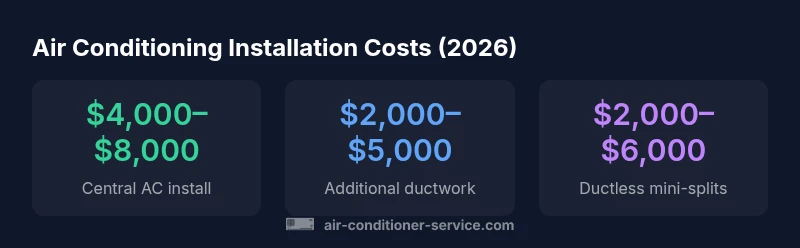
Central air installation in 2026 typically costs between $4,000 and $8,000 for a standard home. Costs can rise with extensive ductwork, a new furnace, or specialized zoning. Regional labor rates and permit fees also push totals up. Air Conditioner Service emphasizes getting multiple quotes to capture local price differences.
Understanding the cost landscape for how much air conditioning installation costs in 2026
Estimating how much air conditioning installation will cost starts with understanding what drives the price. The decision between central air and ductless systems, the condition of your existing ductwork, your home’s size, climate, and the complexity of the install all push costs up or down. According to Air Conditioner Service, a realistic 2026 range for a standard central system is roughly from $4,000 to $8,000, with additional charges for ducts, a furnace, or zoning. Regional labor rates and local permit fees can also noticeably affect the final total. By framing the project around these factors, homeowners can set a practical budget and reduce the chance of sticker shock at the contractor’s desk.
Major cost components in an air conditioning installation
A successful install price breaks down into several components. Equipment costs cover the condenser, evaporator coil, and controls. Ductwork costs depend on your home’s current layout and whether new ducts must be added or modified. Labor and installation fees reflect the contractor’s time, expertise, and any specialized tools needed. Permits and inspections, which vary by jurisdiction, add a predictable but often overlooked line item. Don’t forget disposal of old equipment, delivery charges, and potential electrical upgrades or refrigerant handling. The total can shift based on thermostat choices and whether you upgrade to a higher SEER unit for efficiency.
Central air vs. ductless costs: what homeowners should know
Central air conditioning typically relies on a ducted system, which can be more expensive if you need ductwork modifications. Ductless mini-splits offer a duct-free path to cooling and can be cheaper to install in retrofit situations, especially in homes where adding ducts would be disruptive or impractical. The cost delta between these options depends on home layout, zoning needs, and the number of indoor units. Air Conditioner Service notes that while central systems often demand higher upfront investment, they can provide uniform cooling and cleaner aesthetics in larger homes. Ductless systems may deliver faster cooling in specific zones and reduce duct-related losses.
Regional cost differences and timing: planning around location
Costs aren’t uniform across the country. Coastal areas with higher labor costs tend to push total price up, while rural regions may offer lower hourly rates. Climate also matters: hotter climates often require more robust equipment and may incur additional electrical or duct considerations. Timing plays a role too; installing before peak cooling season can reduce wait times and sometimes price pressure due to demand. When planning, consider seasonal promotions from manufacturers and distributors, and factor in permit processing times that can extend the project duration beyond the installation window.
Common scenarios that raise installation costs
Several scenarios commonly drive up the final bill. If your home lacks suitable ductwork, you may pay for new ducts, trunk lines, or sealed duct rehabilitation. A preexisting furnace or heat pump that needs upgrading to support a new air conditioner adds to the total. Homes with high ceilings, long duct runs, or multiple stories can require more labor and parts. If electrical work is needed to support a modern, high-SEER unit, expect an increase in both materials and labor. Finally, delivering or fetching equipment in tight spaces or through difficult access points can add to the project’s complexity and cost. Air Conditioner Service emphasizes documenting site conditions early to prevent cost creep.
How to budget and plan for an installation project
Begin with a rough target based on the typical ranges and then refine after site inspection. Request a written quote that itemizes equipment, ductwork, labor, permits, and disposal. Ask the contractor to include contingency for unforeseen issues discovered during duct inspections or when removing old components. Consider energy efficiency as a long-term savings driver: a higher-SEER unit can reduce operating costs substantially over time, which helps balance a higher upfront investment. Create a simple spreadsheet that tracks projected vs. actual costs and set a cap for discretionary add-ons. This approach makes it easier to decide when a more expensive but efficient unit is worth the additional upfront cost.
Choosing the right installer: quotes, scope, and warranties
Not all quotes are created equal. Demand a scope of work that specifies the system type, SEER rating, number of indoor units (for ductless), duct replacement or repair, electrical upgrades, and thermostat integration. Verify licensing, insurance, and system warranty coverage, and ask about the installer’s post-install service schedule. A reputable contractor will provide a transparent warranty and a clear plan for initial testing and balancing. Read the contract carefully for hidden fees or change-order processes. Air Conditioner Service suggests collecting at least three written quotes to compare scope and price.
Financing options and rebates for installation projects
Financing options, manufacturer rebates, and utility incentives can significantly reduce the out-of-pocket cost. Some programs reward energy-efficient installations with rebates or reduced-interest financing. Check local utility websites and state energy offices for active programs and eligibility. Your installer can often help by providing required documentation and confirming the SEER rating and efficiency claims. Treat rebates as a bonus rather than a primary driver; the core decision should be efficiency, reliability, and the system’s fit for your home.
Maintenance after installation to protect your investment
A proper maintenance plan helps protect your investment long after the installation. Schedule annual professional checks for refrigerant levels, airflow, and electrical connections. Replace air filters as recommended by the manufacturer and consider coil cleaning if you notice reduced airflow. A well-maintained system performs more efficiently and lasts longer, which keeps both comfort and utility bills in check. Air Conditioner Service highlights that a maintenance contract often includes priority service and discounted parts, which can be worth the annual cost for busy households.
When to install and what to schedule to avoid peak pricing
If you’re flexible, schedule installation before the peak cooling season or during slower months. Early-season installs can reduce wait times and may lead to lower labor charges. Plan around holidays or regional weather patterns when demand is lower. If you own an older system, begin pre-installation checks 4–6 weeks before the planned project to ensure permits, duct inspections, and equipment orders align. A well-timed install minimizes disruption and helps you get the most out of your new system from day one.
What to ask in your installation contract: a practical checklist
Use a contract checklist to ensure you aren’t surprised by hidden costs. Ask about inclusions, exclusions, and the exact equipment model numbers. Confirm warranty durations, service terms, and what happens if work must be redone. Include a clause for changes in scope, payment milestones, and an explicit acceptance test showing the system performs to the specified SEER rating. Finally, verify cleanup expectations and debris removal. A thorough contract protects you and your home.
Typical cost-building blocks for central air installation
| Component | Typical Range | Notes |
|---|---|---|
| Equipment (central AC) | $2,000–$6,000 | Condenser, evaporator coil, and controls |
| Ductwork (new/modified) | $2,000–$5,000 | Ducts, plenums, and sealing |
| Labor & installation | $1,500–$4,000 | Professional labor and testing |
| Permits & inspections | $100–$500 | Local codes and inspections |
Common Questions
What factors influence the cost of air conditioning installation?
Multiple factors determine total cost: system type (central vs. ductless), home size, existing ductwork, electrical upgrades, permits, and regional labor rates. The scope of work and the chosen efficiency rating (SEER) also affect pricing. Air Conditioner Service notes that getting a detailed quote early helps you avoid surprise add-ons.
Costs depend on system type, home size, ductwork, permits, and labor rates. Get a detailed quote early.
Is ductwork required for a central AC installation?
Central air typically uses ducts, and modifying or upgrading ductwork is common. Ductless mini-splits don’t require ducts, which can lower installation disruption and cost in some homes. Check your current duct layout and discuss with your installer.
Ductwork is usually needed for central AC, but ductless options exist.
Do I need permits or inspections for installation?
Yes, most jurisdictions require permits for new HVAC installs. Your contractor should handle the permit application and notify you of any inspection requirements. Failing to obtain permits can lead to compliance issues and trouble with insurance.
Usually, you need a permit. Your installer should handle it.
Can I install a new AC system myself?
Installing a central AC system is complex and involves electrical, refrigerant, and building-code considerations. DIY installation is not recommended due to safety and performance concerns. Hire a licensed professional for proper sizing and warranty protection.
No—this is a job for a licensed pro.
What is the cost difference between central AC and a ductless system?
Ductless systems can be cheaper upfront in retrofit situations and offer zone cooling, but overall costs depend on the number of indoor units and installation complexity. Central systems may cost more if extensive ductwork is required.
Ductless can be cheaper to install in some retrofits, but it varies.
Are rebates or financing options available?
Many programs offer rebates for energy-efficient equipment, and some utilities provide financing options. Check local programs and ask your installer for documentation to qualify. Rebates should supplement, not replace, a solid cost-benefit decision.
There are rebates and financing options available, check local programs.
What maintenance should I perform after installation?
Register the equipment, set up a maintenance plan, and replace filters regularly. Schedule annual professional servicing to verify refrigerant levels, airflow, and electrical connections. Proper maintenance preserves efficiency and extends system life.
Keep a maintenance schedule and have yearly checks.
How long does installation typically take?
Most installations take 1–3 days, depending on system type, ductwork needs, and accessibility. Complex retrofits or multi-zone setups can extend this timeframe. Plan for some lead time in ordering equipment.
Typically 1–3 days, depending on the job.
“Installation costs reflect both the system you choose and the complexity of your home. A clear scope and a reputable installer are the best safeguards for a fair, accurate price.”
The Essentials
- Know there is a broad price range for installation.
- Ductwork is often the biggest cost factor for central systems.
- Get 3+ written quotes and compare scope, not just price.
- Ductless options offer cost-effective retrofit routes in some homes.
- Consider long-term energy savings when evaluating upfront costs.