AC Installation Cost in 2026: A Homeowner's Budget Guide
Explore ac installation cost in 2026 and learn what drives price for central, ductless, or window systems. Air Conditioner Service breaks down labor, ductwork, permits, and regional pricing for budgeting.


AC installation cost varies by system type, home size, and regional labor rates. According to Air Conditioner Service, homeowners should expect a broad price range and plan for add-ons like ductwork, permits, and disposal. This quick answer outlines the main price drivers and how to compare quotes.
What drives AC installation cost
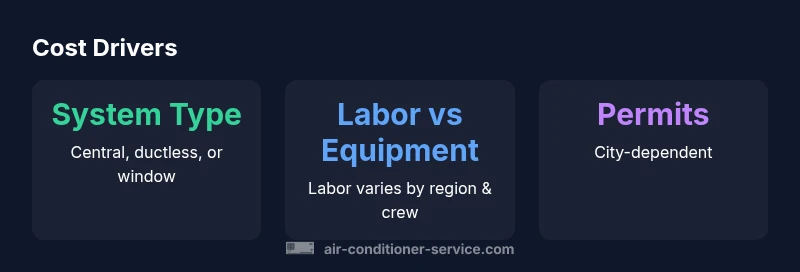
The total price for installing a new air conditioner is influenced by a mix of equipment choices, installation complexity, and local market conditions. The core drivers include system type (central, ductless, or window/portable), cooling capacity, efficiency ratings (SEER), and the home’s existing infrastructure. Labor costs vary by region and contractor, and most projects will require electrical work, refrigerant piping, and possibly electrical panel upgrades. Ductwork condition matters a lot for central systems; homes with existing ducts in good shape typically incur fewer added expenses. Permits, inspections, and disposal of old equipment are additional line items that can vary by city. Understanding these factors helps homeowners form realistic expectations and avoid sticker shock when quotes arrive. According to Air Conditioner Service, price variability is common, but most projects share a predictable pattern: larger or more complex jobs push costs higher, while simpler retrofits stay closer to the lower end. The upfront cheapest option may not deliver the best long-term performance or reliability.
System types and their cost implications
Central air conditioning with ductwork typically requires more labor and materials than a ductless mini-split, which in turn can be more expensive per zone due to multiple indoor units. Window units or portable systems, when repurposed for whole-home cooling, can be less expensive to install but rarely deliver the same efficiency or comfort as a properly designed central or ductless system. In practice, homeowners pay for equipment quality, installation precision, and efficiency. A higher SEER rating usually commands a higher upfront price but can reduce operating costs over time. The balance between initial cost and long-term savings is a core consideration in any ac installation cost discussion. The Air Conditioner Service team notes that choosing the right configuration for your home matters as much as the label on the compressor.
Home factors that influence the price
Home characteristics such as floor plan, ceiling height, and whether you have existing ducts influence price more than you might expect. A larger home or one with multiple rooms may require more equipment or multiple zones. Duct condition matters; leaky or poorly sealed ducts waste energy and can necessitate sealing or repairs during installation. The electrical system must support the new load, which can trigger panel upgrades or new circuit breakers. The climate and orientation of your home influence equipment size; under-sizing leads to inefficiency while over-sizing raises cost without improving comfort. A precise load calculation, performed by a qualified technician, helps prevent mis-sizing and ensures you get value for money.
Hidden costs and add-ons to budget
Expect add-ons that can surprise unprepared homeowners: new thermostats or zoning controls, improvements to ductwork, air sealing, or ceiling insulation, and disposal of old equipment. Permits and inspections vary by city and can add time and administrative costs. In some cases, electrical work or a small sub-panel upgrade is needed to accommodate a larger air handler or condenser. Refrigerant line sets, vibration isolation pads, and outdoor condenser pads are standard but not always included in the base price. Budget for potential ongoing maintenance, such as filter replacements and system checks that extend the life of the installation.
How to estimate costs and compare quotes
Start with a professional load calculation to determine the correct system size for your home. Request itemized quotes from multiple contractors, and compare each line item: equipment, labor, ductwork, permits, electrical work, and disposal. Ask about included warranties, the timeline for commissioning, and whether the price covers start-up tune-ups or free follow-up visits. Get a written contract that specifies equipment models and SEER ratings, and verify if future servicing is included. Whenever possible, obtain quotes in off-peak seasons to reduce scheduling pressure. The goal is transparency and a clear understanding of what’s included in the ac installation cost.
Financing, timing, and long-term value
Many contractors offer financing options or payment plans to spread the upfront cost. Check for utility or government rebates and any local incentives that reduce the overall price; eligibility varies by location. Scheduling the installation during slower months can reduce costs and minimize disruption. Think about the long-term value: a well-installed, efficient system can lower energy bills and improve comfort. Pair the installation with an annual maintenance plan to preserve performance and prevent surprises in future seasons. This approach helps you optimize total cost of ownership over the system’s life.
Practical checklist before you hire
Before you request quotes, prepare a practical checklist: confirm space for outdoor condenser, measure doorways and hallways for equipment clearance, inspect existing ductwork, and note any electrical upgrades that might be needed. Gather current utility bills to estimate potential energy savings and set energy goals. Define your preferred system type (central, ductless, or window) and desired efficiency. Ask your contractor about load calculation methods, warranty terms, and service expectations. Finally, request itemized proposals and check references to ensure you’re selecting a trusted installer.
Cost drivers and considerations
| Aspect | Typical Range | Notes |
|---|---|---|
| System Type | Central or ductless vs window | Range depends on home layout and setup |
| Home Size/Load | Variable by home | Requires professional load calculation |
| Ductwork Condition | May require upgrades | Adds cost if ducts are poor or leaky |
| Permits & Scheduling | City-dependent, often modest | Affects timeline and paperwork |
Common Questions
What costs are included in ac installation cost?
A typical installation includes the condenser and evaporator, refrigerant lines, wiring, mounting hardware, and labor. Depending on the setup, it may also cover ductwork repairs, thermostat upgrades, and disposal of old equipment. Always request an itemized quote to see exactly what’s included.
Expect equipment, labor, and sometimes ductwork and disposal to be listed item-by-item. Ask for a breakdown to avoid surprises.
Do I need permits for ac installation?
Permits are often required for electrical work and sometimes for the outdoor unit installation. Check with your local building department and let the installer handle permit issuance when possible.
Permits depend on your city; your contractor should confirm and secure them if needed.
How can I reduce ac installation costs?
Capture quotes from multiple contractors, compare identical equipment models, and consider mid-range efficiency if high-efficiency options don’t fit your budget. Improving duct sealing and insulation can reduce system size requirements and operating costs over time.
Shop around, compare apples-to-apples quotes, and optimize ductwork and insulation for savings.
What about financing options for installation?
Many contractors offer financing or payment plans. Check for regional rebates or utility incentives that can offset upfront costs. Read terms carefully before committing.
Financing is common; look for 0% offers or favorable terms where available.
How long does installation take?
Installation typically spans a few hours to a day or two, depending on the system type and home layout. Complex retrofits or ductwork work can extend the timeline.
Most installs wrap in a day or two, depending on complexity.
Will a bigger system cost more?
Oversizing can increase material and labor costs and may harm efficiency. A correctly sized system based on a professional load calculation delivers better comfort and long-term value.
Size matters; bigger isn’t always better. Get a proper load calculation.
“Understanding AC installation cost means evaluating system size, efficiency, and local labor norms; a precise load calculation pays for itself in comfort and efficiency.”
The Essentials
- Analyze your system type before pricing
- Get multiple itemized quotes to compare costs
- Consider ductwork and electrical upgrades upfront
- Expect permits and disposal to add to the total
- Ask about warranties and maintenance to protect long-term value