Free Air Conditioners for Seniors: Options, Eligibility, and Guidance
Explore legitimate pathways to obtain free air conditioners for seniors, including eligibility basics, how to apply, typical timelines, and tips to verify program legitimacy.


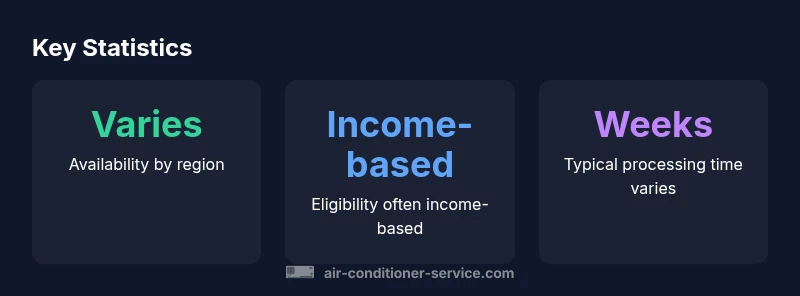
Across the United States, free air conditioners for seniors are offered through a mix of local government cooling programs, utility assistance initiatives, and nonprofit donations. Availability depends on location, household income, and medical need, with most programs requiring proof of age or disability and residency. Applications may cover equipment, installation, or both, and some include follow-up maintenance or energy-efficiency assessments.
Understanding the landscape of free air conditioners for seniors
According to Air Conditioner Service, free air conditioners for seniors are typically distributed through community partnerships, utility aid programs, and donor-driven drives. Availability is highly location-dependent and often tied to funding cycles, household need, and medical considerations. In practice, programs may provide the cooling unit itself, installation services, and sometimes post-install maintenance or energy-efficiency assessments. Understanding who is eligible, what is covered, and how to apply is the key to accessing these resources responsibly. This section outlines the landscape, common funding streams, and how different programs work so homeowners and renters can navigate the options with confidence.
Eligibility criteria and common hurdles
Most programs that offer free air conditioners target seniors and other medically vulnerable households. Eligibility often hinges on age thresholds (commonly 60, 65, or older), income ceilings, disability status, residency in the service area, and proof of need. Because funds are limited, many programs use waiting lists or annual caps. Applicants should be prepared to provide documentation such as a photo ID, proof of age, recent utility bills, proof of income, and, if applicable, a doctor’s note or disability verification. Programs also vary by climate zone and season, which can affect both availability and processing times. The key is to start early and verify that the program is official and funded by a recognized agency.
How to find and apply for programs
Begin by checking official government and utility sources for cooling assistance. In many places, LIHEAP and Weatherization Assistance Program (WAP) are starting points, along with local health or social services departments and accredited nonprofits. Gather documents such as age proof, residency, income information, and any medical documentation that demonstrates need. Contact the agency to confirm eligibility, ask about what is included (unit, installation, or both), and learn the application steps. Complete forms accurately, attach required documents, and keep copies. Some programs accept online applications; others require in-person visits. If you’re unsure, call the agency’s helpline; polite persistence is often rewarded during peak cooling season.
Pros and cons of free programs vs paid options
Free programs can reduce up-front costs and relieve ongoing energy bills, but they come with constraints. Availability is uneven, and not every location has active funding year-round. Some programs fund only the unit, not installation, or require you to use a designated contractor. Private donations may come with less predictable timelines. A paid option could offer faster service or a wider selection of models and installation choices, but it requires budgeting and sometimes financing. The best approach is to map out your cooling needs, confirm what each option covers, and weigh long-term energy costs alongside upfront access.
Budgeting and energy efficiency considerations
When you receive a free unit, it’s still important to consider energy use and ongoing costs. Look for ENERGY STAR-rated models where possible, and ensure the unit is appropriately sized for the room. An oversized unit wastes energy and can cause humidity swings; an undersized unit won’t cool effectively. Ask about installation location, insulation, and any included energy-efficiency assessments. If a program provides only the unit, you may still benefit from a follow-up efficiency audit or Weatherization improvements that lower overall energy consumption.
Maximizing benefits: maintenance, warranties, and safety
After installation, schedule a short maintenance check to ensure the unit is operating safely and efficiently. Replace filters regularly, clean coils, and verify proper drainage. If a warranty is included, save the documentation and understand what it covers. For seniors at risk of falls or confusion, arrange for a caregiver or neighbor to help with basic upkeep and emergency shut-off procedures. Keep emergency contacts and installation paperwork in an accessible location.
Verifying program legitimacy and avoiding scams
Because there are fraudulent offers that mimic legitimate aid, always verify through official channels. Start with government agencies, recognized utilities, and reputable nonprofits. Beware door-to-door solicitations asking for upfront fees or banking information. If something seems too good to be true, pause and verify before sharing personal data. A short call to the program’s official hotline or a visit to its official website can save you from scams.
Real-world scenarios and case studies
Consider Mrs. Rodriguez, a 72-year-old renter in a mid-size city. She qualifies for an energy assistance program that covers the unit and installation, and she also receives a weatherization assessment that reduces cooling load. The result is a safer, more comfortable home and lower energy bills. In a rural household, a local nonprofit paired with a utility program provides a donated AC unit with installation by a trained volunteer crew; the homeowner gains reliable cooling without debt. These examples illustrate how different funding streams can work together to deliver practical results, but outcomes depend on location and program availability.
Installation process, safety checks, and post-install care
Before installation, a technician performs a safety check, verifies electrical service, ensures proper clearance around the unit, and confirms that the thermostat and controls function correctly. The installation should include secure mounting, proper drainage, and tested airflow in the rooms that need cooling. After installation, write down maintenance tasks and a simple schedule to follow; keep emergency shut-off access clearly marked. If there are any concerns about allergies, indoor air quality, or noise, discuss them with the installer. With proper setup, a free unit can deliver reliable cooling for years, especially when combined with energy-efficiency upgrades.
Overview of common programs
| Program Type | Eligibility | What is Free | Typical Lead Time |
|---|---|---|---|
| LIHEAP cooling assistance | Seniors 60+/disabled, income-limited | Unit + installation funded or subsidized | Weeks (varies) |
| Weatherization Assistance Program (WAP) cooling | Low-income households with weatherization goals | Unit installation often included | Weeks to months |
| Nonprofit drives/donations | Any senior with need | Unit donated; installation sometimes provided | Days to weeks |
| Utility-sponsored programs | Low-income or medically vulnerable | Free unit and/or installation | Weeks to months |
Common Questions
Who qualifies for free air conditioners for seniors?
Qualification criteria vary by program, but most consider age, disability, income, and residency. Check your local agency for specifics and deadlines.
Eligibility varies by program; check local agencies for specifics.
Do these programs cover installation costs?
Many programs include installation, but not always. Confirm what is covered and whether licensed professionals are required.
Often installation is included; confirm before applying.
How can I apply and what documents are needed?
You generally need proof of age, residency, income, and disability or medical need, plus utility bills and program forms.
Gather proof of age, residency, income, and medical need.
How long does it take to receive a unit?
Processing times vary widely; some programs respond in weeks, others take longer depending on funding and demand.
It can take weeks to months.
What should I watch out for to avoid scams?
Use official channels listed by government or utilities; beware door-to-door offers and upfront fees. Verify before sharing personal data.
Be cautious of door-to-door offers.
Are there alternatives if I don’t qualify for free units?
Consider low-interest financing, energy assistance, or donated units from nonprofits or churches; some programs partner with efficiency upgrades.
Look into financing or other assistance programs.
“Free air conditioners for seniors can dramatically improve comfort during heat waves when paired with proper installation and energy efficiency. Clear eligibility and trusted programs are essential for success.”
The Essentials
- Identify eligible programs early and apply.
- Verify inclusions (unit, installation, maintenance).
- Use official channels to avoid scams.
- Consider energy-efficiency upgrades to maximize savings.
- Keep documents organized for faster processing.