How to Get an Air Conditioner for Free: A Practical Guide
Learn legitimate, practical ways to obtain an air conditioner at no cost, including rebates, energy assistance, and charitable programs. This step-by-step guide covers eligibility, required documents, timelines, safety, and how to avoid scams.


Discover practical, legitimate ways to get an air conditioner for free by exploring rebates, energy assistance programs, charity drives, donations, and manufacturer promotions. This guide walks you through eligibility checks, required documents, timelines, and a step-by-step plan to maximize your chances—while staying safe, avoiding scams, and ensuring proper installation. We'll cover homeowner vs renter eligibility, installation readiness, and expected wait times.
How to get an air conditioner for free
According to Air Conditioner Service, obtaining a free air conditioner is not about chasing myths; it’s about navigating legitimate programs, charitable opportunities, and manufacturer promotions. This section clarifies what options exist and how to approach them ethically and safely. You’ll learn how programs typically work, eligibility basics, and practical steps you can take today to start the process. Air Conditioner Service analysis shows that results vary by location and program year, so it’s important to check your local options regularly. By the end of this section, you’ll have a clear map of where to look and how to apply with confidence.
Legitimate avenues to pursue
There are several legitimate routes that can lead to a free or reduced-cost AC, depending on where you live and your household situation. Below are common options along with practical tips for pursuing each one:
- Government energy assistance programs (e.g., LIHEAP-like services) that help with high cooling costs for low-income households.
- Local charities and nonprofits that run appliance drives or donation programs.
- Manufacturer promotions or retailer-sponsored offers that include free units with installation or bundled energy-efficiency packages.
- Community donations or exchange programs (e.g., hardware drives, volunteer-based projects).
- Trade-in or salvage programs where a unit is donated or subsidized as part of a larger appliance recycling effort.
Note: Availability and eligibility vary by region. Start with your city or county housing or energy office and ask about current offers and timelines.
How to apply and document readiness
Before applying, gather and organize the documents most programs require. Common items include proof of identity, proof of residency, proof of income (if means-tested), and utility bills. Create a simple file with digital copies and keep a printed folder handy. The goal is to show you meet criteria, deadlines, and documentation is complete. Air Conditioner Service emphasizes keeping copies of all submissions and confirming receipt with the program administrator. If you’re unsure about a document, contact the agency to confirm acceptable formats and expiration dates.
Safety, installation, and responsibilities
Even when a unit is provided at no cost, installation should be handled by a licensed HVAC professional to ensure safety, building code compliance, and warranty coverage. Ask the provider whether installation is included and who handles permits if needed. If you’re a renter, obtain written authorization from your landlord and verify access for a technician. Air Conditioner Service’s guidance underscores the importance of professional installation to prevent electrical hazards and ensure proper airflow and efficiency.
Red flags and scam avoidance
Be cautious of offers that require upfront payments, request sensitive information beyond typical application data, or promise miracles outside official channels. Never provide your Social Security number or bank details to unknown third parties. Always verify through official program pages or known nonprofit partners. If something sounds too good to be true, pause and verify before sharing personal information. The best defense is to stick to recognized agencies, utility programs, and reputable charities.
Pre-install readiness checklist for renters and homeowners
Before a unit can be installed or donated, use this quick checklist to save time:
- Confirm eligibility with the program administrator.
- Gather required documents and keep digital copies accessible.
- Secure landlord or property owner approval if you rent.
- Arrange a suitable space for installation and accessibility for technicians.
- Schedule a pre-install assessment if required (some programs include a site visit to confirm suitability).
Tools & Materials
- Personal identification documents(Photo ID or passport; ensure your name matches your utility accounts.)
- Proof of residency(Utility bill or lease agreement showing current address.)
- Proof of income or household size(Recent pay stubs, SNAP/food assistance documentation, or tax returns as applicable.)
- Contact information for program providers(Phone numbers and emails for agencies or nonprofits you plan to contact.)
- Utility or energy bill(Recent bill showing energy usage and account number.)
- Submission templates or digital copies(Printable or digital submission forms, if provided by the program.)
Steps
Estimated time: 2-6 weeks (varies by program, region, and document turnaround)
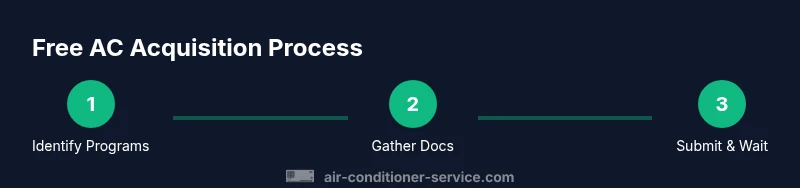
- 1
Identify legitimate avenues
Research local government programs, nonprofits, and manufacturer promotions that offer free or subsidized AC units. Note eligibility criteria, deadlines, and required documents for each option.
Tip: Start with your state or city energy office website and ask a local housing agency about current offers. - 2
Assemble required documentation
Collect identity, residency, income, and utility documents. Create a single, organized folder (digital plus printed) to simplify submissions and avoid missing items.
Tip: Scan or photograph documents for quick uploads and keep originals in a safe place. - 3
Submit applications and track status
Submit applications through official portals or partner nonprofits. Keep a log of submission dates, reference numbers, and any follow-up tasks.
Tip: Set reminders to check status weekly and respond promptly to any requests for additional information. - 4
Coordinate installation-readiness
If approved, confirm whether installation is included. If not, arrange a licensed HVAC professional and ensure access for the technician.
Tip: Inspect the installation window for permits or code requirements and coordinate with the landlord if you rent. - 5
Evaluate alternatives and plan ahead
If you don’t qualify for a free unit, pursue discounted options, like energy-efficiency rebates or donated second-hand units, and plan for future affordable upgrades.
Tip: Ask about minimum efficiency requirements so you don’t buy or accept a unit that won’t meet long-term needs. - 6
Document outcomes
Keep copies of approval notices, installation receipts, and any warranties or service records. This protects you and helps with future heating/cooling needs.
Tip: Store digital backups in a cloud folder labeled by program name for easy retrieval.
Common Questions
Can I really get an air conditioner for free?
Yes, through legitimate rebates, energy assistance programs, charitable donations, and occasionally manufacturer promotions. Availability varies by location and program year. Always use official channels to verify eligibility before applying.
Yes. Legitimate rebates, energy programs, and charitable donations can provide a free or subsidized unit, but verify eligibility on official sites first.
What programs typically offer free or discounted ACs?
Programs include energy assistance initiatives at the state or local level, nonprofit appliance drives, and sometimes manufacturer promotions tied to energy-efficiency incentives. Check your energy office and DSIRE for current listings applicable to your area.
Typical options include energy assistance and nonprofit drives; check official energy programs and DSIRE for current listings.
What documents are usually required?
Common requirements are proof of identity, proof of residence, income documentation if needed, and recent utility bills. Having scans of these ready speeds up the process.
You'll typically need ID, residency proof, income details if required, and a recent utility bill.
How long does the process take?
Processing times vary. Some programs respond within a few weeks, while others may take longer due to demand or regional differences. Staying proactive with follow-ups helps.
Times vary; you may wait weeks to months depending on the program and region.
Are there risks of scams I should avoid?
Yes. Be cautious of offers that require upfront fees or sensitive data outside official channels. Use only official program websites or trusted nonprofit partners, and verify contact information before sharing details.
Yes—avoid offers asking for up-front payments or data on unofficial sites. Stick to official sources.
Watch Video
The Essentials
- Pursue legitimate programs, not scams.
- Prepare and organize documents early.
- Coordinate installation with licensed professionals.
- Verify eligibility and timelines before submitting.
- Keep thorough records of all communications and approvals.