Portable vs Window AC: Which Is Better for Your Home in 2026
Compare portable air conditioners and window units to decide which is better for your space. Practical guidance on cooling power, efficiency, installation, and cost from Air Conditioner Service.


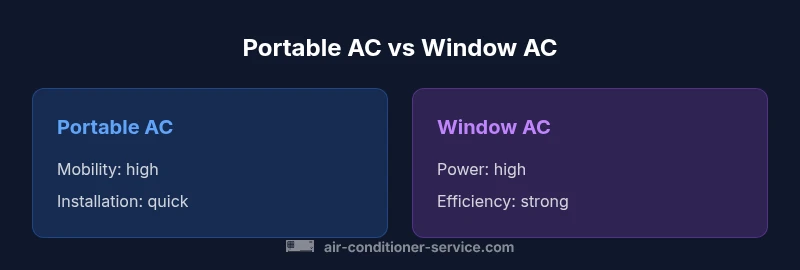
When weighing which is better portable aircon or window type, the window unit generally wins on cooling power and efficiency for a fixed space, while portable models win on mobility and installation flexibility. For renters or temporary needs, portable units are convenient; for long-term comfort and heavy use in a static room, a window unit typically provides better value.
What defines 'better' in this head-to-head
Choosing between portable aircon and window type hinges on what you value most in cooling, comfort, and convenience. For many homes, the defining question is whether you need fixed-room performance or flexible space cooling. According to Air Conditioner Service, the most meaningful comparisons start with space layout, usage pattern, and budget. If you live in a rental or frequently rearrange furniture, portability and non-permanent installation are decisive advantages. If you own a home with a single main living area and want reliable annual cooling with long-term energy efficiency, a window unit often provides stronger performance per watt.
Beyond raw cooling, consider how the unit integrates with your space: window units sit in the window opening, leaving floor space largely undisturbed but requiring a window with a suitable opening; portable units stand freely but may block light or require venting through a nearby window. Safety considerations matter, too: ensure the exhaust hose is properly vented and that cord management keeps walkways clear. In the end, the 'better' choice is the one that minimizes comfort gaps between what you want to feel and what you can realistically install and operate every day.
Performance and cooling capacity
Cooling capacity is the most tangible difference between portable and window ACs. Window units typically offer higher peak cooling in standard sizes and can maintain lower indoor temperatures more consistently in warm weather. Portable units usually deliver adequate relief in smaller rooms or in spaces where a window unit would be impractical due to architecture or occupancy.
When you compare options, look at the unit’s rated BTU (for performance) and its actual room size suitability. For example, a window AC rated for a given room size often delivers better temperature stability because the condenser is built into the structure, reducing heat transfer into the room when the fan cycles. Portable models rely on a single cabinet with intake and exhaust ducts; their effectiveness can be diminished by heat exchange and the need to vent to a window. The practical takeaway: for larger rooms, or spaces with heat-generating equipment, a window unit tends to deliver more consistent comfort.
Energy efficiency and long-term costs
Energy efficiency matters because it translates directly into monthly operating costs and long-term energy consumption. Window air conditioners often achieve higher efficiency per BTU than portable units because of a tighter seal around the installation and more efficient condensers integrated into the window frame. However, real-world energy use depends on how well you insulate the space, how often you open doors, and how often you run the unit.
Air Conditioner Service analysis shows that in typical home use, window units may deliver lower energy consumption for the same cooling outcome in a configured space. Portable units, while usually less efficient per BTU, can be cost-effective in situations where you only need to cool a small area intermittently. Consider using energy-saving features such as programmable timers, eco modes, and proper maintenance to maximize efficiency in either category. In all cases, compare energy usage in practical, real-world scenarios rather than relying solely on nameplate ratings.
Installation, space, and practicality
Installation ease is a major differentiator. Window ACs require mounting in a window frame and may need professional help if you lack the proper tools or a compatible window. The process creates a temporary obstruction and can affect natural light, but once installed, the unit remains out of the way and offers strong performance.
Portable ACs are designed for quick setup: place the unit on the floor, attach the included exhaust hose to a window or doorway, and plug in. This makes portable models a favorite for renters or situations where a permanent installation isn't allowed. However, venting through a nearby window can be awkward in some layouts, and you may need to reposition the unit when you re-arrange furniture. The practical takeaway is to weigh the cost and disruption of installation against the value of mobility.
Noise, vibration, and comfort
Noise and vibration often influence comfort more than raw cooling numbers. Window units tend to have firmer chassis and better sound isolation when mounted properly, resulting in quieter operation in many cases. Portable units can be louder because the compressor is in the same footprint as the living space and may transmit more vibration through the floor or walls.
Comfort goes beyond decibels: airflow direction, room sealing, and ducting affect perceived cooling. A well-placed window unit can push cool air deeper into a room, while a portable unit may create uneven cooling if the exhaust hose length restricts airflow. If quiet operation is important, test before committing, or choose a model specifically designed for lower noise output in your room size.
Durability, maintenance, and serviceability
Durability matters for the long haul. Window units, often built into the home, may offer slightly longer lifespans with more robust housings and simpler repair paths when something goes wrong, though servicing them can require tools and sometimes professional help. Portable units are easier to service because you can access filters and fans without removing the unit from a window, but the flexible venting hoses can wear over time.
Maintenance for both is straightforward: clean or replace the filter regularly, check for leaks around seals, and clear the exhaust path. For renters, maintenance may be more challenging if you relocate the unit frequently. For homeowners, scheduling periodic checks with a local technician can keep either type operating efficiently.
Size, aesthetics, and flexibility
Size and aesthetics influence how well a cooling solution integrates with your space. Window units occupy a portion of the window and reduce daylight in a small way; their presence is sometimes noticeable but generally accepted as part of the room's look. Portable units take up floor space and can be visually intrusive in small rooms, but they blend with various interiors because they can be placed in corners or moved to different rooms.
Flexibility is a major differentiator: portable units adapt to changing room sizes, seasonal needs, or temporary living arrangements. If you frequently rearrange your layout or move houses, this flexibility matters more than the frugal trade-offs in efficiency or noise.
Price considerations and total ownership
Initial price is not the only factor; total cost of ownership matters. Window units often command higher upfront installation considerations but can deliver better long-term efficiency, reducing ongoing energy costs and maintenance complexity. Portable units typically cost less upfront and offer the benefit of mobility, which can be appealing for renters or households that need cooling in multiple spaces over the year.
Consider long-term maintenance costs, filter replacements, and potential window hardware wear. When budgeting, weigh not just the sticker price but the expected lifespan, energy costs, and the value of mobility or permanence in your lifestyle. The best choice balances upfront affordability with predictable running costs over several cooling seasons.
Decision framework and quick checklists
Use this framework to decide which is better for you.
- Step 1: Define space and usage. Is this for a fixed room or multiple rooms?
- Step 2: Assess window availability and housing rules. Can you install a window unit safely, or do you need a vented solution?
- Step 3: Prioritize energy and noise preferences. Do you value low operating costs or quiet operation?
- Step 4: Consider mobility and flexibility. Will you relocate soon or reconfigure the space?
- Step 5: Check the total cost of ownership, including maintenance and replacement costs.
Checklist:
- Identify room size and climate expectations
- Verify window dimensions and venting options
- List desired features: timer, eco mode, washable filter
- Evaluate long-term needs versus temporary cooling
- Confirm budget constraints and expected lifespan
Comparison
| Feature | Portable AC | Window AC |
|---|---|---|
| Cooling capacity and performance | Lower peak cooling; best in small to mid-size rooms | Higher peak cooling; better for larger rooms |
| Energy efficiency | Often lower efficiency per BTU | Typically higher efficiency per BTU in fixed installations |
| Installation | Plug-in, portable venting through window or vented doorway | Window mounting in a dedicated window frame |
| Mobility | Full mobility; move between rooms as needed | Fixed in place; limited relocation |
| Noise and comfort | Can be louder; vibration potential in smaller spaces | Typically quieter with better insulation when mounted |
| Maintenance | Access to filters is straightforward; venting hose wear can be a factor | Filters accessible; less venting hardware to manage |
| Best use case | Renters, temporary cooling, multi-room flexibility | Fixed spaces, long-term cooling, higher energy efficiency |
Strengths
- Portable AC provides mobility and easy setup for renters
- No permanent installation required for portable units
- Window ACs often deliver higher efficiency per BTU and stronger cooling
The Bad
- Portable units can be louder and less efficient per BTU
- Window units require window space and proper mounting
- Both options increase electricity use; neither is ideal for whole-house cooling
Window type wins for fixed-space cooling; portable wins for flexibility and temporary cooling
Choose window when you need steady, strong cooling in a single room. Choose portable if you rent, move often, or need cooling in multiple spaces without permanent installation.
Common Questions
Which is easier to install, portable or window AC?
Portable air conditioners are generally easier to install since they require only venting through a window and a standard outlet. Window units need a window frame and more permanent mounting. Your home's layout and rental rules will influence which option is more practical.
Portable ACs are easier to install in most spaces, especially in rentals. Window units require mounting in a window, which can be more disruptive.
Can I cool a large room effectively with a portable AC?
Portable units work well for small to mid-size spaces but may struggle in very large rooms. For larger areas, a window unit with higher cooling capacity is typically more effective and energy-efficient overall.
A portable AC is best for smaller rooms; large rooms usually need a window unit for reliable cooling.
Are portable air conditioners energy-efficient compared to window units?
Window units typically deliver better energy efficiency per BTU in fixed installations due to sealing and condenser design. Portable models can be efficient in smaller, intermittent use but generally consume more energy for the same cooling area.
Window units usually save energy per cooling unit; portables may use more energy for the same space.
Do I need professional installation for a window unit?
Many window units can be installed by a capable homeowner using the included hardware, but some setups benefit from professional help, especially if the window or structural framing is unusual. Always follow the manufacturer's installation instructions and local regulations.
Window units can be DIY, but call a pro if the window framing is unusual.
Which is better for a rental: portable or window AC?
For rentals, portable units offer flexibility and avoid altering the window area or violating lease terms. If the building allows permanent installation and you need stronger, permanent cooling, a window unit can be a better long-term solution.
Renters often prefer portable units for mobility; window units are better if permanent cooling is allowed.
The Essentials
- Define space and usage before choosing
- Window units excel in fixed-space performance
- Portable units offer mobility and renter-friendly setup
- Evaluate energy use and maintenance to capture total cost