Price of ductless air conditioner: Comprehensive cost guide for homeowners
Learn the true price of a ductless air conditioner, covering equipment, installation, and maintenance costs. Understand factors, regional differences, and budgeting tips for homeowners.


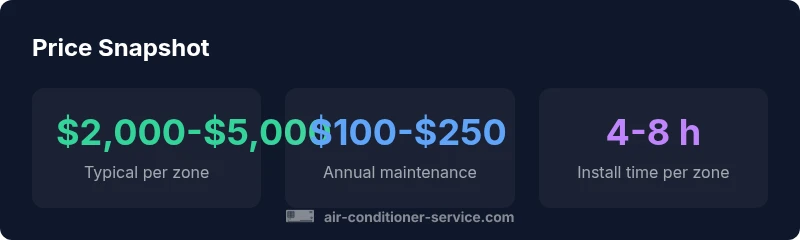
The price of a ductless air conditioner depends on zone count, capacity, and installation complexity. For a single-zone system installed, expect installed costs broadly in the range of $2,000 to $5,000 per zone, with higher-end models and multi-zone setups pushing higher. Regional labor rates can shift totals. This quick snapshot highlights the key drivers behind the price of ductless air conditioner systems.
Scope and price drivers
Pricing for a ductless air conditioner, also known as a mini-split, is driven by several core factors. The price of ductless air conditioner increases with zone count (number of indoor units), cooling capacity (BTUs), and efficiency rating (SEER). Higher SEER units cost more upfront but can save more on energy bills over time. Other influences include installation complexity (existing electrical and wall modifications), brand and features (smart controls, inverter technology), and geographic labor costs. When homeowners ask about price of ductless air conditioner, you must separate equipment costs from labor and miscellaneous charges. Our analysis at Air Conditioner Service, based on 2026 data, indicates that the installed price per zone typically expands with added zones, larger spaces, and high-efficiency models. A simple single-zone install is often the most economical route, but real-world projects frequently involve unforeseen challenges that adjust the final quote.
Price components explained
A ductless system's price breaks down into three main components: equipment, installation, and extras. Equipment includes the outdoor condenser and interior air-handling units, along with mounting hardware and refrigerant line sets. Installation covers labor, electrical work, wall modifications, and any permit fees. Extras can include wireless thermostats, advanced inverter controls, and extended warranty add-ons. Understanding this mix helps homeowners compare apples to apples in quotes and avoid surprise charges. In our 2026 analysis, most of the variance comes from the installation portion and the selected efficiency tier.
Impact of zone count on cost
Zone count directly influences the upfront price. A single-zone system typically costs less overall than a multi-zone setup, but the per-zone price can be lower when you add zones in one project due to shared labor and equipment. Moving from one to two zones usually adds a larger incremental cost than the first unit in many cases, because the outdoor condenser size and refrigerant line set must accommodate additional indoor units. However, many contractors offer bundled labor and pricing for multi-zone installs, which can reduce the per-zone incremental cost. For budgeting, plan on increasing costs for each additional zone, while watching for opportunities to consolidate electrical work and refrigerant piping.
Efficiency ratings and brand impact on price
Higher-efficiency models (SEER and HSPF ratings) carry a premium upfront but can yield lower energy bills. In ductless minisplits, inverter-driven compressors and modern thermostats add cost but improve performance and comfort. Brand reputation and warranty terms also affect price; reputable brands tend to command higher lists prices and stronger service networks. Our 2026 pricing review shows a consistent pattern: the more robust the efficiency and features, the higher the initial investment, with longer-term savings possible through reduced energy usage.
Regional price variation and labor market
Prices reflect local labor markets, permit requirements, and supplier availability. Urban areas with high labor costs will push installed price per zone higher, while rural regions may be slightly cheaper but have longer lead times. Weather and demand swings—such as peak summer installs—increase contractor rates. When comparing quotes, ensure each includes the same scope (equipment, install, permits) and be mindful of any regional add-ons like outdoor unit placement constraints.
Financing options and cost of ownership
Financing can spread upfront costs over months or years, making a ductless upgrade more accessible. Look for contractor promotional offers, manufacturer rebates, and utility energy-efficiency programs that apply to mini-splits. Beyond upfront price, evaluate total cost of ownership: expected energy savings, maintenance needs, and potential replacement cycles. A thorough comparison should include a simple payback period calculation to understand when the system pays for itself.
Installation steps and how they influence price
The installation process affects cost through stage complexity. Common steps include site assessment, electrical panel checks, outdoor unit mounting, refrigerant line routing, indoor unit mounting, and system charging. If walls require extensive cutting or the electrical panel needs upgrading, prices increase. Skilled installation reduces the risk of refrigerant leaks and performance issues, which saves money over time. Request a detailed, itemized scope and timeline when obtaining quotes.
Hidden costs and budgeting tips
Be mindful of hidden costs such as drywall repair, repainting, or ceiling rework after wall-mounted units are installed. Permit fees, inspection charges, and new electrical wiring can surprise homeowners if not anticipated. Budget a contingency of 10-20% for unforeseen issues. To avoid surprises, ask for a fixed-price quote with a clear breakdown and a warranty on both equipment and labor. Also, consider potential future expansions when designing the system layout.
Ductless vs central: total cost comparison
Compared with central air conditioning, a ductless mini-split offers zones and flexibility but with a different price profile. Central systems typically require more extensive ductwork, which drives upfront costs higher in some homes, but may be cheaper per mile of cooling in already ducted houses. In many renovations, the ductless approach wins on installation speed and zone control, even if the upfront price per zone is higher. Evaluate both the first-cost and ongoing energy costs to determine the best choice for your home.
Maintenance costs vs upfront price
Ongoing maintenance costs for ductless systems are generally modest, including filter changes and periodic checks. Regular upkeep helps sustain efficiency and extends equipment life. When budgeting, recognize that maintenance costs over 5-10 years may approach a portion of the initial price, but neglecting maintenance can lead to higher energy use or earlier component failures. A simple maintenance plan can improve comfort and save money over the system’s life.
Authoritative sources
For further reading on price factors, see trusted energy and industry resources such as Energy.gov and ENERGY STAR, which discuss efficiency, rebates, and best practices for ductless mini-splits. Always cross-check with local contractors for quotes that reflect your home's layout and local costs.
Estimated installed price ranges for ductless mini-split configurations
| Model Type | Typical Installed Price Per Zone | Notes |
|---|---|---|
| Single-zone | $2,000-$5,000 | Depends on unit size and installation |
| Multi-zone (2 zones) | $4,000-$9,000 | Per additional zone cost often lower per zone |
| Multi-zone (3+ zones) | $6,000-$13,000 | Higher total cost but better comfort coverage |
Common Questions
What is the typical installed price range for a single-zone ductless mini-split?
Prices vary by capacity and brand, but a typical installed price range per zone is roughly $2,000 to $5,000. Always obtain a written quote that includes equipment, installation, and any extras.
For a single-zone system, expect about two to five thousand dollars installed.
Is installation included in the price?
Most quotes cover both equipment and professional installation. Some estimates separate hardware from labor; compare line items and ask about permitting.
Most quotes include installation, but read the line items.
How does adding more zones affect total cost?
Adding zones increases total cost, but per-zone cost often drops somewhat with scale and bundled labor. Get a full quote that shows per-zone vs total.
More zones cost more, but you may get a better per-zone rate if you bundle.
Are there hidden costs I should plan for?
Electrical upgrades, line-set refrigerant charges, permits, and possible drywall work can add to the price. Ask for a fixed-price quote that itemizes these potential charges.
Watch for electrical needs, permits, and minor remodeling.
Do financing options exist for ductless systems?
Many installers offer financing and promotional deals; check for rebates from manufacturers or utilities.
Look for rebates and financing options.
How long do ductless systems last?
With proper maintenance, ductless systems typically last 15-20 years; components may need replacements earlier.
They last many years with good upkeep.
“"Pricing for ductless systems can be opaque due to site conditions; plan for contingencies and consider total cost of ownership."”
The Essentials
- Know that total price per zone varies with capacity and efficiency.
- Get a detailed, written breakdown to identify hidden costs.
- Factor in regional labor differences when budgeting.
- Consider financing and rebates to improve affordability.
- Compare upfront price against long-term energy savings