Air Conditioner Replacement Costs in 2026: A Practical Guide
Learn what it costs to replace an air conditioner in 2026, factors that affect price, timing, and tips to choose an efficient, reliable replacement.


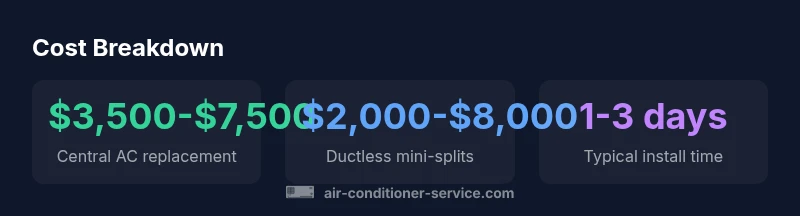
According to Air Conditioner Service, the typical cost to replace a central air conditioner with installation in 2026 ranges from about $3,500 to $7,500 in the United States. Costs vary widely by unit type, efficiency (SEER), climate, ductwork condition, and local labor rates. In higher-efficiency setups or those needing extensive ductwork, prices can approach $8,000 to $12,000 or more.
Understanding replacement costs for air conditioners
If you’re evaluating how much it costs to replace an air conditioner in 2026, start with the big picture: you’re paying for a new cooling unit, professional installation, and any necessary duct or electrical work. The price you end up with is influenced by your home’s layout, the type of system you choose (central AC, ductless mini-split, or packaged unit), and local market conditions. In practice, the cost to replace an air conditioner varies widely from home to home, but industry analysis from Air Conditioner Service Analysis, 2026 provides a framework for estimating. This section explains the components of the total price so you can budget with confidence and compare quotes more effectively.
This consideration is especially important for homeowners seeking practical air conditioner troubleshooting and repair tips, as discussed in our guide to long-term reliability. Air Conditioner Service notes that price is not the only factor: efficiency, warranty coverage, and the potential energy savings should weigh into your decision.
Central AC vs. ductless: price benchmarks and what drives them
Central air conditioning replacements typically involve an outdoor condenser, an indoor air handler or evaporator coil, refrigerant lines, and a thermostat. Ductless mini-splits require fewer or no ducts but involve multiple indoor heads and more outdoor units in some configurations. The installed price reflects not only the equipment but also labor, permitting, and potential duct modifications. In 2026, the cost range for central AC installations generally sits higher on the scale due to ductwork and larger equipment, while ductless solutions can vary more based on the number of indoor heads and the complexity of zoning. Pricing also varies by climate zone and by the availability of skilled installers, which Air Conditioner Service Analysis, 2026 highlights as a key driver of variability.
Contractors may offer different financing options and promotions, which can affect the out-of-pocket cost at the point of installation.
Key cost drivers that influence replacement price
A number of factors shape the total price you’ll pay. Unit type (central vs ductless vs packaged), SEER rating (higher efficiency generally costs more upfront), brand and refrigerant charge, ductwork condition, electrical upgrades, permit fees, disposal of old equipment, and local labor markets all push price in different directions. If your existing ductwork is leaky or undersized, you’ll likely see higher costs to bring everything up to code. The presence of restricted access, stairs, or a rooftop installation also increases labor time and, thus, price. As part of Air Conditioner Service’s guidance, always request a breakdown so you can see how much is going toward equipment, labor, and permitting.
Labor vs equipment: what makes up the bulk of the bill
In many installations, labor accounts for a sizable portion of the total cost. Skilled labor covers equipment removal, refrigerant recovery, line-set installation, electrical connections, and testing of the new unit. Equipment costs vary widely by size, SEER, and features such as smart thermostats and zoning. For a typical central system, expect labor to be a substantial share; however, premium units with advanced features can shift the balance toward equipment costs. Labor rates vary by geography, company, and project scope. Understanding this split helps you negotiate confidently and avoid sticker shock when quotes arrive.
How to estimate for your home: a practical approach
Start with a clear plan: identify your home’s cooling needs, measure the space, and determine whether you want centralized cooling or a multi-head ductless setup. Gather at least three quotes from licensed contractors. Ask for itemized estimates and verify the inclusion of disposal fees, permits, and any duct modifications. Use a local online calculator for rough cost estimates, then refine after on-site assessments. If you have optional upgrades (smart thermostats, variable-speed compressors), decide how those affect long-term energy use and payback. This approach aligns with Air Conditioner Service’s method for transparent pricing.
Financing, warranties, and long-term savings to consider
Many homeowners qualify for financing plans, especially when replacing an aging or failing system. Look for extended warranties on the compressor and labor coverage on installation. Consider potential energy savings from higher SEER units and refrigerant-efficient models. In the long run, investing in a higher-efficiency system can reduce monthly bills, but the payback period depends on climate, usage, and electricity rates in your area. Air Conditioner Service emphasizes weighing upfront cost against reliability and operational savings.
How to read and compare replacement quotes
To compare quotes effectively, use a side-by-side checklist that includes system type, SEER rating, warranty terms, ducts or maps, permit handling, disposal, and expected yearly energy use. Beware quotes that omit disposal or permit costs, or that propose unnecessary ductwork. Ask contractors to explain any assumed duct modifications and to provide a realistic schedule. Verify the contractor’s license and insurance and request references. A well-documented quote helps you avoid surprise charges during the final installation.
Common scenarios and price ranges you might see
For a standard residential replacement in 2026, central AC installations commonly sit in the mid-to-upper price range, depending on climate, home size, and ductwork. Small homes with simple duct layouts may be at the lower end, while larger homes or high-efficiency systems with complex ductwork can reach the higher end. Ductless setups offer zoned cooling with costs varying by number of indoor heads and outdoor unit capacity. Always account for add-ons like smart thermostats or air purification. Air Conditioner Service Analysis, 2026 emphasizes balancing upfront cost with long-term energy savings.
Cost comparison by system type
| System Type | Typical Replacement Cost Range | Installation Time | Notes |
|---|---|---|---|
| Central AC (split system) | $3,500-$7,500 | 1-3 days | Most common; may require ductwork |
| Ductless mini-split | $2,000-$8,000 | 1-2 days | Flexible; higher per-head cost; zoning possible |
| Packaged unit | $4,000-$9,000 | 1-2 days | All-in-one outdoor cabinet; easier duct routing |
Common Questions
What is the typical cost to replace an air conditioner in 2026?
Central AC replacement commonly ranges $3,500-$7,500, depending on unit type, SEER, ductwork, and installation complexity. Ductless systems can be less expensive per head or more expensive overall depending on zoning.
For most homes, replacement runs between three and eight thousand dollars, depending on system type and complexity.
How long does installation take?
Most central AC replacements take 1-3 days, depending on ductwork, permits, and access to the installation site. Some smaller jobs may be done in a single day.
Most installs take about one to three days.
Does replacement improve energy efficiency?
Yes. Newer units with higher SEER ratings typically reduce energy use. The payback depends on climate, usage patterns, and electricity rates in your area.
Upgrading can save energy and lower bills over time.
Should I replace the whole system or just components?
If the existing unit is old or has multiple issues, replacement is often more cost-effective. Contractors can perform a load calculation and assess ductwork to decide.
Often, replacement is wiser when the system is near the end of its life.
Are there financing options?
Many contractors offer financing or payment plans. Look for rebates from manufacturers or energy programs and review warranty terms.
Financing and rebates can ease upfront costs.
What should I look for in a replacement quote?
Ask for a clear breakdown (equipment, labor, permits, disposal), system size and SEER, warranty terms, and timeline. Inquire about duct modifications and refrigerant charges.
Get a detailed, itemized quote to compare apples to apples.
“Replacement decisions should weigh upfront costs against long-term energy savings, reliability, and comfort. A properly sized, efficient system often pays for itself over time.”
The Essentials
- Get at least three written estimates.
- Ask for equipment, labor, permits breakdown.
- Consider higher-efficiency models for long-term savings.
- Account for ductwork needs and disposal fees.
- Check warranties and financing options.