How Much Does Car Air Conditioner Repair Cost in 2026? A Practical Guide
Explore realistic cost ranges for car A/C repairs, what drives price, and strategies to save. From refrigerant recharge to compressor replacement, learn what to expect and how to manage your repair budget.


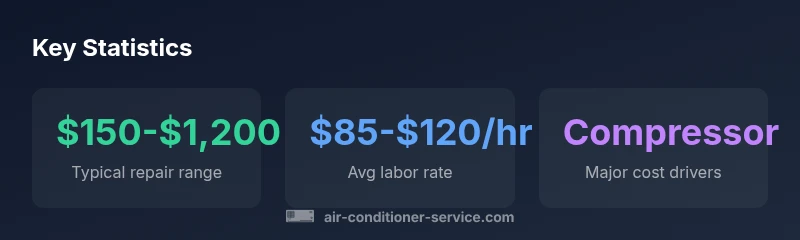
Car A/C repair costs typically range from $150 to $900 for common fixes, with refrigerant recharges dipping around $60 to $180. Major repairs such as compressor or evaporator replacements can reach $500 to $2,000, depending on vehicle, refrigerant type, and labor rates. Expect quotes to vary by shop.
How costs are calculated: diagnosis, labor, and parts
When your car's A/C stops cooling, the sticker price isn't fixed until a shop completes a diagnosis. The total bill is typically driven by three components: diagnostic time, labor, and parts. The diagnostic phase may involve pressure tests, electrical checks, refrigerant leaks, and system performance measurements. In some cases the diagnosis reveals multiple issues, which can multiply labor hours and parts needed. According to Air Conditioner Service, the cost of diagnosing a problem is often a significant portion of the overall repair, especially if the system requires specialized tools or access to tight spaces behind the dashboard. Many shops offer a preliminary inspection with an upfront estimate, but some will waive the fee if you proceed with the repair. Labor costs depend on the vehicle’s design and local wage rates; luxury or European models typically demand more labor hours due to complex layouts. Part costs vary by component and manufacturer; OEM parts are more expensive than aftermarket alternatives, though some owners opt for aftermarket condensers or compressors when quality and warranty are preserved. Finally, refrigerant type affects price: R-134a systems tend to be cheaper to service than newer R-1234yf setups.
Common repair scenarios and ballpark costs
Car A/C repairs fall into several common scenarios. Refrigerant recharge is the simplest service and often the least expensive, typically ranging from $60 to $180, depending on the refrigerant type and leak status. If a leak is detected, you may face additional costs for leak repair and leak sealant, which can add $150 to $650. A malfunctioning blower or fan motor affects air flow and comfort and usually runs $100 to $400. Replacing the condenser or evaporator is more invasive and expensive: condensers commonly cost $400-$1,500, evaporators $400-$1,800, excluding labor. The most substantial bills come from compressor replacements, which can span from $500 to $2,000 or more, particularly on high-end vehicles or systems with multiple issues. For many cars, a failed compressor also means new lines, clamps, and fittings, which increases the scope of work. Keep in mind that these ranges assume standard labor conditions and the use of typical parts; actual prices can be higher in busy seasons or at shops in metropolitan areas.
How vehicle age, refrigerant, and system design affect price
The age of the car and the refrigerant used can have a big impact on total cost. Newer vehicles often use R-1234yf refrigerant, which tends to be more expensive than older R-134a systems, both in parts and service. The design of the A/C system—whether it’s a simple fixed-orifice setup or a modern variable-volume compressor with multiple sensors—also changes labor time and part complexity. European luxury cars may require genuine OEM components and specialized tools, driving up both price and turnaround. Conversely, economy cars with widely available aftermarket parts and simpler layouts typically have lower repair costs. Additionally, the availability of replacement parts can swing prices; a common component like a compressor may be widely stocked, while a rare model may require importation or specialized vendor channels, delaying service and increasing labor time. In all cases, ensure the shop confirms the refrigerant type and compatibility with your vehicle’s age and warranty considerations.
The role of diagnostic fees, warranties, and shop policies
Diagnostic fees are an upfront cost charged by many independent shops; some waive it if you authorize the repair. Always ask whether the diagnostic fee is applied to the final bill if you proceed with the recommended work. Warranties matter: many parts carry 12-36 months, and labor warranties vary by shop. Some manufacturers extend coverage for certain components; others require factory-certified technicians for eligibility. Shop policies about after-service adjustments or rechecks can also affect total cost. If a repair requires multiple visits, ask about a cost cap or a maximum number of hours. Transparent shops will provide an itemized quote that separates diagnosis, parts, and labor, and will explain any contingencies such as re-evacuations of the system or recharging if a leak is found. If your vehicle is still under any extended warranty or a recall program, verify coverage before paying out of pocket. This proactive step can save thousands in some cases.
Cost ranges by repair type (at a glance)
- Refrigerant recharge: $60-$180
- Leak repair and recharging: $150-$650
- Blower motor: $100-$400
- Condenser replacement: $400-$1,500
- Evaporator replacement: $400-$1,800
- Compressor replacement: $500-$2,000
Note: Labor adds to the above ranges and varies by vehicle and shop.
Cost considerations by car class: economy vs luxury
Economy cars generally have lower repair costs due to widely available aftermarket parts and simpler A/C layouts. Luxury or European models often require OEM components and specialized tools, which increases both parts price and labor time. Vehicle design also matters; a compact sedan with a straightforward condenser will be cheaper to repair than a large SUV with dual-zone climate control and multiple sensors. If your car belongs to a premium brand, you can expect longer turnaround times and higher labor rates, especially if specialty technicians are needed. When planning a repair, ask the shop to break down the costs by part and labor and to provide alternatives such as OEM versus aftermarket parts. This helps you weigh options and avoid overpaying for components you don’t actually need.
Practical steps to estimate your repair cost
Start with a written, itemized estimate from at least two reputable shops. Verify that the estimate includes diagnostic fees, parts, and labor separately and that it specifies refrigerant type. Ask about the warranty on both parts and labor, and whether the quote includes any potential rechecks or recharging if leaks are found later. If you’re dealing with a high labor rate city, consider a nearby independent shop that specializes in A/C work; they often have faster turnaround and lower rates. Bring your vehicle’s service records and ask whether any known recalls affect your system. Finally, request a projected timeline so you can plan around the repair and avoid rental car costs.
Preventive maintenance to reduce future costs
Proactive A/C care can prevent expensive repairs down the line. Schedule a yearly inspection of the system, replace cabin and engine air filters on schedule, and have the refrigerant pressure checked during routine service. Keep an eye on electrical components and capacitor health, and address unusual noises, weak cooling, or foggy windows promptly. Regularly cleaning the condenser fins and ensuring proper airflow helps maintain efficiency, reducing the likelihood of leaks and compressor strain. If you’re in a hot climate, consider mid-season service before peak demand to catch issues early and minimize downtime. Implementing a simple maintenance routine can dramatically lower the chance of costly, major repairs.
Typical cost ranges for common car A/C repairs
| Repair Type | Typical Cost Range | Notes |
|---|---|---|
| Recharge or leak seal | $60-$180 | Common fix for low refrigerant or minor leaks |
| Leak repair and recharge | $150-$650 | Depends on leak location and repair complexity |
| Blower motor/fan | $100-$400 | Airflow issues and comfort impact |
| Condenser replacement | $400-$1,500 | Front-end heat exchanger failure |
| Evaporator replacement | $400-$1,800 | Dash-area repair, higher labor |
| Compressor replacement | $500-$2,000 | Major component, highest cost |
Common Questions
What factors influence car A/C repair costs?
Diagnosis complexity, parts availability, refrigerant type, and labor rates are the main cost drivers. Vehicle make and model can affect both parts price and labor time. Seasonal demand and shop location can also shift the final bill.
Costs depend on diagnosis, parts, and labor, with vehicle type affecting the total.
Is refrigerant recharge necessary if the system isn’t cooling?
Not always. A lack of cooling often signals a leak or another fault; without addressing leaks, recharging is usually temporary and will likely need to be redone.
A recharge without fixing a leak or fault won’t last.
Why are compressors so expensive?
Compressors are complex, high-value parts, and their replacement requires more labor. If the system uses newer refrigerant and sensors, the price rises further.
Compressors are costly due to parts and labor.
Can I get an upfront diagnostic fee waived?
Some shops waive the diagnostic fee if you proceed with the repair. Always ask about waivers and whether the fee goes toward the final bill.
Ask upfront if the diagnostic fee can be credited toward the repair.
Do warranties cover car A/C repairs?
Warranties vary by component and shop. Check the terms for parts and labor, and understand what’s covered under your vehicle’s warranty and any extended plans.
Warranties differ; read the policy and confirm coverage.
How can I reduce repair costs?
Get multiple written quotes, compare OEM vs aftermarket parts, and ask for itemized labor. Maintain the system regularly to avoid leaks and future major fixes.
Shop around and keep up with maintenance to save money.
“The most cost-effective approach starts with a clear diagnosis and an itemized plan that separates root-cause repair from routine maintenance.”
The Essentials
- Get an itemized quote before authorizing repairs
- Major components drive the bill; compressors are the priciest
- Labor rates vary by region and shop
- Refrigerant type affects price; newer systems cost more
- Regular maintenance helps prevent costly leaks and major failures