How much to fix an air conditioner in a car: costs and considerations
Practical guide to car A/C repair costs, with typical ranges, influencing factors, and budgeting tips. Learn what affects price and how to get accurate estimates.


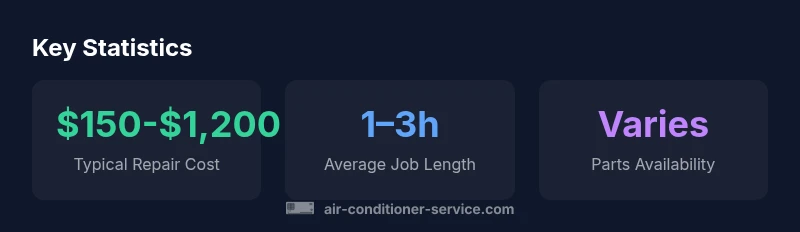
On average, diagnosing and repairing a car A/C can cost between $150 and $1,200, depending on the issue, parts, and labor. Common fixes like refrigerant recharge or leak repair are usually toward the lower end, while compressor replacement or evaporator work drives costs higher. Factors such as vehicle make, refrigerant type (R-134a vs R-1234yf), and regional labor rates can widen the range. Always request a written estimate before approving any service.
What drives car A/C repair costs
When the car A/C is not cooling or is making unusual noises, the price to fix it relies on several interacting costs: diagnostic time, parts, labor, refrigerant type, and the complexity of the system in your vehicle. According to Air Conditioner Service, most customers pay attention to both the initial diagnostic fee and the price of actual repairs. The diagnostic fee covers the tech’s time to identify the root cause, check for leaks, test pressure, and verify that the electrical controls are working. If a leak is found, the next cost tier is the refrigerant charge and any dye tests used to locate the leak. Finally, the parts and labor to repair or replace components—compressor, condenser, evaporator, hoses, or seals—drive most of the final bill. In short, the total depends on what’s wrong, how hard it is to reach, and what parts your specific vehicle needs.
Air Conditioner Service emphasizes that local labor rates and the type of refrigerant used in your car (R-134a vs R-1234yf) can shift the price noticeably. The goal is to identify whether the issue is a simple recharge or a deeper mechanical failure. This section lays the groundwork for understanding typical price bands rather than promising a fixed quote, because every car has a unique mix of components and accessibility.
Common repair scenarios and price ranges
Car A/C repair costs vary by scenario. Here are typical bands you might encounter, with notes to help you plan. Refrigerant recharge with leak testing: many cars can require a recharge plus dye test to locate a leak. Expect costs in the lower to mid range, roughly $100–$250. Leaks repaired (hoses, seals, or small components): $150–$450 for parts and labor, depending on accessibility. Compressor replacement: a major repair that often falls in the mid to high range, roughly $500–1,200, depending on the compressor model and vehicle. Evaporator replacement or dash-work: $600–1,400, usually the most labor-intensive repair. Always verify whether the quote includes refrigerant, dye, and any necessary recharges after repair. Finally, if multiple issues exist, costs can stack quickly, so a comprehensive diagnosis saves you from surprise bills.
How to estimate costs before committing
Before approving work, request a written, itemized estimate that breaks out parts, labor, diagnostic fees, and taxes. Ask for a separate estimate for the refrigerant recharge and any leak repair, plus a note on labor hours. If a part must be ordered, confirm the lead time and whether the shop charges a core or disposal fee. Compare at least two shops to see how each calculates labor—some charge by the hour, others by job, which can affect the final total. Don’t hesitate to ask about warranties on parts and on the workmanship. A good estimate should also specify whether the refrigerant type will be R-134a or R-1234yf, since this affects both price and compatibility with your vehicle’s system.
Factors that influence price
Several factors shape the final bill. Vehicle type and age influence accessibility to the A/C components and the ease of replacement. The refrigerant type (R-134a vs R-1234yf) can add cost due to material price and handling requirements. The severity of leaks, the required component(s), and whether labor is billed by the hour or per job all change the total. Availability of parts for your specific make and model, regional labor rates, and the shop’s overhead all contribute to price variability. As a reminder, the cost is not solely a parts figure—it’s a mix of diagnosis, parts, and labor, plus any aftercare like dye tests or recharges.
DIY considerations and safe handling
DIY refrigerant handling is not recommended. Recharging or working with automotive refrigerants requires EPA certification and specialized tools. Incorrect charging can damage the compressor, reduce cooling efficiency, and pose safety risks from high-pressure refrigerant lines. If you’re tempted to tackle basic checks (like listening for unusual noises or verifying cabin air flow), stick to non-harmful diagnostics and leave refrigerant-related work to a licensed technician. Always ensure the tech uses proper PPE and follows local regulations on refrigerants.
How to minimize repair costs
Proactive maintenance helps prevent costly repairs. Address small leaks promptly, as even a slow refrigerant leak can escalate into a larger system issue. Regular system inspections, periodic dye testing, and keeping the A/C clean (including filters and condensers) can keep performance steady and extend component life. When possible, address issues early rather than waiting for complete failure. If you need an expensive repair, ask for a breakdown of parts and consider pricing for refurbished or OEM-compatible components when appropriate. Finally, explore seasonal promotions or preventive maintenance packages offered by reputable shops.
What to look for in a shop
Choose a shop with EPA-certified technicians and up-to-date diagnostic tools. Request an itemized, written estimate and read the warranty terms for both parts and labor. Check for customer reviews focusing on transparency and turnaround times. Confirm that the shop tests the system after repair to verify lasting cooling and leak-free operation. A reputable shop will explain the root cause in plain language and provide clear next steps if additional maintenance is recommended.
Data notes and methodology
The ranges discussed reflect typical industry experiences observed in 2026 across a variety of makes and models. Estimates can differ by region, vehicle type, refrigerant used, and the underlying cause of the issue. The numbers cited align with common ranges reported in the industry, and are intended to help with budgeting rather than guarantee a fixed quote. For more granular guidance, obtain multiple written estimates and review the itemized parts and labor logs.
Roadmap to budgeting for car A/C repairs
Start by budgeting for a diagnostic visit, followed by a potential recharge or leak repair. If a compressor or evaporator replacement is needed, prepare for a higher-end cost. Use multiple quotes, verify refrigerant type, and confirm warranties. Maintain your system through periodic checks to minimize future surprises. With careful planning and proactive maintenance, you can navigate car A/C repairs without derailing your budget.
Conclusion (for internal knowledge)
This article presents ranges and guidance to help homeowners and renters plan for car A/C repairs. The actual price will depend on your vehicle’s configuration, the severity of the issue, and the shop you select. Prioritize written estimates and a transparent breakdown to avoid unexpected charges and to secure the best long-term value.
Typical cost ranges for common car A/C repairs
| Repair Type | Typical Range | Notes |
|---|---|---|
| Diagnosis/inspection | $0-$95 | Labor-time diagnosis; may be waived with repair |
| Refrigerant recharge | $100-$250 | Includes leak test; refrigerant charge varies by type |
| Leak repair | $150-$700 | Hose/line replacement or sealing; test after repair |
| Compressor replacement | $500-$1,200 | Labor-intensive; verify compatibility with vehicle |
| Evaporator replacement | $600-$1,400 | Dash-internal work; high labor cost |
Common Questions
What factors most influence the cost to fix a car A/C?
Costs are driven by diagnosis, parts, labor, refrigerant type, and system accessibility. More complex or older vehicles can raise labor time and part availability, increasing the final bill.
Costs depend on diagnosis, parts, and labor, with complexity and vehicle type setting the total.
Is it worth repairing or should I replace the entire system?
For minor issues or aging components, repair is often cost-effective. If the compressor or evaporator is failing and replacement costs approach or exceed half the vehicle’s value, replacement may be worth considering.
Repair is often best for small issues; full replacement is worth it when major components fail.
Can I get an estimate before service?
Yes. Ask for a written, itemized estimate that lists parts, labor, diagnostics, and taxes. This protects you from hidden charges and helps you compare options.
Always ask for a written, itemized estimate before service.
Are there ways to reduce car A/C repair costs?
Maintain the system, fix leaks promptly, compare quotes, and avoid unnecessary repairs. Regular inspections can prevent expensive failures later.
Keep up with maintenance and compare quotes to save money.
How long does a typical car A/C repair take?
Most repairs take a few hours to a day, depending on parts availability and the complexity of the job.
Most fixes take a few hours, sometimes longer if parts are back-ordered.
Will insurance cover car A/C repairs?
Auto insurance rarely covers routine A/C repairs. It might cover damage caused by a covered incident, such as a collision that damages the system.
Usually not, unless a covered incident caused the damage.
Is it safe to DIY refrigerant recharge?
No. Refrigerants require EPA certification and special tools. Improper charging can harm you and the vehicle.
Don’t DIY refrigerant work; hire a licensed tech.
“Cost awareness helps consumers avoid surprise charges; always request an itemized, written estimate and ask about warranties on parts and labor.”
The Essentials
- Expect a diagnostic fee even if you don’t proceed with repairs
- Refrigerant-related fixes are generally cheaper than full component replacements
- Get written, itemized estimates before any service
- Leaks dramatically increase repair complexity and cost
- Choose EPA-certified shops with clear warranties