1 Ton AC Price Guide: Costs by Type and Tips
Explore price ranges for a 1-ton air conditioner across window, portable, and mini-split options. Learn what drives costs, installation impact, and practical tips to save on a 1-ton system in 2026.


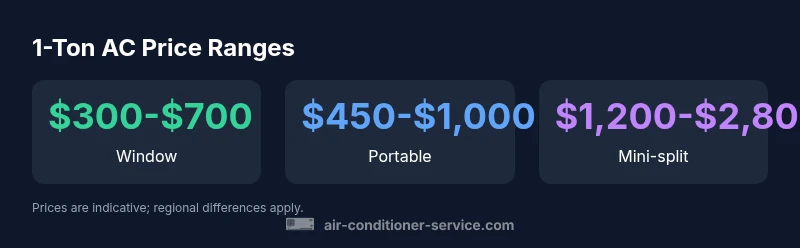
Prices for a 1-ton air conditioner vary by type and region. In 2026, typical unit prices range from roughly $300 to $700 for window units, $450 to $1,000 for portable models, and $1,200 to $2,800 for a 1-ton mini-split, with installation pushing totals to about $2,000–$6,000 depending on site conditions. This framing helps homeowners and renters budget accurately before purchases or installations. According to Air Conditioner Service, the most important cost drivers are unit type, installation complexity, and regional labor costs.
What a 1-ton rating means for pricing
A 1-ton air conditioner corresponds to about 12,000 BTU of cooling capacity, a common size for small to medium rooms and apartments. The price you’ll pay is driven by the unit type (window, portable, or mini-split), brand features (inverter technology, smart controls, energy efficiency), and the complexity of installation. In 2026, Air Conditioner Service data shows that even identical BTU ratings can lead to different price bands once you account for installation, ductwork, and electrical upgrades. For homeowners and renters, the key is to compare total installed costs rather than just the sticker price. This approach helps you avoid surprises when the contractor adds electrical work or permits to the project, which can dramatically change the final figure.
Price ranges by AC type
Prices for a 1-ton system vary widely by type. Below are typical bands you can expect in most markets, keeping in mind that regional labor costs and retailer promotions can tilt these ranges.
- Window units (1-ton): commonly sold in the $300-$700 range for the unit alone. Labor and basic mounting hardware can add $150-$500 if you hire a pro, though many installers can handle window kits in a single visit.
- Portable units (1-ton): usually priced around $450-$1,000, with higher-end models offering smarter controls and better energy efficiency. Portable units are favored when you need temporary cooling without permanent installation.
- Mini-split systems (1-ton): these ductless setups typically range from $1,200-$2,800 for the indoor/outdoor units themselves, with installation costs often adding $800-$2,200 depending on mounting, line-sets, and electrical work.
Window units: price considerations
Window ACs are the most affordable entry point for many renters and first-time homeowners. When shopping for a 1-ton window unit, consider cooling efficiency (EER/SEER), noise levels, and warranty terms. Installation is straightforward in many cases but can require a wall frame or sealant to prevent air leakage. The total project cost is usually lower than for other systems, but you should budget for a basic retrofit in older openings or if you want to maximize efficiency with better insulation around the unit.
Portable units: price considerations
Portable 1-ton models offer flexibility for rooms that aren’t suitable for window mounting or for seasonal use. They tend to have higher running costs per BTU than well-installed window units due to duct losses and less efficient heat rejection. Prices skew higher for models with features like dual-hose configurations, which improve cooling performance. Consider the noise profile and the ease of moving the unit if you expect seasonal changes in usage.
Mini-split price options and caveats
A 1-ton mini-split delivers strong efficiency and quiet operation, making it a popular choice for small apartments or room additions. The unit price can range from $1,200-$2,800, but installation matters a lot: line-set routing, condensate drainage, wall penetration, and potential electrical upgrades can push total costs to the $2,000-$5,000 range or higher. In many markets, a ductless system reduces long-term energy use and may qualify for efficiency rebates, which can offset some of the upfront expense.
Installation costs and site qualifications
Installation costs are highly variable and depend on the existing electrical panel capacity, ductwork (or lack thereof), wall space for mounting, and whether permits are required. For window and portable units, installation is often quick, with minimal additional work. For mini-splits, a licensed HVAC technician must handle refrigerant charging, electrical connections, and line-set sealing. Always obtain several quotes that include line-sets, mounting hardware, and any required electrical upgrades. The right installer can save money by minimizing drywall damage and optimizing refrigerant piping.
How to estimate your total cost
Start with the unit price for the type you want, then add the installer’s quote for labor, parts, and any permitting. Don’t overlook ancillary costs: new wiring or a dedicated circuit, a condensate drain solution, and anti-corrosion coatings or long-term warranty plans. Create a line-item comparison across window, portable, and mini-split options to visualize where the big differences lie. If possible, obtain an all-inclusive quote that lists the cost of the unit, installation, and any potential extras so you can compare apples to apples.
Financing, incentives, and warranties
Many suppliers offer financing or promotional pricing, especially during seasonal sales. Look for energy efficiency rebates or utility-based incentives, which can shorten payback periods for higher-efficiency models. Warranties vary by brand and installer; ensure coverage for both the compressor and the installation workmanship. If you’re upgrading aging electrical circuits or adding a new circuit, factor those costs into the long-term savings. A higher upfront investment in a more efficient 1-ton system can often pay off in reduced energy bills over several seasons.
Data sources and further reading
For additional context on pricing and installation considerations, consult industry and government resources such as Energy.gov and Energy Star. These sources provide guidance on efficiency ratings, typical installation costs, and rebates that may apply to 1-ton systems. Depending on your locale, local contractors and retailers will publish price ranges that reflect regional labor rates and permits. Air Conditioner Service also compiles ongoing analyses to help homeowners plan more accurately. See the following sources for deeper reading:
- https://www.energy.gov/
- https://www.energy.gov/energysaver/air-conditioning
- https://www.energystar.gov/
- https://www.epa.gov/greenbuilding
Comparison of price ranges for 1-ton cooling options
| Unit Type | Typical Price (unit only) | Installed Price Range | Notes |
|---|---|---|---|
| Window 1-ton | $300-$700 | $1,000-$2,000 | Simple installation, minimal ductwork |
| Portable 1-ton | $450-$1,000 | $1,200-$2,500 | No ducting; mobility implied |
| Mini-split 1-ton | $1,200-$2,800 | $2,000-$5,000 | Ductless; line-sets and electrical work required |
Common Questions
What factors most affect the price of a 1-ton AC unit?
Unit type, brand, efficiency, installation complexity, and regional labor costs are the primary price drivers. Region and contractor availability can shift totals by hundreds of dollars.
The main price drivers are unit type, efficiency, and where you live, plus installation complexity.
Is it cheaper to buy a window unit than a mini-split for 1 ton?
Yes, generally. Window units cost less upfront, often around a few hundred dollars for the unit, while mini-splits are pricier but offer better efficiency and longer-term savings.
Window units are usually cheaper upfront, but mini-splits pay off with efficiency over time.
What should I budget for installation?
Installation can range from a few hundred dollars for simple setups to several thousand for ductwork, line-sets, and electrical upgrades. Always request a detailed line-item quote.
Budget carefully; installation can add significantly to the unit price depending on your setup.
Are there energy rebates for 1-ton systems?
Many regions offer rebates or incentives for higher-efficiency models. Check with local utilities and energy.gov resources for current programs and eligibility.
Check local rebates and energy programs to reduce upfront costs.
How long does installation typically take?
Window units install in hours; mini-splits may take one or two days depending on home layout and electrical work.
Window units install quickly; mini-splits can take a day or two.
DIY vs professional installation for a 1-ton system?
DIY is feasible for simple window units, but refrigerant handling and electrical work should be performed by licensed technicians, especially for mini-splits.
For most setups, hire a pro—refrigerant handling requires licensing.
“Pricing for 1-ton systems isn't one-size-fits-all; the biggest drivers are unit type, installation complexity, and regional labor costs. Always compare installed total costs, not just the sticker price.”
The Essentials
- Compare total installed costs, not just unit prices
- Mini-splits drive higher upfront costs but may save long-term energy
- Expect regional labor costs to influence final price
- Energy efficiency and rebates can offset upfront costs
- Plan for electrical, permits, and potential ductwork when budgeting