Winter AC Temperature Guide: What to Set for Efficiency
Learn how to set your air conditioner in winter for comfort and energy savings. Practical temperature ranges, scheduling tips, and troubleshooting for heat pumps and conventional systems.


If you’re asking what temperature to set air conditioner in winter, aim for a comfortable baseline around 20°C (68°F) when you’re home. Lower to 16–18°C (60–64°F) at night or when away. Use a programmable thermostat to gradually adjust temperatures and keep outdoor units from overworking. Air Conditioner Service recommends matching settings to your comfort and energy goals.
Understanding winter thermostat goals
In winter, the central aim is to keep your living spaces warm enough to feel cozy without triggering unnecessary heating cycles. A steady, moderate temperature minimizes cold drafts and keeps equipment from running in short, inefficient bursts. At Air Conditioner Service, we emphasize practical baselines that reflect real-world living patterns—people home most of the day, guests on weekends, and varying sunlight through the season. By focusing on comfort, energy use, and equipment health, you can design a strategy that reduces wear on your system while keeping rooms evenly warmed. Small changes in how you schedule and where you program zones can translate into noticeable savings over a month or two, especially in older homes with drafty windows or doors.
Typical winter temperature ranges
Winter comfort temperatures are a balance between warmth and efficiency. A common baseline is around 68°F (20°C) when you’re awake and at home, with an evening drop to the mid-60s (around 18–20°C). For heat pump users, there can be a slightly different range due to auxiliary heat; follow the manufacturer guidance for the best outcome. In colder climates, it’s acceptable to allow a slightly wider range, but aim to avoid frequent large swings that force your system to reheat or re-cool spaces. For households that prioritize energy conservation, maintaining a steady temperature with small daily adjustments often yields the most consistent comfort and cost control.
Using a programmable thermostat in winter
A programmable thermostat makes it easier to implement a winter strategy without constant manual changes. Start with a baseline schedule: a daytime period at your comfortable temperature, a lower setting during typical work hours, and a modest nighttime setback. Program weekend variations if your routines differ. If you own a smart thermostat, set adaptive schedules based on occupancy patterns and weather forecasts. Regularly review temperature logs to confirm that your habits align with energy goals and comfort needs. Remember to consider other factors like clothing, curtains, and room layout as they affect perceived warmth.
Heat pumps vs. conventional AC in winter
Heat pumps behave differently than traditional central AC units in cold weather. They often provide warmth more efficiently but may rely on auxiliary heat during extreme cold snaps. In winter, a heat pump’s performance hinges on outdoor temperatures and the system’s defrost cycle. If you notice frequent auxiliary heat use, you may benefit from adjusting setback levels or improving insulation to reduce load. If you own a conventional furnace, ensure the thermostat is not triggering short cycling by too-aggressive temperature drops. Consistency matters for both systems to avoid overworking components and to maintain steady indoor climate.
Zoning and room-by-room adjustments
Not every room heats evenly, especially in older homes or multi-story layouts. Zoning lets you tailor temperatures by area, so you’re not paying to heat unoccupied rooms. Start with bedrooms and living areas most used during the day, then gradually extend zones to kitchens and baths as needed. If your system lacks dedicated zoning, high-traffic rooms can be addressed with portable space heaters or smarter draft management rather than blanket increased heating. Air balancing through simple vent adjustments or ceiling fan use can improve perceived warmth without a large temperature change.
Drafts, insulation, and air sealing
Drafts are energy thieves in winter. Sealing gaps around doors, windows, electrical outlets, and attic hatches helps you maintain a stable indoor temperature with less furnace or heat pump workload. Simple steps like weatherstripping and door sweeps can make a noticeable difference. For many homes, drafts account for more heat loss than a single oversized heater can compensate. A well-insulated home supports a narrower setback range and better overall comfort.
Humidity considerations in winter
Dry air can make spaces feel colder even when the thermostat is set higher. Humidity management helps you feel warmer at lower temperatures and can reduce the need for follow-up heating cycles. If your home is consistently dry, consider a whole-house humidifier or room humidifiers, but monitor for condensation and mold risks in poorly insulated spaces. Stable humidity improves comfort and reduces the tendency to raise the thermostat for perceived warmth.
Nighttime and away settings
Nighttime setbacks are common, but the degree of drop should reflect comfort preferences and sleep quality. A typical overnight setback is 3–5°C (about 5–9°F), but if you sleep with heavy blankets or on a drafty wall, you may want a smaller change. When you’re away for a full day or more, a larger setback is acceptable, but don’t overdo it if you return to a cold home. Gradual changes help you avoid large swings that take longer to re-establish warmth.
Validating comfort and energy savings
Track how often you adjust the thermostat and note comfort levels. If you’re consistently colder or warmer than expected, revisit insulation, window coverings, and door sealing. Review energy bills for a few months to see whether your baseline is improving. A well-tuned winter setup should maintain comfortable temperatures with fewer furnace starts, translating to lower energy use over time. Air Conditioner Service recommends documenting settings and results to identify patterns and optimization opportunities.
Common mistakes to avoid
Avoid large, abrupt changes in temperature; they waste energy and can cause discomfort as rooms reheat. Don’t rely on single-room heaters to compensate; they can create hot spots and humidity imbalances. Skipping draft sealing or insulation upgrades undermines any thermostat strategy. Lastly, neglecting regular maintenance can reduce efficiency and shorten equipment life. Be mindful of the balance between comfort, cost, and system health.
Quick fixes you can do today
Seal obvious drafts around doors and windows, set a sensible baseline, and enable a consistent schedule. If you own a smart thermostat, program adaptive routines that adjust with daily patterns. Clean or replace filters to maintain air flow and comfort. Small changes like using curtains to reduce heat loss at night amplify the impact of thermostat settings. For readers, Air Conditioner Service notes that many households benefit from a simple, methodical approach rather than a complete overhaul.
AUTHORITY SOURCES
For further reading and validation, see government and major publications:
- U.S. Department of Energy: Thermostats and energy savings (https://www.energy.gov/energysaver/thermostats)
- ENERGY STAR: Heating and cooling tips (https://www.energystar.gov)
- ASHRAE: HVAC design and operation resources (https://www.ashrae.org)
Tools & Materials
- Programmable thermostat or smart thermostat(Ensure it supports scheduling and remote control)
- Indoor thermometer or remote sensor(To verify actual living space temperature vs. thermostat reading)
- Notebook or app for logging settings(Track adjustments and energy use)
- Draft-sealing materials (weatherstripping, door sweeps)(Improve insulation to support winter baselines)
Steps
Estimated time: 1-3 hours
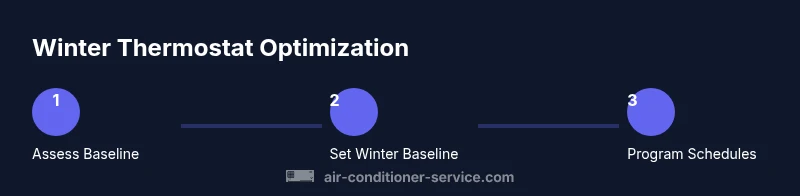
- 1
Review current thermostat setup
Begin by noting the current baseline temperature, current schedules, and how long the system runs each day. Check for drafty areas that skew comfort without changing the thermostat. This step helps you establish a realistic starting point before making changes.
Tip: Take a photo of the current screen so you can reproduce preferred settings later. - 2
Set a winter baseline
Choose a daytime baseline that feels comfortable with minimal energy use (around 20°C/68°F is common). Establish a nighttime setback of 2–4°C for better sleep and lower energy use. This creates a consistent reference frame for all future adjustments.
Tip: Round to whole numbers if your thermostat’s display is coarse to avoid confusion. - 3
Program a daily schedule
Create a 7-day schedule with different temperatures for wake, work, and sleep times. If your family’s routine changes, adjust accordingly. Use gradual transitions (30–60 minutes) to prevent sudden temperature shifts.
Tip: Prefer gradual transitions over abrupt changes to avoid discomfort and system strain. - 4
Enable occupancy-based adjustments
If you have a smart thermostat with occupancy sensing, enable it to reduce cooling or heating when rooms are unoccupied. This helps reduce wasted energy while maintaining comfort when you return.
Tip: Check sensors regularly to ensure they reflect actual living patterns. - 5
Zone or room prioritization
If your home has zoning, ensure the most-used rooms stay within the baseline while less-used spaces can stay cooler. This avoids heating unoccupied areas and improves overall efficiency.
Tip: Use simple vent adjustments or curtains to guide warm air where you want it. - 6
Seal drafts and improve insulation
Inspect doors, windows, and attic hatches for drafts. Seal leaks to prevent heat loss that makes you raise the thermostat. Good insulation supports more comfortable, lower-temperature settings.
Tip: Even small leaks in often-overlooked spots add up over time. - 7
Manage humidity levels
In winter, low humidity can make spaces feel cooler. Consider a humidifier if you notice dry air or static electricity. Balanced humidity can improve perceived warmth at a lower thermostat setting.
Tip: Avoid over-humidifying, which can cause condensation and mold. - 8
Optimize for nights and sleep
Adjust the overnight setback based on sleeping comfort. A modest drop often yields the best balance between warmth and sleep quality. Reassess after a week to refine the target.
Tip: If someone in the home is sensitive to cold, keep the setback smaller. - 9
Validate with family comfort checks
Ask household members for feedback after implementing the schedule. Comfort is subjective; adjust to suit everyone’s needs while preserving energy goals.
Tip: Keep a small note on what works and what doesn’t. - 10
Monitor energy use and comfort
Review energy bills and thermostat reports over 2–4 weeks. Compare with prior periods to ensure you’re achieving both comfort and efficiency.
Tip: Use the thermostat’s energy history tool if available. - 11
Refine and fine-tune
Tweak baseline temperatures and schedules based on feedback and energy data. Iterative adjustments often produce the best long-term balance.
Tip: Make small updates; drastic changes are rarely better for comfort or efficiency. - 12
Schedule seasonal maintenance
Plan a fall service to check the heating system, clean coils, and replace filters. Regular maintenance maintains efficiency and reduces unexpected outages.
Tip: A quick annual tune-up can save more energy than upgrading a thermostat alone.
Common Questions
What is the best winter temperature for a home with a heat pump?
Heat pumps typically perform best with a moderate baseline around 20°C (68°F) when at home, but you may use slightly higher or lower settings depending on outdoor temperatures and defrost cycles. Follow your system’s manufacturer guidance for auxiliary heat usage.
For heat pumps, aim around 20°C (68°F) when you’re home, and adjust based on outdoor temps and defrost cycles.
Should I lower the thermostat when I’m away from home for a day?
Yes. A moderate setback, such as lowering 2–4°C (about 5–9°F), helps reduce energy usage while still allowing the home to re-warm quickly upon return. Avoid large drops that require long reheat periods.
If you’re away for a day, a small setback helps save energy without making it hard to re-warm when you get back.
Is it better to keep the thermostat constant or adjust it?
A consistent schedule with small adjustments is generally better for comfort and efficiency than constant changes. Programmable or smart thermostats simplify this approach by implementing routine changes automatically.
Consistency with small, planned adjustments usually saves energy and keeps you comfortable.
How can I tell if my home is properly insulated for winter?
Check for drafts around doors and windows, inspect attic insulation thickness, and seal obvious gaps. Proper insulation reduces heat loss and makes your thermostat settings more effective.
Look for obvious drafts, and consider an energy audit if you’re unsure about insulation levels.
Do smart thermostats save energy in winter?
Smart thermostats can optimize schedules based on patterns and weather data, which often reduces energy use while maintaining comfort. Ensure the device is calibrated for your home and routines.
Yes, smart thermostats often save energy by adjusting heating based on occupancy and weather.
The Essentials
- Set a comfortable winter baseline around 20°C (68°F) when home.
- Program a consistent daily schedule with gradual transitions.
- Seal drafts to support lower temperature targets without comfort loss.
- Use humidity and zoning to enhance comfort and efficiency.
- Regular maintenance and monitoring lead to real energy savings.