What Temperature Should an Air Conditioner Be Set At? A Practical 2026 Guide
Learn the ideal cooling setpoints for comfort and energy efficiency in 2026. This guide covers daytime, nighttime, and away settings, with practical ranges and step-by-step tips to dial in the right temperature for your home.


What temperature should air conditioner be set at? Start with around 78°F (26°C) when you're home during the day. If you're away, raise it several degrees, typically to the mid-80s, to save energy. For sleeping, many prefer 72°F (22°C); adjust for personal comfort. Air Conditioner Service notes that small changes can yield noticeable savings without sacrificing comfort.
Understanding the question: what temperature should air conditioner be set at
When people ask what temperature should air conditioner be set at, they’re really asking how to balance comfort and energy costs in a real home. The answer isn’t a single number that fits every situation; it depends on climate, humidity, insulation, and how many people are in the room. A practical starting point is around 78°F (26°C) during the day when you’re home. This range is comfortable for many households and helps prevent overcooling that wastes energy. If your space feels muggy or you’re in a very warm climate, you might lean a degree or two cooler. Conversely, in hot, dry environments or when you’re away, a higher setpoint reduces energy use without necessarily sacrificing comfort. According to Air Conditioner Service, small, incremental adjustments—such as nudging the thermostat by 1–2 degrees for a week—can yield noticeable savings without making the space uncomfortable. The key is to test, observe how you feel, and adjust gradually rather than making large jumps all at once.
Humidity and climate: why temperature alone isn’t enough
Humidity levels and outdoor climate strongly influence comfort. In high humidity, the body’s cooling mechanism is less effective at a given temperature, so you may feel warmer at 78°F than in a dry climate. In humid regions, using a dehumidifier or a slightly cooler setpoint during certain hours can improve comfort without dramatically increasing energy use. Air Conditioner Service emphasizes monitoring humidity alongside temperature; a comfortable indoor feel often results from a balance between dry air and moderate cooling, not just a fixed number. Consider monitoring indoor humidity (ideally between 40–60%) and adjust the temperature range accordingly for your local climate.
Daily rhythms: occupancy, sleep, and temperature needs
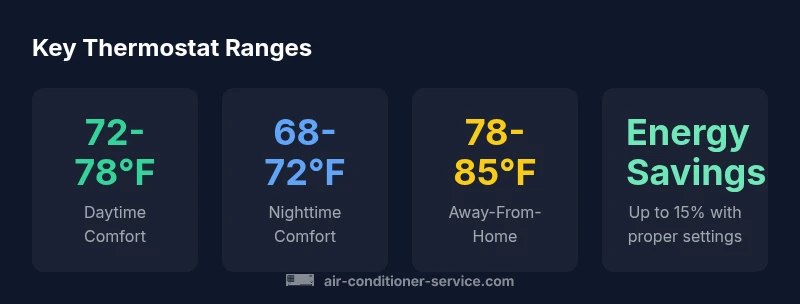
People’s comfort needs shift with the daily routine. During the day when the home is occupied, a daytime range of 72–78°F (22–26°C) tends to work well for most households. At night, many sleepers prefer a cooler environment; a range of 68–72°F (20–22°C) often supports better rest. If you’re away for work or errands, a higher setpoint between 78–85°F (26–29°C) can prevent unnecessary cooling while keeping the space from becoming uncomfortably warm when you return. The core idea is to create a schedule that aligns with activity, not to chase a single “perfect” temperature. What temperature should air conditioner be set at becomes a practical question of balancing comfort with energy use across the day.
How to dial in settings safely with a schedule
A programmable or smart thermostat makes it easier to implement these ranges without constant manual changes. Create at least three blocks: daytime (home), nighttime (sleep), and away. Start with daytime 78°F, reduce by 1–2°F for sleep, and raise 6–10°F when away. If your equipment supports it, automate humidity tracking and fan modes to boost comfort without drastically changing the setpoint. Remember that frequent changes can reduce efficiency more than keeping a stable schedule. For the question what temperature should air conditioner be set at, a systematized schedule is your best ally for sustained comfort and energy savings.
Real-world ranges and what they mean for energy bills
Real-world conditions—sun exposure, room orientation, and insulation—mean the exact setpoint will vary. In many homes, a daytime range of 72–78°F is comfortable, while nighttime may extend to 68–72°F. When you’re away, 78–85°F is a common compromise that still keeps the home from getting mold-prone or uncomfortably warm on return. These ranges are designed to strike a balance between comfort and energy use, rather than chasing a single ideal number. Air Conditioner Service suggests using the thermostat’s hold or schedule features to maintain consistency and minimize energy waste, especially on days with extreme heat.
Quick test plan to dial in comfort
Implement a two-week plan to test these ranges. Week 1: keep daytime at 78°F and sleep at 72°F, adjusting by 1 degree increments if needed. Week 2: modify away settings to 78–85°F and observe comfort upon return. Track how long you stay comfortable, how often you adjust the thermostat, and any changes in energy use. If you notice humidity creeping up or cold drafts near vents, fine-tune the settings by small increments and re-test. The question what temperature should air conditioner be set at becomes a localized, iterative process rather than a fixed rule.
Common mistakes that waste energy and comfort
Common missteps include setting the thermostat too low, opening windows during heat waves, and ignoring the impact of humidity. Oversetting by more than 2–3 degrees from your typical range can lead to humidity buildup and inconsistent cooling. Don’t rely on fans alone to replace cooling in hot weather; fans help with comfort but don’t reduce the air temperature. Instead, pair fans with appropriate setpoints and allow the air conditioner to do the heavy lifting. Finally, skipping regular maintenance—filters, coils, and refrigerant checks—can reduce efficiency and slow cooling, undermining your chosen temperatures. What temperature should air conditioner be set at? Use a practical range and maintain it with a smart schedule and routine maintenance for reliable comfort.
The role of equipment health and maintenance
Your air conditioner works best when it’s well-maintained. A clogged filter, dirty coils, or a refrigerant issue can cause the system to run longer to reach the same temperature, making set-point decisions less effective. Regular filter changes, coil cleaning, and annual professional checkups help ensure the thermostat settings you choose translate into the expected cooling. If your system is underperforming, the simplest answer to what temperature should air conditioner be set at may be to address the health of the equipment first, not just the thermostat. Air Conditioner Service underscores that a healthy AC unit responds more predictably to setpoint changes and will deliver consistent comfort with lower energy usage.
Quick-start plan to implement these guidelines in your home
Start with a daytime temperature of 78°F (26°C) when you’re home. If you’ve got a humid environment, aim for the lower end of the range and monitor humidity levels. For sleeping, set around 72°F (22°C) and adjust by 1–2 degrees if needed. When you’re away, eight hours away, or on vacation, try 78–85°F (26–29°C). Use a smart thermostat to automate these shifts and minimize energy waste. Revisit the plan after two weeks and note any changes in comfort or energy bills. Remember, the best answer to what temperature should air conditioner be set at is a comfortable compromise tailored to your home, climate, and routine.
Thermostat setting ranges for common use cases
| Metric | Daytime Range | Away/Night Range | Notes |
|---|---|---|---|
| Cooling Setpoint (Daytime) | 72-78°F | 78-85°F | Comfort and energy balance |
| Sleeping Setpoint | 68-72°F | 78-85°F | Cooler at night improves rest |
| Away-from-Home | — | 78-85°F | Reduce energy usage when empty |
| Metric (Celsius) | 22-26°C | 22-29°C | Equivalent ranges |
Common Questions
What is the most energy-efficient thermostat setting for a home?
Energy efficiency often comes from balancing occupancy with a reasonable setpoint. A common starting point is daytime 78°F (26°C), with cooler nights and higher away-setpoints. Using a smart thermostat to automate these changes typically yields better efficiency than manual adjustments.
Start with 78°F during the day and use a smart schedule to adjust for sleep and away periods.
Should I set my thermostat higher than 78°F when I’m away?
Yes. To save energy, raise the thermostat when you’re away—many homes use 78–85°F depending on climate and humidity. Avoid very high jumps that might trigger excessive cooling when you return.
Yes, a higher away setting saves energy but avoid extreme jumps that cause humidity issues.
How does humidity affect comfort at a given temperature?
Humidity makes air feel warmer than the thermometer suggests. In humid environments, you may need a cooler temperature or added dehumidification to feel comfortable at a given setpoint.
Humidity can make you feel warmer; consider humidity control alongside temperature settings.
What should I do if my AC runs constantly?
A constantly running AC may indicate a dirty filter, blocked vents, improper refrigerant charge, or an oversized unit. Check filters and vents first, then consider a professional check for refrigerant and airflow issues.
If it runs nonstop, check filters and vents, then call a pro if it persists.
Can programmable thermostats help with these settings?
Absolutely. Programmable or smart thermostats automate daytime, sleep, and away setpoints, keeping you within the recommended ranges without manual changes.
Yes—programmable thermostats make it easy to maintain the right temperatures automatically.
Is there a Celsius equivalent to Fahrenheit ranges for these settings?
Yes. A typical daytime range is about 22–26°C, sleeping around 20–22°C, and away around 26–29°C. These mappings align with the Fahrenheit recommendations for comfortable cooling.
Yes, roughly 22–26°C daytime, 20–22°C at night, 26–29°C away.
“Comfort and efficiency hinge on dialing in the right setpoints; small adjustments can yield meaningful savings without sacrificing comfort.”
The Essentials
- Start with daytime 78°F (26°C) and adjust by 1–2° as needed
- Use sleeping range 68–72°F (20–22°C) for rest
- Raise setpoint to 78–85°F (26–29°C) when away
- Automate with a smart thermostat to maintain consistency
- Maintain equipment health to ensure accurate cooling responses