What Should Air Conditioner Be Set At? Practical Home Guide
Discover practical guidance on what should air conditioner be set at to balance comfort and energy use. Includes summer ranges, humidity considerations, and smart-thermostat tips for homeowners and renters.


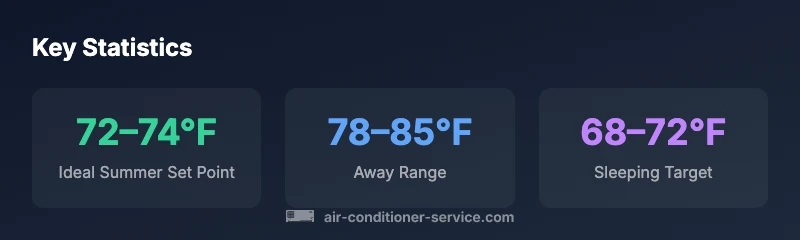
Typically, what should air conditioner be set at for comfortable, efficient cooling is around 72–74°F (22–23°C) when you’re home in warm weather. If you’ll be away for several hours, setting the thermostat to 78–85°F (26–29°C) reduces energy use without sacrificing safety. For bedrooms, many people prefer 68–72°F (20–22°C) for better sleep quality. This baseline balances comfort and efficiency in most homes.
What should air conditioner be set at? Establishing a reliable baseline
According to Air Conditioner Service, the starting point for most homes is a practical baseline of 72–74°F (22–23°C) during warm weather. This range tends to deliver a balance between comfort, humidity control, and energy use. If you’re asking, "what should air conditioner be set at?" this baseline provides a straightforward answer that works for many households. Keep in mind that differences in insulation, sun exposure, and humidity can shift the ideal point by a degree or two. The goal is to minimize rapid swings and rely on steady, moderate cooling plus airflow. A smart approach combines a reasonable set point with fans that move air across living spaces, which can help you feel cooler even without a large temperature drop.
Summer set point ranges: comfort vs. efficiency
The most common, widely recommended range for summer is 72–74°F (22–23°C) when people are at home. This point strikes a balance between personal comfort and energy conservation. If you regularly encounter humidity or heat stress, consider a slightly higher baseline during the day and using fans to improve perceived cooling. Conversely, bedrooms can tolerate a cooler range like 68–72°F (20–22°C) to aid sleep. The key is consistency: large swings in temperature cause the system to work harder and may negate any perceived comfort gains. Air conditioners respond to small adjustments with noticeable differences in comfort.
Humidity and climate considerations
Humidity plays a crucial role in how cool a space feels. In sweaty, humid climates, you may need to keep the thermostat at the lower end of the recommended range to achieve the same level of comfort, or use dehumidification alongside cooling. If humidity is low, you can operate closer to the higher end of the range without sacrificing comfort. The relationship between temperature and humidity means that sometimes a 2–3°F adjustment can yield a substantially drier, more comfortable indoor environment. In all cases, pairing temperature control with good air circulation improves perceived cooling.
Scheduling and occupancy: when to tweak settings
Occupancy patterns matter. If you’re away for long stretches, raising the set point by 4–7°F (2–4°C) can save energy without significantly impacting comfort on return. For households with irregular schedules, a programmable or smart thermostat helps maintain a steady baseline while automatically adjusting for your routine. Nighttime cooling can often be achieved with modest drops (for example, 2–4°F) paired with ceiling fans to maintain comfort without overworking the AC.
Smart thermostats and humidity management
Smart thermostats enable adaptive scheduling based on your routines and local weather. They can optimize start times so cooling begins before you arrive home, reducing peak load. Pair smart cooling with humidity management—if your home retains moisture, consider a dehumidifier integrated with climate control. In hot, humid environments, humidity management can improve comfort more effectively than chasing very low temperatures. When you consider what should air conditioner be set at, think in terms of comfort plus humidity control, not just temperature.
Common mistakes and how to avoid them
Avoid leaving windows open while the AC runs, which wastes energy. Don’t rely on a single cold set point to resolve all comfort issues; humidity, airflow, and insulation matter equally. Resist the urge to go far beyond the typical ranges to “speed up cooling,” as this usually leads to higher energy use and less comfort. Finally, keep filters clean and maintain your system—a well-maintained unit can achieve the same comfort with modest temperature reductions.
Temperature set-point recommendations by scenario
| Scenario | Recommended Set Point | Notes |
|---|---|---|
| Summer daytime at home | 72–74°F (22–23°C) | Balance comfort and energy use |
| Away from home (8+ hours) | 78–85°F (26–29°C) | Minimize energy use |
| Sleeping | 68–72°F (20–22°C) | Personal comfort; aids sleep |
| Humid climates | 72–74°F (22–23°C) | Humidity control is key |
Common Questions
What is the ideal thermostat setting for summer when I'm home?
For most homes, aim for 72–74°F (22–23°C) when you're at home in warm weather. This range balances comfort with energy efficiency. If humidity is high, you may need a slightly cooler setting or rely on a dehumidifier. Always adjust gradually and monitor comfort.
Aim for 72 to 74 degrees Fahrenheit when you’re home in summer, then tweak as needed for humidity and comfort.
Does turning the thermostat up always save energy?
Raising the temperature does save energy, but benefits depend on climate, home insulation, and humidity. The biggest savings come from maintaining a steady, comfortable baseline rather than frequent large swings. A programmable schedule helps maximize efficiency.
Yes—raising the temp can save energy, especially with a steady schedule and good insulation.
Should I set different temperatures for day and night?
Yes. Many households use a higher temperature during the day and lower at night for comfort and energy efficiency. Start with a daytime baseline around 72–74°F and a sleeping range around 68–72°F, then adjust to personal preference.
Yes—use a sleeping range around 68–72°F and a warmer setting when you’re awake.
How does humidity affect the perceived cooling?
High humidity makes spaces feel warmer, so humidity control is crucial. Cooling alone may not feel comfortable in damp air. Pair temperature control with dehumidification and good air movement.
Humidity can make you feel warmer; combine cool temps with humidity control.
Can I use fans with the AC to feel cooler?
Yes. Fans improve air circulation and can make you feel cooler at higher thermostat settings. Use ceiling fans or portable fans to spread cooled air more evenly and reduce the need for aggressive cooling.
Yes—fans help you feel cooler and can let you raise the thermostat a bit.
“Maintaining the right indoor temperature is about comfort and humidity as much as numbers. Small setpoint adjustments can lead to noticeable energy savings when paired with good airflow.”
The Essentials
- Start with 72–74°F in summer for most homes
- Raise to 78–85°F when away for long periods
- Balance humidity with airflow and dehumidification
- Use a programmable thermostat to automate changes
- Tailor settings to occupancy and humidity, per Air Conditioner Service