24 Hour Air Conditioner Repair: Quick Guide for Homeowners
Practical, safe steps for urgent cooling restoration. Learn triage, when to call a pro, and how to minimize downtime during 24 hour air conditioner repair.


According to Air Conditioner Service, 24 hour air conditioner repair is a critical service for households facing sudden heat. This quick answer outlines immediate triage steps, safe inspection tips, and clear thresholds for calling a licensed technician. You’ll learn how to minimize downtime, protect sensitive components, and document symptoms to speed service when emergencies strike.
Urgency and safety: framing 24 hour repair reality
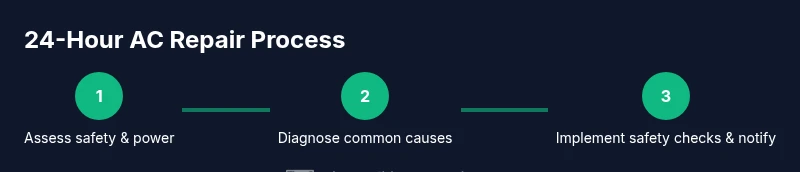
When an air conditioner fails after hours or during peak heat, a fast, safe response matters. The goal is to stabilize the situation, protect people and equipment, and gather enough details to speed professional help. The Air Conditioner Service team emphasizes safety and rapid triage; start with power shutoff and clear instructions to avoid electrical hazards. The longer you wait to assess and report symptoms, the higher the risk of further damage or unsafe operating conditions. This block sets the frame for practical decisions during a 24 hour repair scenario, highlighting what can be safely managed by a homeowner and what should be left to a licensed technician. By understanding common failure modes and safety boundaries, you’ll reduce downtime and stress when the clock is ticking.
Understanding common failure modes behind urgent AC breakdowns
Urgent cooling failures often stem from a few repeatable causes. Loose or failed electrical connections, a bad capacitor or relay in the outdoor unit, refrigerant issues, and airflow restrictions from a dirty filter are among the top culprits. The Air Conditioner Service analysis shows that many emergencies begin with simple maintenance gaps—like a clogged air filter or an outdoor unit obstructed by debris—rapidly escalating if ignored. While every system is unique, recognizing these patterns helps you triage effectively until a professional arrives. This section explains how to identify likely fault families without disassembling crucial components.
Safety basics: electrical power and hotspot checks
Safety first is non-negotiable in 24 hour repair scenarios. Before touching any wiring, shut off power at the main breaker and the outdoor disconnect if accessible. Use a non-contact voltage tester to confirm there is no live voltage on the thermostat wires or outdoor contact points. Wear gloves and eye protection, and keep children and pets away from the equipment. Do not attempt refrigerant work or intrusive diagnostics yourself. This block outlines essential safety checks that reduce risk while you assess symptoms and prepare information for the technician.
Quick diagnostic steps you can perform safely
Begin with non-intrusive checks to gather useful details. Verify the thermostat is set to a cooling mode and that the setpoint matches the room temperature. Confirm the outdoor condensing unit is receiving power and that the fan spins when commanded. Inspect the air filter and return vents for blockage, and clear any debris around the outdoor unit. Listen for unusual noises or buzzing from electrical components when power is applied (with precautions). These steps help you guide the technician and avoid unnecessary visits when the problem is obvious.
Diagnosing thermostat and sensor issues
Thermostats and sensors are common culprits in unreliable cooling. Look for incorrect temperature readings, unresponsive controls, or error codes displayed on the thermostat. If the system is older, calibration drift or a failing thermistor can cause the outdoor unit to cycle incorrectly. Do not replace sensors yourself unless you are trained. Document any error codes and the precise conditions when failures occur; this information speeds diagnosis and reduces unnecessary part testing during emergency service.
Outdoor unit and airflow checks
A blocked outdoor unit reduces cooling and strains the compressor. Check for leaves, dirt, or grass around the condenser; ensure there is at least 12-24 inches of clearance on all sides for proper airflow. If visible, inspect the condenser coils for dirt buildup and rinse gently with a garden hose from the inside out, being careful not to bend fins. Do not use high-pressure washers, which can damage the coils. Adequate airflow is essential for fast diagnosis and successful repair.
How to document symptoms for faster service
Create a concise symptom log: note when cooling started failing, any unusual noises or smells, whether the system cycles on and off, and the exact thermostat settings. Include model and age if known, recent maintenance actions, and any changes in performance (e.g., reduced airflow, frost on coils). Photograph the outdoor unit and any obvious wiring or control box labels. A clear report helps a technician identify likely failure modes more quickly and reduces diagnostic time.
What to expect from a professional repair during a 24-hour window
When a licensed technician arrives, expect a rapid assessment, safety checks, and targeted testing of electrical and refrigerant systems. Parts availability can influence the timeline; some repairs are completed on the same visit, while others may require ordering replacements. The technician will typically verify system parameters after any repair and test function across multiple load conditions. If immediate refrigerant handling is required, only a licensed professional should perform it, following local regulations and safety standards.
Long-term relief: after the repair and maintenance plan
A 24 hour repair should be followed by a maintenance plan to prevent recurrence. Schedule a preventive service visit to inspect electrical connections, test capacitors and relays, clean coils, and replace filters. Establish a routine for filter changes every 1-3 months depending on usage and air quality. Regular maintenance reduces the likelihood of urgent failures and extends equipment life, delivering more reliable cooling during peak seasons.
Tools & Materials
- Non-contact voltage tester(Verify power at the outdoor unit and thermostat wires)
- Digital multimeter(Measure voltage and resistance safely)
- Insulated screwdriver set(Torque and disconnect screws safely)
- Flashlight (handheld)(Illuminates tight inspection areas)
- Electrical tape(Temporary insulation for exposed conductors)
- Gloves and goggles(Personal protection during inspection)
- Shop rags or coil cleaner (optional)(Clean coils from the outside with care)
- Notebook and pen(Record symptoms, times, and actions)
Steps
Estimated time: 30-60 minutes
- 1
Power down the system safely
Locate the main breaker and outdoor disconnect, then switch to off. If accessible, unplug the unit from its dedicated outlet. This prevents shock and accidental startup during inspection.
Tip: Always verify power off with a tester before touching any wires. - 2
Verify power is off using a tester
Use a non-contact tester to confirm there is no live voltage at the thermostat wires and the disconnect. If you see voltage, wait a few minutes and re-check.
Tip: If you’re unsure, wait and call a pro rather than probing live conductors. - 3
Check thermostat settings and battery
Ensure the thermostat is in cooling mode and the setpoint is below room temperature. Replace batteries if needed and reset if there are error indicators.
Tip: A simple reset can resolve ghost readings on some models. - 4
Inspect air filter and return vents
Remove the filter and check for excessive dirt. A clogged filter reduces airflow and can trigger frost or overheating. Clear obstructions in supply and return ducts.
Tip: Replace disposable filters; note the filter size for future replacements. - 5
Check outdoor unit clearance and visible components
Look for debris around the condenser and ensure at least 12 inches of clearance. Inspect for damaged fins and obvious signs of wear on the contactor or capacitor box.
Tip: Do not touch capacitors directly; do not attempt to reseat large components. - 6
Test basic operation and observe indicators
With power restored, listen for the outdoor fan and observe whether the compressor engages. Note any unusual noises or smells.
Tip: If the fan doesn’t run or you hear buzzing, avoid continuing diagnosis—this indicates a potential fault. - 7
Prepare information for the technician
Record your observations, take photos of wiring and labels, and write down error codes or strange behavior. Have model and age handy.
Tip: Provide a concise symptom timeline to the technician to reduce on-site diagnosis time.
Common Questions
Is it safe to perform 24 hour air conditioner repair myself?
Some basic checks are safe, but working with electrical components and refrigerant is hazardous. If you’re unsure, contact a licensed technician for 24 hour repair.
Some basic checks are safe, but if you’re unsure, call a licensed technician for emergency repair.
What symptoms require immediate emergency service?
No cooling in extreme heat, burning smells, buzzing or arcing noises, or tripped breakers require immediate professional attention.
No cooling with heat, odd smells, loud buzzing, or tripped breakers means call a pro now.
How long does a typical 24 hour repair take?
Duration varies by problem and parts availability. An initial diagnostic visit is common, with repairs completed on the same day if parts are on hand.
It varies, but an initial visit is common and some parts may require next-day delivery.
What information should I have ready for the technician?
Provide model number, age of the unit, symptoms, any error codes, and recent maintenance. Photos of the outdoor unit and wiring labels help speed service.
Have the model, age, symptoms, and any error codes ready for the technician.
What maintenance can prevent 24 hour emergencies?
Regular filter changes, coil cleaning, and annual professional checkups reduce the chance of urgent failures.
Regular maintenance—filters, coils, and annual checks—helps prevent emergencies.
Watch Video
The Essentials
- Safety comes first before any triage steps
- Document symptoms to speed professional help
- Know when to call a licensed technician for 24 hour repair
- Maintain a simple pre-job checklist to reduce downtime
- Follow a long-term maintenance plan after the event