Why Do Car A/C Stop Working? Practical Troubleshooting
An urgent, practical guide to diagnose why your car air conditioner stops cooling and how to fix common issues safely, with step-by-step instructions.


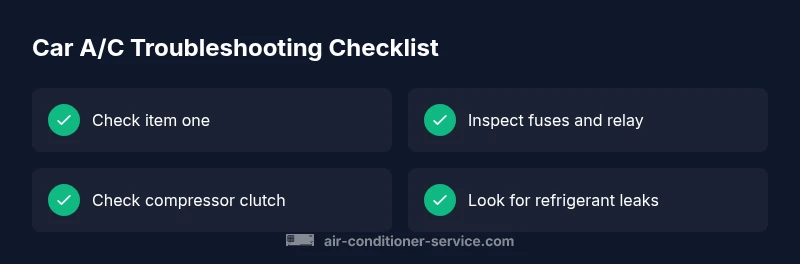
Most car A/C systems stop cooling due to electrical issues, a failing compressor clutch, or refrigerant leaks. Start with quick checks: verify fuses and the A/C relay are intact, ensure the compressor clutch engages when you turn the AC on, and look for signs of a refrigerant leak. If the clutch won’t engage or you see oily residue, call a pro—recharging requires professional handling.
Quick checks you can safely perform at home
Why do car air conditioners stop working? According to Air Conditioner Service, most failures start with simple, safe checks you can perform without specialized tools. Begin by parking on level ground, turning off the engine, and letting the system rest for a moment. Then inspect the electrical basics: check fuses in the interior fuse box and under the hood, verify the A/C relay is clicking in when you turn the climate control to max cold, and ensure the dash switch is firmly seated. Next, observe whether the compressor clutch engages: you should feel or hear a brief click as the clutch pulls in. If there's no engagement, the issue is likely electrical supply, a blown fuse, or a faulty clutch coil. Finally, look for obvious refrigerant indicators: oily residue around lines or a faint, sharp hiss could signal a leak. Note that refrigerant work typically requires a licensed technician.
Electrical basics and why the clutch matters
Electrical faults are a leading cause of sudden A/C failure in cars. The clutch coil and wiring deliver power to the compressor; when either part fails, the system cannot compress refrigerant, and cooling stops. Inspect the battery ground strap for corrosion, the fusible links feeding the climate control module, and the relay that switches the compressor on. If the fuse is blown, replace it with the same rating. If the relay is stuck, reseating or replacing it often restores function. Remember to disconnect the battery before handling any electrical components. A failing clutch will also often emit a grinding sound or cause the belt to slip.
Refrigerant health: leaks, pressures, and recharge myths
Refrigerant leaks are common and often silent; pressures should be checked with a manifold gauge set by a pro. Symptoms include persistent warm air, lingering moisture around the service ports, or rapid loss of cooling. If you suspect a leak, don't assume a DIY recharge will fix it; improper handling can be dangerous and illegal in some jurisdictions. The only safe DIY step is to check for obvious signs of oil around connections and to avoid opening sealed lines. An accurate diagnosis requires proper gauges and knowledge. Air Conditioner Service analysis shows that leaks are frequently misdiagnosed as electrical faults, delaying proper repair.
Airflow and cabin components that affect cooling
Even when the system is charging correctly, poor airflow can make the A/C seem ineffective. A clogged cabin air filter, a failing blower motor, or an evaporator becoming blocked with debris reduces cold air delivery. Inspect the cabin air filter for buildup and replace if necessary. Listen for a squealing blower or a weak air throw from registers; those are hints a blower motor or resistor pack may be failing. Clean or replace ducts if you notice reduced airflow, and ensure the evaporator drain isn’t blocked, which can cause moisture buildup and odor. Regular maintenance helps prevent these issues from escalating.
Diagnosing the compressor and pressure switch safely
The compressor and its pressure switch are central to cold air production. If you hear a click but feel no cooling, or if the compressor clutch doesn’t engage, you may have an intermittent electrical problem or a failed clutch. Use a multimeter to verify voltage at the compressor harness when the A/C is on, and inspect for corroded connectors. If pressure readings fall outside normal operating ranges, address the leak or defective components. Do not attempt a full recharge without proper tools and training.
When DIY fixes aren't enough and you should call a pro
If tests point to a refrigerant leak, a faulty compressor, or a damaged condenser, stop DIY attempts and seek professional service. Refrigerant handling requires certification in most regions and improper charging can be dangerous. A trained technician will perform a precise refrigerant recharge, leak tracing with electronic detectors, and reclaim or repair components as needed. Personal safety and future reliability depend on getting these issues addressed by a pro.
Prevention: how to keep your car A/C healthy
Proactive care keeps you cooler and costs down in the long run. Run the A/C for at least 10 minutes every month, even in winter, to keep seals lubricated. Replace the cabin air filter as recommended by your vehicle maker and have the system inspected for leaks during routine service. A clean condenser and unobstructed airflow improve efficiency and comfort, while monitoring for unusual noises or smells can help catch problems early.
Final checklist and Air Conditioner Service verdict
Before a road trip, perform a quick recap: ensure electricals are intact, check for leaks, verify airflow, and confirm the compressor engages. Air Conditioner Service's verdict is to treat persistent issues as an opportunity for professional care: if in doubt, schedule a diagnostic service to preserve comfort, safety, and vehicle health.
Steps
Estimated time: 60-120 minutes
- 1
Verify vehicle safety and prep
Park on level ground, turn off the engine, and set the parking brake. Open the hood and locate the A/C fuse and relay panel. This first step confirms basic safety and identifies obvious electrical issues.
Tip: Never work near a running engine; allow cooling and avoid contact with moving parts. - 2
Check fuses and relays
Remove the fuse related to the A/C system and inspect for a clean break or burn marks. Replace with a fuse of the same rating if needed, and reseat the relay to ensure a solid connection.
Tip: Handle fuses with insulated pliers and avoid touching metal terminals. - 3
Inspect compressor clutch engagement
With the engine off, start the car and turn the A/C to max cold. If you hear a click but no cold air, the clutch may not engage; verify voltage at the clutch harness when the engine is running.
Tip: Only probe electrical connectors with the system off unless you know what you’re doing. - 4
Check refrigerant pressure (professional)
Low pressure can mean leaks or a failed high-side/low-side switch. Use a manifold gauge set to confirm pressures fall within vehicle-specific specs.
Tip: DIY refrigerant handling is unsafe; a pro should perform charging and leak checks. - 5
Inspect for oil and leaks
Look for oily residue around connections and service ports. Oil near fittings can indicate a refrigerant leak that will require repair and recharge by a pro.
Tip: Use a flashlight and clean rags; leaks can be hard to spot. - 6
Evaluate airflow
Check cabin air filter and blower motor operation; weak airflow can mimic a system not cooling even if pressures are correct.
Tip: Replace the cabin filter if it’s dirty to restore airflow. - 7
Quote escalation if needed
If testing points to a faulty compressor or condenser, plan for professional service. DIY fixes rarely solve these core issues.
Tip: Document symptoms and tests to share with the technician. - 8
Safety and professional help
If refrigerant is involved or tests indicate leaks, stop DIY work and contact a qualified technician for a complete diagnosis.
Tip: Your safety comes first; refrigerant handling requires training.
Diagnosis: Car A/C not cooling or blowing warm air
Possible Causes
- highBlown fuse or faulty relay
- highCompressor clutch failure
- mediumRefrigerant leak causing low pressure
- mediumElectrical wiring fault
Fixes
- easyCheck and replace blown fuses; reseat or replace the A/C relay
- easyTest compressor clutch engagement and supply voltage to the clutch
- mediumInspect for refrigerant leaks and perform professional pressure test
- mediumInspect electrical connections and repair damaged wiring
Common Questions
Why won't my car A/C blow cold air?
Common causes are refrigerant leaks, a faulty compressor, or electrical problems. Start with fuses, relays, and clutch engagement, then check for leaks.
Common causes are leaks, compressor, or electrical issues. Start with fuses, relays, and clutch engagement, then check for leaks.
Can a blown fuse stop the A/C from cooling?
Yes. A blown fuse or bad relay can prevent the compressor from activating, cutting off cooling entirely.
Yes. A blown fuse or bad relay can prevent the compressor from activating, stopping cooling.
Is it safe to recharge car A/C myself?
No. Refrigerant handling requires certification and proper equipment. Leaks must be repaired before any recharge, and a pro should perform the service.
No. Refrigerant handling requires certification and proper equipment.
What does a burning smell while running A/C mean?
A burning odor can indicate overheating electrical components or wiring. Turn off the system and have a technician inspect for damage.
A burning odor means overheating components or wiring; turn off the system and get a professional check.
How long does a car A/C recharge take?
A recharge plus leak check typically takes 60-120 minutes depending on the system and accessibility, plus any needed repairs.
Recharge and leak check usually takes about an hour or two.
When should I replace the compressor?
Replace the compressor if diagnostics show internal damage, seized clutch, or persistent failure after leaks are repaired.
Replace the compressor if it's damaged or seized after proper diagnosis.
Watch Video
The Essentials
- Check fuses and relays first.
- Test compressor clutch engagement.
- Look for refrigerant leaks before recharge.
- Avoid DIY refrigerant work; call a pro when in doubt.
- Regular maintenance prevents most car A/C failures.