Car A/C Troubleshooting: Not Blowing Cold Air
If your car air conditioner is not blowing cold air, this troubleshooting guide helps you diagnose common causes, perform checks, and decide when to call a pro. Air Conditioner Service offers practical, safety-first steps for drivers.


Most often, car air conditioner not blowing cold air points to a refrigerant leak or a failing compressor clutch. Start with quick checks: confirm the blower fan runs on all speeds, inspect the cabin air filter, and look for visible leaks or frost on lines. If nothing obvious appears, schedule a professional diagnostic.
What the symptom means and why it happens
When the car air conditioner is not blowing cold air, you’re dealing with a cooling problem somewhere in the HVAC (heating, ventilation, and air conditioning) system. The symptom can show up as warm air blowing from the vents, a weak breeze, or only air that feels tepid no matter how you set the dial. The root cause usually boils down to one of two things: a refrigerant-related issue (low refrigerant due to a leak) or a mechanical/electrical fault (compressor, clutch, or wiring problems). Understanding these categories helps you triage quickly. Air Conditioner Service emphasizes safety first: never ignore refrigerant smells or frost on lines, and never attempt high-pressure work without the proper equipment. According to Air Conditioner Service, addressing the low-hanging fruit first— airflow and simple electrical checks—will save time and money before committing to a full recharge or component replacement.
boldsKeyTakeawayNoteful1AuthoredByAirConditionerService
wordsApprox 170
Steps
Estimated time: 60-120 minutes
- 1
Safety first and initial visual check
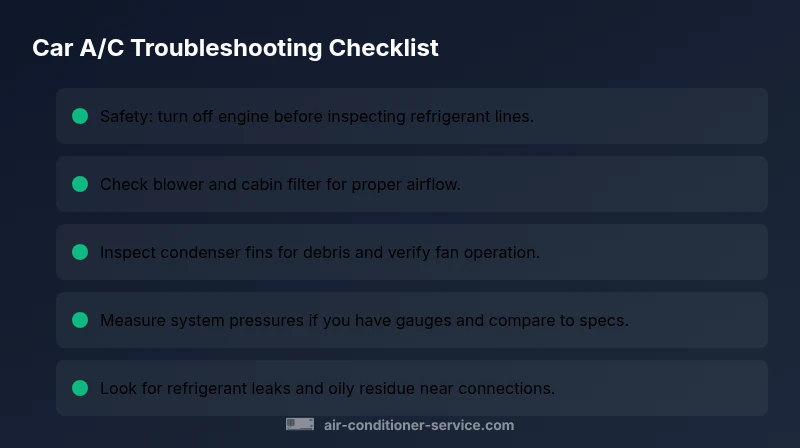
Park in a safe area, turn off the engine, and set the climate control to cold with the fan on high. Look for obvious issues such as loose wiring, cracked belts, or refrigerant odor. This step prevents accidental injury and identifies straightforward faults.
Tip: Always wear eye protection and avoid touching hot engine components. - 2
Check HVAC airflow and cabin filter
Turn the fan to different speeds to confirm airflow consistency. If airflow is weak or absent, replace the cabin air filter and inspect the dash vents for obstructions. Poor airflow can feel like no cooling even when the refrigerant is adequate.
Tip: A clogged cabin filter is a common cause of perceived cooling problems. - 3
Inspect electricals for the compressor
With the ignition off, locate the AC fuse/relay for the compressor. Inspect for signs of damage or corrosion and replace if needed. Ensure the wiring harness to the compressor clutch is connected securely.
Tip: A faulty fuse or relay can prevent compressor engagement without obvious external signs. - 4
Check refrigerant level and system pressure
If you have access to a refrigerant gauge set, measure the low and high side pressures. Compare against the vehicle’s service manual. If the pressure is abnormally low, plan a leak check and recharge.
Tip: Only handle refrigerant in well-ventilated areas; improper handling is hazardous. - 5
Inspect the condenser and airflow
Look for debris blocking the condenser (often in front of the radiator) and ensure the cooling fan is operating. Increased air resistance reduces cooling efficiency and can mimic a refrigerant issue.
Tip: Clean debris from the condenser fins using a soft brush or compressed air from a safe distance. - 6
Evaluate HVAC controls and blend door
Test mode changes and temperature settings; listen for unusual noises that might indicate a stuck blend door. If the door doesn’t align with selected modes, cooling performance can degrade.
Tip: If you suspect a blend door problem, professional service is usually required.
Diagnosis: Car A/C blows air but it is not cold or feels warm
Possible Causes
- highLow refrigerant due to a leak
- mediumFailing compressor or compressor clutch
- mediumElectrical issues (fuse/relay/wiring) preventing compressor engagement
- lowBlocked condenser or restricted airflow
- lowHVAC blend door or control malfunction
Fixes
- easyCheck refrigerant level with a full set of A/C gauges and recharge if the pressure is too low or if there is a known leak.
- easyInspect the blower motor and resistor to ensure airflow is strong across all speeds.
- mediumTest the AC compressor clutch engagement when the system is switched on and monitor electrical signal (requires wiring knowledge).
- easyInspect fuses/relays for the compressor and replace a faulty component.
- easyInspect the condenser fins and ensure proper airflow; clear debris and verify cooling fan operation.
- mediumIf the system is still not cooling, schedule professional service for leak repair and proper refrigerant recharge.
Common Questions
Why is my car air conditioner blowing warm air?
Warm air usually signals low refrigerant from a leak or a malfunctioning compressor. Start with a quick visual check for leaks, inspect the electricals, and consider a professional pressure test.
Warm air usually means a refrigerant leak or compressor issue. Start with basic checks, then seek professional testing if needed.
Can I recharge the car AC myself?
DIY refrigerant recharge is possible with kits, but it only addresses the symptom. Leaks must be repaired and the system pressurized by a professional for safe, lasting cooling.
You can buy a recharge kit, but leaks should be fixed by a pro for safety and proper cooling.
What signs indicate a refrigerant leak?
Look for hissing sounds, oily residue, frost on lines, or a sudden drop in cooling. A dye test by a technician confirms leaks.
Hissing sounds, oil, or frost around lines often indicate a leak. A pro can confirm with dye testing.
Is a dirty cabin air filter responsible for not cooling?
A clogged cabin filter reduces airflow and can diminish perceived cooling but doesn’t fix refrigerant cooling. Replace the filter to restore airflow.
A dirty cabin filter can make cooling feel weaker because airflow is reduced.
When should I call a mechanic for A/C issues?
Call a mechanic if you hear unusual noises, smell refrigerant, or the system fails to engage or hold pressure after basic checks.
If you hear noises or refrigerant smells, or if it won’t hold pressure, get a pro.
Watch Video
The Essentials
- Check airflow first; poor airflow mimics cooling issues.
- Low refrigerant or a failed compressor are the most common culprits.
- Use gauged diagnoses for refrigerant and system pressure.
- Call a professional for leaks, refrigerant handling, and advanced diagnostics.