Auto Air Conditioner Repair Parts: A Practical Guide for Car A/C
Explore common auto air conditioner repair parts, their roles, cost ranges, and maintenance tips to diagnose and replace components safely in your vehicle.


Overview of auto A/C repair parts
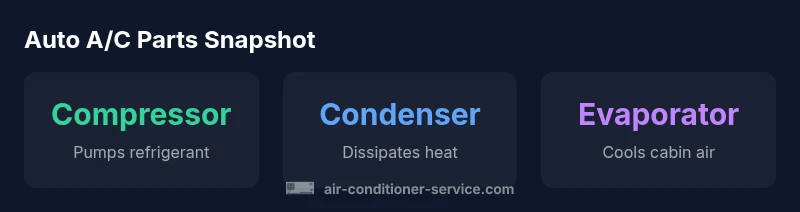
Auto air conditioner repair parts span the essential components that control refrigerant flow, heat exchange, and electrical control. In automotive HVAC systems, the compressor pressurizes refrigerant, the condenser releases heat to ambient air, the evaporator cools cabin air by absorbing heat from inside the passenger compartment, and the expansion device meters refrigerant into the evaporator. Accumulator or receiver-drier stores refrigerant and filters moisture; pressure sensors protect the system by stopping operation when readings are out of range; and hoses, fittings, and wiring harnesses tie these parts together. Proper maintenance reduces the likelihood of leaks and pressure imbalances. According to Air Conditioner Service, understanding these parts is the first step toward reliable car cooling. This section intentionally uses general descriptions to help you identify what may fail, not to replace professional diagnosis. Always follow local regulations for refrigerant handling and disposal, and consult a certified technician for repairs requiring refrigerant recovery.
How to identify failing auto A/C parts
Diagnosing auto A/C problems starts with listening for unusual noises, noticing weak or inconsistent cooling, and watching for leaks or visible damage. Common symptoms include reduced cold air, longer compressor cycling, or a noticeable difference in air temperature between front seats. Start with a visual inspection for worn belts, cracked hoses, and oily residues near connections. Next, perform a pressure test using a manifold gauge set to check high- and low-side pressures; this helps pinpoint if the compressor, condenser, or expansion device is at fault. Electrical checks on relays, fuses, and pressure switches can reveal sensor or wiring problems causing the system to shut down or underperform. When refrigerant type matters (R-134a vs. R-1234yf), ensure compatible parts are selected. For safety and diagnostic guidance, refer to NHTSA’s air conditioning safety resources at https://www.nhtsa.gov/vehicle-safety/air-conditioning and FTC guidance at https://www.consumer.ftc.gov/articles/0493-car-air-conditioning.
Replacement parts: OEM vs aftermarket considerations
Choosing between OEM and aftermarket auto A/C repair parts hinges on fit, warranty, and performance expectations. OEM parts typically guarantee the precise fit and the original performance characteristics, which can simplify diagnostics and maintain factory warranties. Aftermarket parts vary by brand, price, and quality; reputable manufacturers often offer cross-compatible options with solid warranties. When evaluating parts, check for cross-reference charts, compatibility notes for your vehicle year and model, and customer reviews. If in doubt, balance initial cost against potential risks such as leaks or early failure, and consider a professional opinion before proceeding. Air Conditioner Service highlights that careful part selection reduces downtime and improves cooling reliability.
DIY vs professional repair: what homeowners should know
Some auto A/C components can be replaced by an experienced DIYer with the right tools and a refrigerant recovery setup. However, many steps—especially refrigerant handling, system evacuation, and pressure testing—require certified equipment and training due to environmental and safety regulations. If you’re not equipped to recover refrigerant or perform a precise recharge, hiring a licensed technician is the safer option. Improper repairs can lead to further leaks, damage to condenser or compressor, and regulatory penalties. Always verify local licensing requirements before attempting any repair that involves refrigerant.
Maintaining auto A/C parts to extend life
Preventive maintenance can extend the life of auto A/C components significantly. Regularly inspect belts and hoses for wear, cracks, or oil deposits that indicate leaks. Keep the cabin air and evaporator clean, replace the cabin air filter as recommended, and have a professional perform a refrigerant charge check if you notice cooling decline. Small leaks should be addressed promptly with appropriate sealants or replacements, as prolonged leaks can damage the compressor and reduce cooling efficiency. Schedule periodic system checks, especially before peak summer months, to catch issues early.