Why Is My Air Conditioner So Loud? A Practical Troubleshooting Guide
Discover practical steps to diagnose and fix a loud air conditioner. This guide covers common causes, safety checks, and when to call Air Conditioner Service for professional help.


Most often the noise comes from loose mounting hardware, a dirty or worn fan, or an unbalanced outdoor unit. Start with the easiest fixes: tighten screws, clean the blades, and clear debris around the condenser. If the noise persists after simple steps, power off the unit and call a professional to inspect electrical components and the compressor.
Quick Diagnostic Snapshot
According to Air Conditioner Service, a loud air conditioner is usually a symptom of a few repeatable, simple issues rather than a catastrophic failure. In most homes, the first sign is a rattling, banging, or shrill whistle that appears when the system starts or runs at higher speeds. The goal is to isolate the source quickly with a logical checklist and then proceed to safer, more definitive fixes. Early identification can prevent further damage and reduce the risk of costly repairs. If you notice burning smells, smoke, or sparking, immediately shut off power at the breaker and call emergency services.
Common Loud AC Culprits
Loud noises can originate from several areas, including the outdoor condenser, the blower fan inside the air handler, and ductwork. A loose cabinet panel or worn mounting hardware can vibrate loudly at startup. Bent or damaged fan blades can strike the housing, creating clattering or grinding sounds. Debris like sticks, leaves, or even small animals around the outdoor unit can also cause banging or rattling. Dirty or dry bearings in either the outdoor fan motor or indoor blower can generate whining or grinding noises. Regular maintenance reduces the chance of these issues turning into bigger problems.
What to Check Safely Right Now
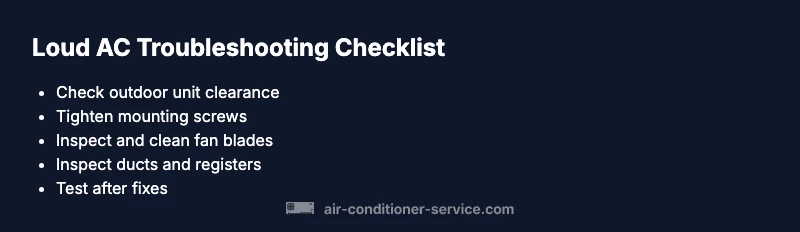
Before you touch anything, turn the thermostat to OFF and switch off the circuit breaker to the unit. Then visually inspect: 1) Outdoor unit clearance—ensure at least 2 feet of clearance around the condenser and 3 feet above it. 2) Mounting hardware—look for loose screws or panels and tighten carefully. 3) Blades and fan—check for bent blades; do not touch moving parts while power is on. 4) Ductwork—listen for whistling sounds indicating leaks or loose joints. 5) Filters—dirty filters can cause the system to work harder and produce unusual noises. These steps reduce risk while you diagnose the issue.
Diagnostic Flow Overview
A systematic flow helps you move from symptom to solution without guesswork. Start with visual checks and simple fixes. If the noise remains after you’ve tightened screws, cleaned blades, and cleared debris, move to the next step: check for motor bearing wear and electrical issues. If you’re not comfortable with electrical tests, skip to contacting a professional. The key is to avoid running the unit with obvious safety concerns or damaged components.
Step-by-Step Fixes for the Most Common Cause
- Tighten mounting screws and panels on the outdoor unit. Loose hardware is the most frequent source of rattling noises. Access the unit only after turning off power at the breaker. 2) Clean the outdoor condenser. Remove leaves, mulch, and debris that can vibrate and obstruct airflow. 3) Inspect the fan blades for bending or damage; replace damaged blades. 4) Check the fan motor bearings by listening for a gritty or grinding sound; if bearings are worn, replace the motor. 5) Verify duct joints and registers are sealed and supported to prevent whistling noises. 6) Reassemble and secure the thin panels to reduce vibration transmission. 7) Restore power and run a brief test cycle at low, then high speed to confirm stabilisation. If noise persists, schedule a professional inspection.
Tips, Warnings & Prevention
- Safety first: always shut off power at the breaker before any inspection or adjustment.
- Don’t ignore odd smells, smoke, or buzzing near electrical components.
- Use a soft brush or cloth to clean fan blades; never use harsh chemicals on exposed bearings.
- Schedule annual professional maintenance to catch wear and alignment issues early.
- Keep the outdoor unit clear of vegetation and debris for steady operation.
- If the noise is accompanied by reduced cooling capacity, unexpected temperature swings, or ice formation on the coil, turn the system off and call a technician.
How to Prevent Future Loud Noises
Regular maintenance reduces the odds of loud AC noises. Replace or clean air filters every 1-3 months depending on usage and household conditions. Schedule a professional inspection at least once a year to check electrical components, refrigerant pressures, and motor bearings. Address minor problems promptly to avoid escalation into costly repairs or full unit replacement.
Steps
Estimated time: 60-90 minutes
- 1
Power down and safety check
Turn off the thermostat and switch off the outdoor unit’s breaker. Inspect for visible hazards, then wear safety gloves and eye protection before handling any components.
Tip: Always assume conductors can be energized; verify power is off with a non-contact tester. - 2
Inspect outdoor unit clearance
Ensure at least 2 feet of clearance around the condenser and 3 feet above it. Remove leaves, weeds, and other debris that can cause vibration or restrict airflow.
Tip: Clear a full radius around the unit to prevent reaccumulation of debris. - 3
Check mounting hardware
Tighten all screws on panels and the mounting bracket. A rattling case is almost always due to loose hardware.
Tip: Use a torque screwdriver if available to avoid over-tightening plastic mounts. - 4
Inspect and clean the outdoor fan
Check for bent blades or foreign objects; clean the blade surface gently with a soft brush.
Tip: Do not attempt to bend blades back into shape; replace if damaged. - 5
Evaluate indoor blower and ducts
Listen for whines from the blower and check for loose duct joints that could whistle. Seal leaks with appropriate duct tape or mastic.
Tip: Never seal while the system is running. - 6
Power up and test
Restore power and run the unit through a short cycle to observe if the noise persists and from which area it originates.
Tip: If the noise changes with speed, it may indicate a motor or bearing issue. - 7
Call a professional if unresolved
If the noise continues or you hear electrical buzzing, arcing, or smells, contact a qualified AC technician promptly.
Tip: Professional help is essential for safe handling of electrical and refrigerant components.
Diagnosis: Loud banging or rattling when the AC runs
Possible Causes
- highLoose components or mounting hardware
- mediumFan blade contacting housing
- lowDebris around outdoor unit
Fixes
- easyTighten mounting screws and secure loose panels
- easyInspect fan blades for damage and clean
- easyClear debris from around outdoor unit and remove obstructions
- mediumCheck electrical connections and consult a professional if you hear buzzing or see arcing
Common Questions
What causes a loud air conditioner, and how can I tell which part is making the noise?
Loud AC noises can stem from loose mounting hardware, a dirty or damaged fan, or debris around the outdoor unit. A simple approach is to listen for whether the sound comes from the outdoor unit, the indoor blower, or the ductwork. Visual checks and controlled testing help pinpoint the source. If unsure, consult a technician.
Common causes are loose parts, a dirty or damaged fan, or debris near the outdoor unit. Listen for whether the noise comes from outside or inside, then inspect those areas.
Can a dirty air filter cause loud noises?
Yes, a clogged filter can cause the system to strain and produce unusual sounds as it fights restricted airflow. Replace or clean the filter, then run a short cycle to see if the noise improves.
A dirty filter can make the system work harder and create strange noises. Replace or clean it and test again.
Is it safe to lubricate AC bearings myself?
Most modern units are sealed and do not require user lubrication. Opening a unit can void warranties and pose risks. If you suspect bearing wear, it’s best to contact a licensed technician.
Bearings in most residential units aren’t user-serviceable. If you hear grinding, call a pro.
When should I replace components instead of repair?
If the fan, motor, or compressor shows recurrent failures after multiple repairs, or if the unit is approaching the end of its lifespan (typically 10-15 years), replacement may be more cost-effective.
If components keep failing, consider replacement, especially in older units.
Can weather impact my AC noise level?
Yes, extreme weather can affect vibration and airflow, making noises more noticeable. Ensure proper unit clearance and check for loose attachments after severe wind or storms.
Weather can amplify noises when airflow is disrupted by debris or loose parts.
If my outdoor unit is freezing up, could that cause loud noises?
Ice buildup can cause unusual noises as the fan struggles to move air. Turn off the unit, thaw the ice, and inspect for airflow obstructions or refrigerant issues. If icing recurs, call a tech.
Ice can make noises as the fan works harder; thaw and check airflow. If it keeps icing, get a professional check.
Watch Video
The Essentials
- Start with easy checks to isolate the source
- Clean or replace moving parts and secure loose hardware
- Inspect outdoor unit clearance and duct joints for obstructions
- Call a pro if noises persist after basic fixes