Why Does My Air Conditioner Smell? A Practical Troubleshooting Guide
Discover practical steps to diagnose and fix common AC odors—from musty mold to refrigerant leaks—with safety tips and maintenance advice.


Unpleasant odors from an air conditioner are usually caused by mold or mildew on the evaporator coil or a clogged condensate drain, often worsened by a dirty filter. The quickest fixes are to replace the filter, clear the drain line, and run the fan on a dry cycle after cleaning. If the smell persists, call a licensed HVAC technician.
What causes odors in air conditioners?
If you're wondering why does my air conditioner smell, the most common answer is moisture and organic growth inside the unit. In many homes, a damp evaporator coil and a clogged condensate drain create a perfect environment for mold, mildew, and bacteria. When air passes over this contaminated surface, you pick up musty, sour, or rotten odors that can be alarming. The good news is that most odor issues are preventable and fixable with basic maintenance. In this guide from Air Conditioner Service, we walk you through the practical steps to identify the source and restore pleasant airflow.
Odor profiles and their likely sources
- Musty or moldy smell: typically points to mold growth on the evaporator coil or within ductwork.
- Rotten-egg or sulfur smell: could signal a refrigerant leak or degraded insulation around lines; treat as a potential hazard.
- Chemical or solvent odor: may come from burned wiring or overheated components.
- Sharp, dusty odor: usually from a dirty air filter or accumulated dust in the blower.
- Sweet or syrupy odor: sometimes linked to microbial activity in damp condensate lines.
Recognizing the odor profile helps you target the source and avoid fruitless fixes. As you search for answers, remember that regular maintenance dramatically lowers the odds of recurring smells.
Safe, immediate actions you can take today
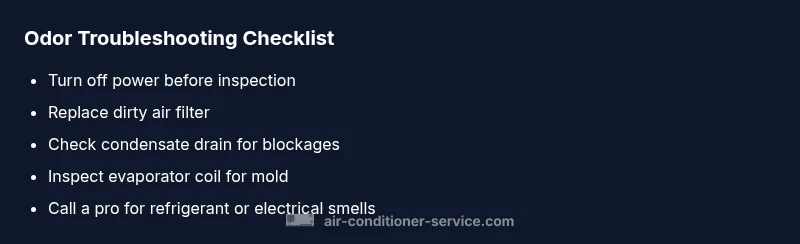
Before touching any internal parts, power off the system and unplug it from the wall outlet. Replace a clogged or dirty filter, then inspect the condensate drain for blockages or standing water. If accessible and safe, wipe down the interior surfaces around the evaporator coil to remove visible mold; never disassemble components beyond your comfort level. Run the fan on a dry or ventilation setting to help evaporate residual moisture. If you smell refrigerant or feel dizzy, leave the area and contact a licensed professional immediately.
How moisture, mold, and drainage interact to create odors
Moisture is a key factor in odor development. The evaporator coil collects humidity from the air, and if it remains damp, a biofilm can form that houses mold and bacteria. The condensate drain removes this moisture; when the drain is blocked, water stagnates and becomes a hotspot for odors. This combination is the most frequent source of musty smells. Regularly cleaning the drain and changing filters creates a less hospitable environment for microbes and reduces odor risk.
When ducts and coils harbor mold or mildew
Mold spores can migrate from the evaporator coil into the ductwork, especially in humid climates or if the system has an aging duct seal. A persistent musty odor that intensifies when the AC runs, or a sour note that persists after cabinet cleaning, suggests duct or coil contamination. In many cases, a professional duct cleaning or coil treatment is needed to restore air quality and prevent recontamination.
Foul chemical odors and refrigerant concerns
A strong chemical or solvent-like odor can indicate a refrigerant leak or damaged insulation around refrigerant lines. Refrigerant leaks are hazardous and require immediate professional repair; never seal or attempt to repair a leak yourself. A trained technician will locate and repair the leak and test for other leaks to prevent future odors. If you suspect refrigerant, shut down the system and ventilate the space.
Electrical smells and overheating components
If the odor resembles burning plastic or wires, it can come from overheated motors, capacitors, or wiring insulation. Electrical smells warrant immediate attention because arcing or overheating can lead to a fire. Do not operate the unit until a qualified technician confirms safety. Regular electrical inspections, especially during maintenance visits, help prevent dangerous failures.
Step-by-step path to resolution and when to call a pro
Once basic maintenance is attempted, if the odor persists, schedule a professional diagnostic. A licensed HVAC technician will inspect refrigerant lines, check duct integrity, verify electrical safety, and perform tests for leaks. Expect a detailed report and an estimated repair plan. Proactive maintenance minimizes recurring odors and improves system longevity.
Prevention and maintenance routines to keep odors away
Create a simple seasonal routine: replace filters on a regular schedule, clean the condensate pan and drain line, inspect for moisture intrusion, and schedule seasonal HVAC maintenance. Keep indoor humidity in check with dehumidifiers if needed, and seal any obvious moisture ingress points in your home. Consistent care reduces odor risks and extends equipment life.
Steps
Estimated time: 60-90 minutes
- 1
Power down and safety prep
Turn off the unit at the thermostat and unplug the power cord. Put on safety gloves if you inspect any interior surfaces. Confirm there is no water pooling around the unit before you touch any components.
Tip: Always work with the power off to avoid shocks or shorts. - 2
Check and replace the air filter
Remove the old filter and inspect for visible dirt or mold. Replace with a properly rated filter and install according to the airflow arrows. A clean filter improves airflow and reduces odor carry-through.
Tip: If you have pets or a dusty environment, consider a higher-efficiency filter. - 3
Inspect the condensate drain
Trace the drain line from the evaporator to the condensate pan. Look for signs of clogging or standing water. If you can access the line safely, clear minor blockages with a wet/dry vac and flush with a small amount of distilled water.
Tip: Never use chemical drain cleaners in an HVAC drain line; they can harm the system. - 4
Check for visible mold on coil and cabinet
Look for dark or fuzzy growth on accessible coil surfaces and inside the cabinet. Do not disassemble parts you cannot safely reassemble. Lightly wipe moldy surfaces with a mild, non-ammonia cleaner if advised by your manual.
Tip: Avoid aggressive scrubbing that can release spores into the air. - 5
Run the system and observe odor changes
After cleaning, run the fan on a dry or fresh-air setting to vent moisture. Note if the odor diminishes over 10–20 minutes or if it returns with certain modes (cooling vs. fan only).
Tip: If the odor persists after a dedicated dry run, a professional inspection is needed. - 6
Plan for professional inspection
If the smell persists despite cleaning and filter changes, schedule a professional assessment. A licensed technician will test refrigerant levels, inspect duct integrity, and check electrical safety.
Tip: Document symptoms, when they occur, and any exposures to share with the tech.
Diagnosis: Unpleasant odor from air conditioner during operation
Possible Causes
- highMold/mildew on evaporator coil
- highBlocked or dirty condensate drain line causing stagnant water
- mediumDirty air filter and dusty ducts
- lowRefrigerant leak or degraded insulation
- lowOverheating electrical components or burnt wiring
Fixes
- easyReplace or clean air filter; clean coil area if accessible and safe
- easyClear condensate drain and verify proper drainage
- mediumInspect ductwork for mold; consider professional cleaning if odor persists
- mediumHave a licensed tech check refrigerant levels and leaks
- hardInspect electrical components and replace damaged parts, ensure safe wiring
Common Questions
Why does my air conditioner smell musty?
Musty odors usually indicate mold or mildew growth on the evaporator coil or within ductwork. The odor comes from microbial activity triggered by moisture. Addressing moisture and cleaning accessible surfaces typically resolves this issue, but persistent smells may require duct cleaning or coil treatment by a pro.
A musty AC odor often means mold on the coil or in ducts; cleaning and moisture control usually helps, but call a pro if it persists.
What does a rotten egg smell mean in an AC?
A rotten egg odor can signal a refrigerant leak or degraded insulation near coolant lines. Refrigerant leaks are hazardous and must be handled by a licensed technician. If you notice this scent, shut down the unit and seek professional service promptly.
Rotten egg odor suggests a possible refrigerant leak; shut the unit off and contact a pro right away.
Can a dirty air filter cause odors?
Yes. A clogged filter restricts airflow, allowing dust and moisture to accumulate near the coil, which can grow odors. Replacing the filter is a quick, low-cost fix that often eliminates smell when paired with coil and drain cleaning.
A dirty filter can cause smells; replacing it is a quick fix that often helps a lot.
Is it dangerous to run the AC when it smells?
Running an AC that smells like burning plastic or chemical can indicate electrical trouble or a refrigerant issue. This is potentially dangerous and should be inspected by a professional before continued use.
If it smells burning or chemical, stop using it and call a pro.
How can I prevent odors in the future?
Schedule seasonal maintenance, replace filters regularly, keep drains clear, and monitor humidity. These steps reduce moisture and microbial growth, making odors far less likely.
Regular maintenance and clean drains prevent most AC odors.
When should I call a professional for an AC odor?
If basic cleaning and filter changes don’t resolve the odor within a day or two, or if you smell refrigerant or burning electrical components, contact a licensed HVAC technician promptly.
If odor persists after basic fixes, call a professional.
Watch Video
The Essentials
- Identify odor type to pinpoint likely sources.
- Replace filters and clear drains to stop most odors.
- Don’t ignore electrical smells; safety first.
- Refrigerant leaks require licensed technicians.
- Regular maintenance prevents future odors.