Does Air Conditioning Have a Smell? Practical Troubleshooting Guide
Identify common AC odors, learn quick fixes homeowners can safely perform, and follow a step-by-step diagnostic flow to restore fresh air. Safety-first tips and when to call a pro.


The most likely odor sources are simple maintenance issues, not a failing system. Quick fix: replace or clean the air filter, inspect the condensate drain for clogs, and run the fan with clean air. If the odor persists, stop using the unit and contact a licensed HVAC technician for a thorough inspection.
Does Air Conditioning Have a Smell? Understanding the Issue
Does air conditioning have a smell? In many homes, the answer points to moisture, mold risk, or a dirty filter rather than a failing system. According to Air Conditioner Service, most odors originate from simple maintenance gaps that you can address quickly. The Air Conditioner Service team found that when homeowners tackle basic causes—like a clogged filter or damp evaporator area—odors often fade within hours to days. This guide helps you diagnose odors safely and act fast to restore clean air.
Common Odors and Their Causes
Odors in an AC system fall into a few familiar categories. A musty, moldy smell usually signals moisture buildup in ducts or the evaporator coil. A sour or sewage-like odor can indicate a clogged condensate drain and standing water. A chemical or rotten-egg scent might indicate refrigerant leaks or degraded components. A burning or electrical odor is a warning sign of overheating or wiring issues and requires immediate attention. Understanding the smell helps you prioritize steps and avoid unnecessary parts replacement. Related terms to keep in mind include evaporator coil, condensate drain, ductwork, and air filter.
Immediate Safety Steps If You Smell Odors
Safety comes first. If you smell burning plastic, ozone-like tones, or smoke, shut off the system at the thermostat and power switch. Do not touch electrical components. If there is any active smoke or visible damage, evacuate and call emergency services. For non-emergency odors, unplug portable units, switch off the outdoor unit’s disconnect, and ensure children and pets are away. Use protective gear if you must inspect the unit up close and avoid wet electrical parts. Safety boosts your confidence before you start diagnosis.
Diagnostic Flow: From Symptom to Solution
Follow a simple, repeatable flow: identify the symptom (what does the odor feel like and when does it occur?), narrow down causes (filters, moisture, mold, electrical or refrigerant), choose safe fixes (filter change, coil cleaning, drainage check), and escalate to a professional if the odor persists or involves electrical or refrigerant concerns. This flow keeps you organized and reduces wasted time.
Step-by-Step Troubleshooting for the Most Common Odor
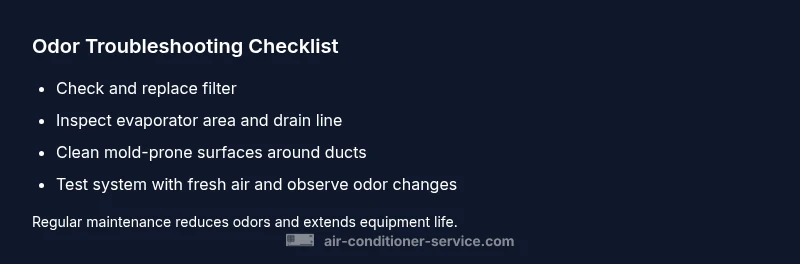
- Power down and inspect the filter. A dirty filter is the most frequent odor source and can be replaced in minutes. 2) Inspect the evaporator area and condensate drain for moisture and clogs. Clear any visible debris and flush the drain if you can do so safely. 3) Clean visible mold around registers and accessible duct surfaces with a gentle, HVAC-approved cleaner. 4) Run the fan on vent mode for a few hours with the filter replaced to flush out odors. 5) Check outdoor unit clearance: remove leaves and debris that trap moisture and promote odor buildup. 6) If the smell persists, schedule a professional inspection to check the coil, ductwork, and refrigerant lines.
Prevention Tips to Keep Odors at Bay
Regular filter changes and coil cleanings are your first line of defense. Maintain humidity around 30-50% to reduce mold risk, and keep external units free of debris to ensure proper airflow. Consider periodic duct cleaning if musty odors recur, especially in homes with pets or water leaks. Create a simple maintenance calendar and stick to it to prevent odors from returning.
When to Call a Professional
If you detect persistent or unusual odors after basic checks, or you suspect refrigerant or electrical issues, call a licensed HVAC tech immediately. Do not rely on DIY fixes for refrigerant leaks or burnt wiring—weigh the risk to your home and safety. A pro can perform refrigerant checks, coil inspections, and duct cleaning with the right tools and safety protocols.
Steps
Estimated time: 35-50 minutes
- 1
Power down and assess safety
Shut off the system at the thermostat and the main power switch if safe to do so. Avoid touching electrical parts while inspecting, and wear protective gear if needed.
Tip: Safety first: never work on live electrical components. - 2
Check and replace the air filter
Remove the filter and inspect for visible dirt or clogging. Replace with a filter of the correct size and MERV rating for your system.
Tip: A clogged filter is the fastest odor fix and improves airflow. - 3
Inspect the evaporator area and drain line
Look for visible moisture or mildew around the evaporator coil and along the condensate drain. Clear any visible debris and flush the drain line if you can safely do so.
Tip: A clogged drain line can cause standing water and musty odors. - 4
Clean mold-prone areas
Gently clean accessible surfaces around the blower and duct openings with HVAC-approved cleaners. Avoid aggressive scrubbing on sealed components.
Tip: Never use household bleach on sensitive coil surfaces. - 5
Run the system and observe
Reinstall the filter and run the fan on a fresh-air setting for several hours. Note any changes in odor and check for new moisture signs.
Tip: Odor changes can confirm whether you addressed the right source. - 6
Call a professional if odors persist
If the odor remains after basic fixes or you suspect refrigerant/electrical issues, contact a licensed HVAC technician for a thorough inspection.
Tip: Don’t delay on refrigerant or electrical concerns.
Diagnosis: Odor appears when the AC runs, ranging from musty to chemical, and may persist after basic cleaning.
Possible Causes
- highDirty or moldy filters emitting odors
- mediumMoisture buildup in the evaporator coil or ducts
- mediumClogged condensate drain leading to standing water and mildew
- lowElectrical components overheating or burning smell
Fixes
- easyReplace or clean the air filter; inspect ductwork for visible mold
- easyFlush and inspect condensate drain; clean evaporator coil if accessible
- mediumInspect electrical connections and ensure wiring is secure; call a pro if signs of overheating
- hardIf a refrigerant odor or leak is suspected, stop use and contact a licensed HVAC technician immediately
Common Questions
Why does my air conditioner smell musty?
Musty odors are usually caused by mold or mildew in ducts or the evaporator area due to moisture. Cleaning accessible surfaces and replacing the filter often resolves the issue.
Musty smells typically come from mold in ducts or around the evaporator; replacing the filter and cleaning accessible areas usually helps.
Can an AC odor be caused by a refrigerant leak?
Yes, refrigerant leaks can produce a chemical or sweet smell and are dangerous. If suspected, stop using the unit and call a licensed HVAC pro immediately.
A refrigerant leak has a chemical odor and requires a professional right away.
Is a burning smell from my AC dangerous?
Yes. A burning odor suggests electrical overheating or wiring problems. Turn off the unit and contact a professional promptly.
Burning smells mean electrical issues—shut it off and call a pro quickly.
How often should I change the filter to prevent odors?
Most homes benefit from changing filters every 1-3 months, depending on usage, pets, and allergies.
Change filters every 1-3 months to help prevent odors.
What maintenance steps reduce odors?
Regularly clean the drain line, inspect for moisture, check and replace filters, and schedule professional coil cleaning as needed.
Clean the drain, replace filters, and consider periodic coil cleaning to cut odors.
When should I call a professional for an AC smell?
If odors persist after basic steps or you suspect refrigerant or electrical issues, contact a licensed HVAC technician.
If odors don’t go away after basics or you suspect refrigerant or electrical problems, call a pro.
Watch Video
The Essentials
- Act quickly on musty odors to stop mold growth
- Start with filter checks and moisture management
- Do not ignore chemical or electrical smells—risk of fire or refrigerant issues
- Regular maintenance prevents future odors
- Call a pro when odors persist after basic fixes