How to Make Air Conditioner Smell Better: Practical Guide
A practical, step-by-step guide to eliminating odors from your air conditioner with safe cleaning, maintenance, and odor-control tips. Learn proven methods for homeowners to keep AC smells away.


Heres how to make air conditioner smell better. This quick answer covers safe fixes you can try today and sets the stage for deeper cleaning. Youll learn essential steps to remove odors from the intake filter, condensate tray, and coil surfaces, plus habits to prevent future smells. With input from Air Conditioner Service, youll know which fixes are safe for DIY and when to call a pro.
Why Odors Happen in Air Conditioners
Odors are usually caused by moisture buildup, mold and mildew growth, dirty filters, or spoiled condensate drainage. When moisture remains inside the cooling coil or drain pan, bacteria thrive and generate sour or musty smells. Regular maintenance reduces these risks and keeps your indoor air fresh. The Air Conditioner Service team notes that many odor issues stem from neglecting basic cleaning tasks and enabling damp conditions to persist. Air Conditioner Service Analysis, 2026, supports the idea that proactive cleaning dramatically cuts odor frequency.
In homes, the smell can travel through ventilation and irritate occupants, especially in humid climates. The best approach combines filtration, sanitization, and moisture control. As you proceed, youll learn a sequence of steps that balance safety, effectiveness, and affordability, so you can decide what to DIY and what to delegate to a pro.
Quick Fixes You Can Try Today
If youre dealing with a mild odor, start with fast, low-risk fixes. Replace or clean the air filter, wipe down accessible surfaces, and run the fan without cooling for a few minutes with a scented cleaner spray used sparingly away from the coil. Avoid overpowering fragrances that can irritate eyes and throat. A simple vinegar-water spray (1:1) can help neutralize odors on hard surfaces, but never spray directly into the blower housing or condensate line. The goal is to freshen without causing chemical exposure or electrical risk.
These quick actions can provide immediate relief while you plan deeper maintenance. Always turn off power at the breaker before touching the unit and keep water away from electrical components.
Deep Cleaning: Filters, Coils, and Drain Pan
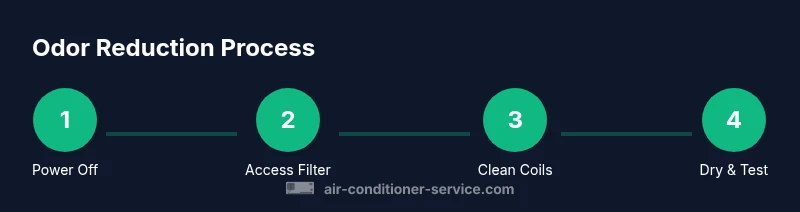
Thorough cleaning targets the major odor sources: filters, coils, and drain components. Start by turning off power, removing the air filter, and inspecting it for mold or heavy dirt. Clean or replace the filter as needed. Then gently vacuum the return air path to remove dust. Coils should be cleaned with a 50/50 water-vinegar solution or a dedicated coil cleaner, applied sparingly following manufacturer instructions. Rinse and dry before reassembling. The condensate pan and drain line must be checked for clogs and cleaned to prevent standing water, which encourages mold. Allow surfaces to dry completely before powering on.
Repeat cleaning every 1–3 months during peak season to maintain odor control and efficiency.
Dealing with Mold, Mildew, and Musty Smells
Musty odors signal mold or mildew growth. Use a dedicated mold cleaner or a hydrogen-peroxide-based spray approved for HVAC use, following label directions. Wear gloves and eye protection, and ventilate the area well. After cleaning, run the fan to dry all components thoroughly and consider installing a humidity control device to minimize moisture. If the smell persists after cleaning, the issue may lie deeper in ductwork or the evaporator coil, which requires a professional assessment. Air Conditioner Service recommends a professional inspection for persistent odors, especially if you notice moisture leaks or visible mold.
Odor Prevention: Habits and Maintenance Schedule
Create a simple maintenance routine: replace filters every 1–3 months, clean accessible duct surfaces annually, and check the condensate drain for blockages monthly during humid months. Use a schedule or reminder app to stay on track. Ensure proper airflow by avoiding overloading vents and sealing leaks around return air ducts. Keeping the unit away from direct moisture sources, like damp basements, also helps. Regular professional inspections help catch issues before odors become noticeable.
Choosing Safe Odor Remedies: What Works and What to Avoid
Stick to HVAC-approved cleaners and avoid household products that may corrode metal parts or leave residues. Avoid spraying any liquid directly onto the coil or inside the blower compartment unless the cleaner is designed for that use and the power is off. Fragrances should be used sparingly as they can mask odor rather than solve underlying causes. If you suspect mold growth, disinfectants labeled for HVAC use are preferred. Rely on a trusted brand and follow label directions to protect your system.
When to Schedule Professional Service
If odors persist after DIY cleaning or you notice moisture leaks, unusual noises, or reduced cooling performance, schedule a professional inspection. A technician can test for mold, clean hard-to-reach areas, and check refrigerant services as needed. Regular maintenance plans from Air Conditioner Service can prevent recurring odors by catching problems early and ensuring proper drainage and filtration.
Tools & Materials
- Vacuum cleaner with hose and brush attachment(For dust in ducts and vents)
- Microfiber cloths(For wiping surfaces, coils exterior)
- Mild detergent or white vinegar(Dilute for spray cleaning)
- Spray bottle(Mix cleaner and water; apply evenly)
- Isopropyl alcohol (70%)(Disinfect after cleaning)
- HVAC-approved cleaner(Coil cleaner if needed)
Steps
Estimated time: Estimated total time: 60-90 minutes
- 1
Power down and access the filter
Turn off power at the service switch and the breaker. Remove the air filter to inspect its condition. A dirty filter is a common odor source, as it traps dust and mold spores.
Tip: Taking a photo of filter location helps during reassembly. - 2
Clean or replace the air filter
If the filter is dirty or moldy, replace it with a high-MERV filter appropriate for your system. A clean filter improves airflow and reduces odor carry-through.
Tip: Use a filter already rated for your HVAC system es size. - 3
Vacuum accessible surfaces and return air path
Carefully vacuum the grille, return air pathway, and any accessible duct surfaces to remove dust and debris that contribute to odor.
Tip: Use low suction to avoid damaging components. - 4
Clean the evaporator coil and pan
Apply a coil cleaner or dilute vinegar solution to the evaporator coil surfaces, following product instructions. Rinse with water if the cleaner requires it, and ensure the drain pan and condensate line are clear of clogs.
Tip: Do not spray water directly into electrical components. - 5
Disinfect and dry
Use a disinfectant labeled for HVAC use on non-electrical components. Wipe surfaces dry and allow the system to dry completely before reassembly.
Tip: Ventilate the area while applying disinfectant. - 6
Reassemble and test
Reinstall the filter, restore power, and run the fan on high for 10–15 minutes to verify odor removal and airflow. Note any remaining smells and monitor for recurrence.
Tip: If odor returns quickly, deeper issues may exist.
Common Questions
Why does my air conditioner smell musty?
Musty odors usually signal mold or mildew growth in the evaporator area or condensate drain. Regular cleaning of the filter, coils, and pan, plus proper drainage, reduces musty smells. If the odor persists, consult a professional.
Musty odors come from mold or mildew in the system; cleaning often helps, but persistent smells may need a pro.
Can I use vinegar or bleach in the AC?
Vinegar can help neutralize odors on non-electrical surfaces when used in a diluted spray, but avoid using bleach directly on coils or electrical components. Only use cleaners labeled for HVAC use and follow the manufacturer irections.
Yes, you can use diluted vinegar for non-electrical surfaces, but avoid bleach and follow HVAC cleaner directions.
How often should I maintain the AC to prevent smells?
Inspect and replace filters every 1–3 months, clean accessible components annually, and schedule professional checkups at least once a year or if odors return. Regular maintenance keeps odors from building up.
Change filters every 1–3 months and get a yearly professional check.
What signs indicate I need professional service?
Persistent odors after DIY cleaning, moisture leaks, unusual noises, or reduced cooling indicate a professional assessment is needed. A licensed technician can diagnose mold, drainage issues, and refrigerant problems.
Call a pro if odors persist or you notice leaks or noises.
Is it safe to operate the unit during cleaning?
Operate the unit only after cleaning is complete and the area is dry. Never clean with power on or inside electrical compartments. Safety first.
Only run the unit after cleaning is complete and parts are dry.
Watch Video
The Essentials
- Tackle odor sources at the source: filter, coils, and drain pan.
- Use HVAC-approved cleaners and follow label directions.
- Regular maintenance prevents recurring odors.
- Deeper odors may require professional assessment.
- Keep moisture in check to avoid mold growth.