Why Your Air Conditioner Smells Bad and How to Fix It
Learn why your air conditioner smells bad, the most common causes, quick at-home checks, and step-by-step fixes to restore fresh air and comfort.


If you’re asking why air conditioner smell bad, the most likely culprits are mold in ducts, a dirty condensate tray, or a clogged filter. Start with simple checks: power off the unit, inspect the condensate pan for mold and standing water, and replace the filter. If you detect refrigerant or burning odors, shut off power and call a licensed technician immediately.
Why air conditioner smell bad: common odor culprits
Many homeowners ask why air conditioner smell bad. The short answer is that odors almost always point to moisture, organic buildup, or chemical sources inside your system. The top culprits are mold and mildew in the evaporator coil or ductwork, a dirty or clogged air filter, and a stagnant condensate tray or drain line. When moisture sits, it creates a breeding ground for bacteria and fungi, producing musty, sour, or stale smells. A burnt-plastic or electrical odor suggests overheated components or wiring, while a sweet, solvent-like scent can indicate a refrigerant issue. Each odor has a likely cause and a distinct fix, and prioritizing safety over cheap DIY is essential if you suspect refrigerant leaks or electrical problems.
Quick checks you can perform safely at home
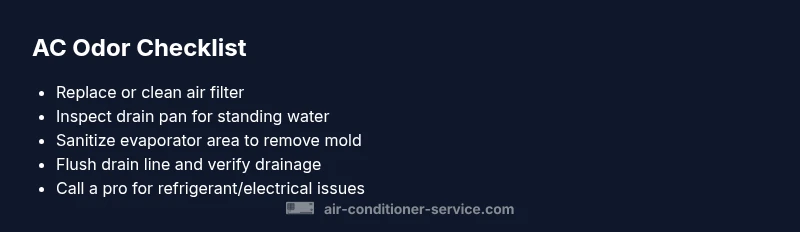
Start with low-risk steps before diving into complex fixes. - Power down the unit at the thermostat and disconnect the outdoor unit if safe to do so. - Check and replace the air filter; a clogged filter reduces airflow and promotes moisture and odors. - Inspect the condensate pan and drain line for standing water, mold, or algae; clear clogs if you can do so safely. - Look for visible signs of mold on evaporator coils or in the duct plenums, and consider a professional cleaning if you see growth. - If the smell is chemical, refrigerant or solvent-like, do not run the system; contact a licensed pro immediately. - After addressing obvious issues, run the fan mode for 10-15 minutes with the vents open to dry and circulate air, then recheck.
Diagnostic flow snapshot: symptom → likely cause → recommended fix
A careful, logical flow helps identify the issue without guessing. Start with the simplest checks (filtration and drainage) and move toward professional assessment if odors persist or intensify. Common odor pathways include mold in ducts, damp coils, blocked drains, and electrical or refrigerant-related concerns. Addressing each root cause in sequence reduces risk and cost and helps restore safe, clean air in your home.
Step-by-step fixes for the most common odor sources
- Replace the air filter: remove the old filter, install a new one with correct orientation, and run the blower on cool to verify improved airflow. 2) Sanitize and clean the evaporator area: disconnect power, access the coil housing, and use a no-rinse cleaner or mild solution to reduce mildew. 3) Clear condensate drain: inspect for clogs, flush with vinegar or a recommended cleaner, and ensure the pan drains properly. 4) Decontaminate and dry ducts: use a duct-safe antimicrobial spray if you notice mold, and allow ample drying time. 5) Inspect electrical components: look for signs of overheating or burnt insulation; do not touch live wires. 6) When odors persist or you suspect refrigerant issues, schedule professional service immediately.
Safety tips, warnings, and prevention
Always shut off power at the breaker before inspecting the unit. Wear eye protection and gloves when handling mold or cleaning agents. Never run the system with a known refrigerant leak or electrical fault. Use manufacturer-approved cleaners and follow warranty guidelines. Regular maintenance, including filter changes and drain line inspections, helps prevent most odors from taking hold.
What to expect from professional service and prevention tips
A licensed tech will inspect refrigerant lines, electrical connections, and the condensate system, plus perform coil cleaning and duct evaluation if needed. They’ll determine whether odors are strictly a maintenance issue or indicate a more serious fault. After service, maintain a routine: change filters monthly (or as recommended), clear the drain line, and schedule annual check-ups to prevent odors from resurfacing.
Quick prevention checklist
- Change filters regularly and keep intake vents unblocked
- Schedule annual tune-ups before peak seasons
- Clean condensate tray and drain line to prevent standing water
- Monitor for signs of mold, moisture, or unusual electrical smells
Steps
Estimated time: 1-2 hours
- 1
Power down and safety check
Turn off the thermostat and switch the unit off at the breaker if accessible. Do not operate the system while inspecting for odors. This prevents electrical hazards and stops mold from spreading.
Tip: Always start with safety to avoid shocks and equipment damage. - 2
Inspect and replace the filter
Locate the return air filter, remove the old one, and install a clean filter in the correct direction. A clean filter improves airflow and reduces moisture buildup.
Tip: Keep spare filters on hand and replace every 1-3 months depending on use. - 3
Check condensate pan and drain
Look for standing water, rust, or algae in the condensate pan. Clear any clogs in the drain line and ensure water flows freely to the outdoors.
Tip: A blocked drain is a major odor source and moisture risk. - 4
Sanitize evaporator area
If you can safely access the evaporator coil, use a no-rinse sanitizer or mild cleaning solution to reduce mold and mildew.
Tip: Avoid harsh chemicals near electrical components. - 5
Run a test after cleaning
Reassemble panels, restore power, and run the blower in cooling mode with doors open to circulate air and dry surfaces.
Tip: If odor persists, do not continue using the unit; call a technician. - 6
Professional evaluation for persistent odors
If the smell remains after DIY steps, a licensed technician should inspect refrigerant lines and wiring for leaks or faults.
Tip: Early professional assessment can prevent costly damage.
Diagnosis: AC emits unusual or strong odors during operation
Possible Causes
- highMold or mildew in ducts/evaporator coil
- highClogged or dirty air filter
- highStagnant condensate drain pan/line
- mediumElectrical overheating or wiring issue
- lowRefrigerant leak or chemical odor
Fixes
- easyReplace/clean air filter and clean condensate pan
- easyFlush and clear condensate drain line; sanitize evaporator housing
- mediumClean coils and inspect for visible mold or moisture
- hardSchedule professional inspection for electrical or refrigerant issues
Common Questions
What causes a bad smell from an air conditioner?
Most odors come from moisture-related growth like mold or mildew, dirty filters, or a blocked condensate drain. Refrigerant leaks or electrical faults can produce chemical or burnt odors and require professional attention.
Common smells come from mold, dirty filters, or drainage issues; refrigerant or electrical smells need a professional check.
Is a refrigerant leak dangerous and what should I do?
Yes, refrigerant leaks can be hazardous. If you suspect a refrigerant smell, shut off the unit and contact a licensed HVAC technician immediately. Do not attempt to seal leaks yourself.
Refrigerant leaks are dangerous—shut off power and call a pro right away.
How do I remove mold odor from the AC?
Replace the filter, clean accessible coils with a mild cleaner, sanitize the housing, and ensure proper drainage. If mold persists, a professional cleaning and duct sanitization may be needed.
Replace filters, clean visible mold, and get a professional cleaning if it keeps coming back.
What’s the difference between musty and chemical odors?
Musty odors usually imply mold or mildew, often from moisture problems. Chemical smells suggest refrigerant leaks or burning electrical components and should be treated as an urgent safety issue.
Musty means mold; chemical smells mean leaks or electrical issues, which require urgent care.
When should I call a professional vs DIY?
DIY is fine for basic steps like filter changes and drain checks. If odors persist, involve a professional to inspect refrigerant, electrical components, and complex ductwork.
If odors linger after basic steps, it’s time to call a professional.
Can odor be prevented with regular maintenance?
Yes. Regular filter changes, drain-line checks, and annual professional tune-ups can prevent most odors by keeping moisture and buildup under control.
Regular maintenance prevents most odors. Keep filters fresh and drains clear.
Watch Video
The Essentials
- Check and replace filters regularly
- Inspect and clear the condensate drain
- Clean evaporator and ducts if mold is present
- Do not operate with refrigerant or electrical odors
- Schedule professional help for persistent or dangerous smells