What to See While Buying an AC: A Practical Guide
A practical guide for homeowners and renters on what to look for when buying an air conditioner, covering size, efficiency, type, noise, and installation considerations.


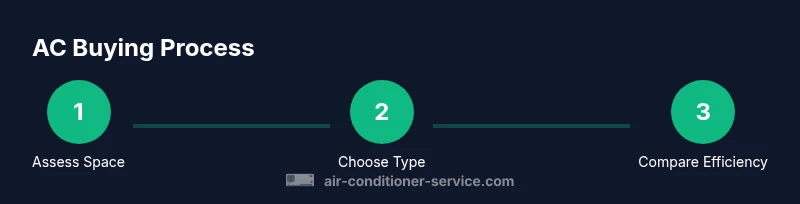
This quick answer shows you what to look for when buying an AC: proper size for your space, efficiency ratings, type (window, portable, or split), installation needs, noise levels, and essential features. Use a side-by-side checklist to compare models and avoid buyer's remorse. Also verify warranty terms and service options before purchase.
Understanding Your Buying Objectives
Before you buy an air conditioner, clarify your objectives: how you plan to use cooling in different rooms, your climate, budget, and how long you expect to keep the unit. This early step informs every later decision. Many shoppers focus on upfront price, but long-term operating costs matter more for total ownership. This guide helps you translate room requirements into a practical shopping list. Remember the exact phrase that anchors your decision: what to see while buying ac. By aligning size, efficiency, type, and service options with your home, you reduce post-purchase regret and make a confident choice.
Room Sizing: Matching BTU to Space
Accurately sizing an AC starts with measuring the room(s) it will cool. Record length, width, and height to estimate cooling needs, keeping in mind that factors like ceiling height, sun exposure, insulation, and number of occupants affect performance. Use a reputable BTU calculator and cross-check results with product specifications. Avoid assuming a unit that is too large or too small; both mis-sizing can waste energy, create humidity issues, and shorten compressor life. Use a simple, repeatable checklist to compare space requirements against each model.
Efficiency Metrics: SEER, EER, and Energy Labeling
Efficiency ratings drive long-term energy costs and comfort. SEER (Seasonal Energy Efficiency Ratio) reflects cooling efficiency over a season, while EER (Energy Efficiency Ratio) indicates steady-state efficiency at a given outdoor temperature. Look for units with higher SEER and reasonable EER values, and pay attention to energy labels and ENERGY STAR certification when available. Remember that higher efficiency often comes with a higher upfront price but lower monthly operating costs, which can pay off over time. Use these metrics to compare models side-by-side.
AC Types: Pros and Cons (Window, Portable, Split)
Understanding the main AC types helps you balance ease of installation, noise, and cooling capacity. Window units are typically affordable and portable but can block window use and may be noisier. Portable ACs offer mobility but can be less efficient and require venting through a window. Split systems deliver quiet operation and strong cooling but require professional installation and higher upfront costs. Your choice should align with space layout, window access, and desired permanence.
Noise, Vibration, and Comfort Factors
Noise level can dramatically affect comfort in bedrooms and living spaces. Check the decibel rating listed by manufacturers and read real-world reviews for typical operation sounds. Consider anti-vibration mounts and the location of the compressor when evaluating models. If you sleep with a light sleeper, prioritize quieter units even if they cost more upfront. Comfort also depends on consistent airflow distribution and avoiding hot spots in rooms adjacent to the cooled area.
Installation Needs and Ventilation
Installation requirements influence both price and performance. Windows and walls must accommodate mounting hardware, clearances, and venting paths. Ensure the unit has proper drainage for condensate and that electrical circuits meet the unit’s amperage, with a dedicated circuit if needed. If you rent, confirm building approval rules before purchase. Poor ventilation or improper drainage can reduce efficiency and shorten the unit’s life.
Features Worth Paying For
Not all features deliver value for every home. Useful features include programmable thermostats, timer controls, flexible scheduling, smart home integration, and adjustable fan speeds. Dehumidification modes can improve comfort in humid climates and save energy. A washable or reusable filter saves maintenance costs, while auto-restart after power outages adds reliability during storms. Weigh features against your climate and usage habits to avoid feature fatigue.
Maintenance and Longevity Considerations
Regular maintenance extends AC life and preserves efficiency. Clean or replace filters regularly, inspect seals around window units, and keep exterior components free of dirt and debris. Schedule professional servicing if you notice reduced airflow, unusual noises, or leaks. Keeping a maintenance log helps you anticipate service needs and plan budget timing for parts and labor. Build a simple maintenance routine into your monthly household tasks.
Price Range and Hidden Costs
Prices vary by type, capacity, brand, and features. When budgeting, include potential installation, venting, and electrical work, as well as ongoing energy costs. Don’t overlook hidden costs such as extended warranties or service plans you may be sold at checkout. Compare total ownership cost by adding estimated annual energy use to the upfront price. A careful cost analysis helps you avoid sticker shock and buyer’s remorse.
Warranty and Service Options
Evaluate warranty terms for compressor, parts, and labor, and confirm what maintenance tasks may void coverage. Check whether local service is readily available and whether authorized technicians maintain the product in your area. A robust service network reduces downtime and improves long-term satisfaction. When possible, document model numbers, purchase receipts, and warranty details for easy reference.
Quick Model Comparison Checklist
Create a simple checklist for each model you consider: size compatibility, efficiency metrics, type, installation needs, noise level, features, warranty, and estimated lifetime costs. Add notes on availability of local service and expected maintenance intervals. Use this checklist to rank options and narrow your choices to two or three finalists for in-person testing or demo.
AUTHORITY SOURCES
- U.S. Department of Energy: How to choose the right air conditioner and understand efficiency metrics
- ENERGY STAR: Consumer guidance on window, portable, and ducted air conditioners
- Federal Trade Commission: Appliance shopping tips and energy labeling considerations
- Industry technical sheets and consumer education pages from university extension programs
Glossary and Quick References
- BTU: A unit of heat that helps quantify cooling capacity. More BTU means more cooling power, but it's not always better for every space.
- SEER: Seasonal Energy Efficiency Ratio, higher values indicate better efficiency over a season.
- EER: Energy Efficiency Ratio, reflects efficiency at a specific outdoor temperature.
- ENERGY STAR: A labeling program that identifies efficient appliances and provides performance benchmarks.
Tools & Materials
- Measuring tape(Measure room length, width, and ceiling height for rough BTU estimation)
- Room BTU calculator (online)(Cross-check room size, insulation, and sun exposure with model specs)
- Notepad or checklist(Capture model numbers, pros/cons, and price quotes)
- Manufacturer spec sheets(Compare SEER/EER, noise, and installed power requirements)
- Small flashlight(Inspect tight spaces around casing and filter paths)
- Screwdriver set(For simple in-store checks or minor adjustments)
- Safety gloves(General safety during handling and installation demonstrations)
Steps
Estimated time: 1-3 hours
- 1
Assess your space
Measure the room and note sun exposure, insulation, and occupant load. This establishes cooling needs and helps you avoid under- or over-sizing. Record dimensions and conditions for reference.
Tip: Use a consistent method: measure length, width, height, and multiply by occupancy/light loads as a sanity check. - 2
Identify appropriate AC type
Evaluate window, portable, or split options based on room layout, noise tolerance, and permanence. Consider whether you’ll benefit from flexibility or higher efficiency with a fixed unit.
Tip: If you’re renting, confirm permission for a window or portable unit before purchase. - 3
Check efficiency ratings
Review SEER/EER values and any ENERGY STAR certification. Higher ratings usually reduce operating costs over time, though the upfront cost is higher.
Tip: Balance upfront cost with projected energy savings for the expected lifespan. - 4
Compare sizing and BTU estimates
Cross-check room measurements with each model’s capacity. A unit that’s too large cools quickly but dries the air, while an undersized unit struggles and runs constantly.
Tip: Prefer models with slightly adjustable or modular capacity for future space changes. - 5
Review installation requirements
Confirm electrical circuit requirements, venting (for portable/window units), and clearance around the unit. Poor installation reduces efficiency and shortens life.
Tip: Ask for an on-site assessment from a licensed technician if installation is complex. - 6
Inspect warranty and service options
Note compressor and parts coverage, labor terms, and service availability in your area. A strong service network minimizes downtime.
Tip: Request written warranty terms and keep digital copies accessible. - 7
Test features and controls
In-store or online, verify programmability, timers, remote/app control, and any smart features. Ensure the interface is intuitive for daily use.
Tip: Ask for a demo or quick setup guide to avoid post-purchase frustration. - 8
Make a decision with a side-by-side checklist
Summarize each model’s size fit, efficiency, type, installation needs, noise, features, warranty, and price. Choose the best overall value rather than the cheapest option.
Tip: Keep quotes and product data accessible in a single document for final review.
Common Questions
How do I know what size AC I need for my room?
Start with room measurements, climate, and insulation. Use a reputable calculator and cross-check with manufacturer specs. Avoid guesswork by comparing multiple models sized for your space.
Begin with your room measurements, climate, and insulation. Use a calculator and compare several models to find one sized for your space.
What do SEER and EER ratings mean for my energy bill?
SEER measures seasonal efficiency, while EER reflects steady-state efficiency at a specific outside temperature. Higher values generally mean lower operating costs, but consider your climate and upfront cost.
SEER shows seasonal efficiency and EER shows steady efficiency; higher values usually lower energy costs but may cost more upfront.
Is a window unit better than a split system for my home?
Window units are usually affordable and easier to install but may be noisier and less efficient. Split systems are quieter and more efficient but require professional installation and higher upfront costs.
Window units are cheaper and easier to install but louder and less efficient; split systems are quiet and efficient but costlier and need professional installation.
Are portable ACs as effective as fixed units?
Portables offer flexibility and quick setup but typically slower and less efficient. Fixed units provide better cooling efficiency and comfort but require permanent installation.
Portables are flexible but usually less efficient; fixed units cool more effectively but need installation.
What maintenance improves AC longevity?
Regular filter cleaning, keeping coils clean, and scheduling annual professional checkups help maintain efficiency and extend lifespan.
Keep filters clean, coils dust-free, and schedule yearly professional tune-ups to extend life.
How long does installation typically take?
Window and portable units can be installed in an hour or two, while split systems may require several hours and a professional visit.
A window or portable install often takes 1–2 hours; a split system usually needs a professional several hours.
Watch Video
The Essentials
- Measure space accurately before choosing BTU capacity.
- Prioritize high-efficiency models with clear operating costs.
- Choose a type that fits your home layout and permanence needs.
- Use a side-by-side checklist to compare features and price.
- Confirm warranty terms and local service availability.