What to Do When Ice Forms on Your Air Conditioner
Practical steps to diagnose and fix ice on your AC, prevent future icing, and avoid costly repairs. Learn safe, effective troubleshooting for homeowners and renters.


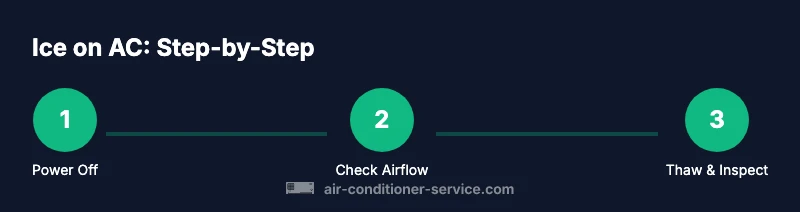
Ice forming on your air conditioner is usually a sign of airflow or drainage problems. To start, power off the unit at the thermostat and breaker, thaw the ice, and inspect the air filter and returns for obstructions. If icing persists or you suspect a refrigerant issue, contact a professional for safe service.
Why Ice Forms on an Air Conditioner
Ice on an air conditioner typically happens when cooled refrigerant meets insufficient warm air, causing the evaporator coil to drop below freezing. According to Air Conditioner Service, airflow restrictions, moisture on the coil, and a dirty filter are among the most common culprits. Harsh humidity can exacerbate frosting, especially in poorly ventilated spaces or with high indoor moisture. When ice forms, it not only reduces cooling efficiency but also places extra strain on the compressor and fan, which can shorten the system’s lifespan. Early detection and addressing airflow problems can prevent a more costly failure. Regular maintenance, including filter changes and vent clearance, is essential for long-term reliability. The Air Conditioner Service team emphasizes proactive care and timely intervention to keep your system running smoothly.
Immediate Safety Steps to Take
Ice on an active cooling system can pose safety risks, including electrical hazards. Start by turning off the system at the thermostat and shutting off the breaker to remove any electrical risk while you inspect. Do not attempt to chip away ice with metal tools or apply direct heat to the coils. Instead, allow the ice to thaw naturally in a controlled environment. Place towels or a shallow pan to catch the meltwater and protect surrounding floors. If water is leaking, consider temporary containment and contact a professional if the leak persists. These immediate steps protect you and prevent further damage while you plan next actions.
Common Causes of Ice Formation
Beyond a dirty filter, several causes can lead to icing on your AC. A blocked return air vent or closed doors can restrict airflow, causing the evaporator coil to freeze. A dirty evaporator coil or condensate drain clog can also contribute by increasing humidity around the coil. Refrigerant issues, such as leaks or undercharge, may cause ice buildup, though these problems typically require professional diagnosis and repairing. Humidity levels in the home, poor insulation, and outdoor debris around the outdoor unit can compound the problem. Understanding these factors helps you target the right fix rather than guesswork.
Diagnosing the Issue Without Tools
Begin with a visual check: is the air filter dirty or oversaturated with dust? Are there closed or blocked return vents in living spaces? Ensure the thermostat is set to cool and not to a mode that bypasses the compressor. Listen for unusual sounds from the outdoor unit, which could indicate debris or a fan problem. If the evaporator coil is accessible, look for visible frost or ice on the coil, but avoid disassembly unless you are trained. Air Conditioner Service analysis notes that many icing cases stem from airflow restrictions and poor maintenance, so focusing on airflow is often the quickest path to resolution.
Step-by-Step Fixes You Can Try (Non-Repair Center)
This section outlines practical steps to thaw and restore cooling, with clear actions and safety considerations. Begin with safety and then move through a sequence aimed at restoring airflow and drainage. If you identify a refrigerant issue or persistent icing, schedule professional service promptly to avoid further damage.
Preventive Maintenance to Avoid Future Ice
Preventing ice is easier than fixing it. Regularly replace or clean air filters, keep return vents unobstructed, and schedule seasonal maintenance. Clean the outdoor condenser area of leaves and debris to ensure adequate airflow. Check the condensate drain for blockages and test the system’s drainage periodically. By maintaining steady airflow and moisture control, you minimize the risk of future icing and improve overall efficiency. Air Conditioner Service recommends proactive maintenance as the best defense against recurring ice formation.
Air Conditioner Service's Verdict and Next Steps
The path to sustainable cooling starts with removing the immediate ice threat and addressing root causes. The Air Conditioner Service team recommends a clean filter, clear vents, and a short thaw period as your first steps, followed by a professional inspection if icing recurs. Document icing events and maintenance actions to help technicians diagnose faster. The long-term verdict is simple: regular maintenance, attention to airflow, and prompt professional help when needed keep your AC efficient and reliable.
Tools & Materials
- Replacement air filter(Choose the correct size and an appropriate MERV rating for your system.)
- Screwdriver set(Phillips and flat-head for access panels.)
- Microfiber cloths(Use to wipe down exterior parts and accessible coils.)
- Bucket or tray(Catch melting ice and condensate water.)
- Towels or absorbent mats(Protect floors from water as ice thaws.)
- Flashlight(Better visibility when inspecting coils and cabinets.)
- Gloves(Protect hands during inspection of panels.)
Steps
Estimated time: 60-120 minutes
- 1
Power off the system
Turn off the air conditioner at the thermostat and switch off the dedicated breaker in the electrical panel. This reduces the risk of electric shock while you inspect and thaw. Confirm the unit is not running by listening for fan noise and verifying that there is no airflow coming from the vents.
Tip: Always verify power is off at both the thermostat and the breaker. - 2
Thaw the ice safely
Allow the ice to melt naturally in a controlled environment. Do not use hot water, hair dryers, or other heat sources on the coils, as rapid heating can damage components. Place towels to absorb meltwater and protect flooring.
Tip: Patience is key; rushing thawing can cause coil damage or water spills. - 3
Inspect and replace the air filter
Remove the old filter and check its condition. If dirty, replace with a new filter of the correct size and rating. A clean filter improves airflow and reduces the chance of re-freezing.
Tip: Note the filter size and replace every 1-3 months depending on usage and pollutants. - 4
Check return air vents and ducts
Ensure that all return vents are open and free from obstructions. Move furniture or drapes that block airflow and keep doors open to improve circulation. Poor airflow is a leading cause of icing.
Tip: Use a flashlight to verify no hidden obstructions behind furniture or behind closed doors. - 5
Inspect accessible evaporator area
If the access panel is removable and you are comfortable, inspect for visible frost or debris on the evaporator coil. Do not bend or puncture fins. Clean away loose dust with a soft brush or cloth.
Tip: Do not attempt to disassemble or scrape frost aggressively; professional service may be needed for deeper ice. - 6
Check for signs of refrigerant issues
Look for oily residues around copper lines or fittings, which could indicate a leak. Note that detecting and repairing leaks requires licensed HVAC expertise. Do not attempt to recharge refrigerant yourself.
Tip: If you see signs of a leak, schedule service promptly; refrigerant handling is hazardous. - 7
Clear the condensate drain
Inspect the condensate drain pan and line for clogs. If accessible, flush the line with a safe cleaner or clear tubing. A blocked drain can contribute to humidity near the coil and promote icing.
Tip: Pour a small amount of water through the drain to test flow after clearing. - 8
Test the system and monitor
Reconnect power and set to cool. Observe for normal operation and monitor for any recurrence of icing within the next 24-48 hours. If icing returns, contact a technician for a thorough inspection of refrigerant and airflow systems.
Tip: Keep a simple icing log to help the technician identify recurring patterns.
Common Questions
Why does ice form on my air conditioner evaporator coil?
Ice typically forms when airflow over the evaporator is restricted or the coil gets too cold due to excess moisture. Dirty filters, blocked vents, and humidity contribute to frosting. In many cases, improving airflow and cleaning filters resolves the issue.
Ice on the evaporator coil usually means restricted airflow or high moisture; fix airflow and clean or replace the filter to start.
Can a dirty air filter cause icing?
Yes. A clogged filter reduces airflow across the coil, causing the coil to get colder and ice to form. Replacing the filter and keeping vents clear often stops icing quickly.
A dirty filter can trigger icing by blocking airflow and letting the coil freeze.
Is it safe to run only the fan when the unit is iced?
Running the fan can help thaw the ice, but you should keep the cooling function off until the ice melts. After thawing, you can run the fan to dry the coil.
You can run the fan to aid thawing, but only after turning cooling off.
How long does it take for ice to thaw?
Thaw time varies with room temperature and how much ice is present. It typically takes several hours; avoid forcing the ice to melt with heat.
Thaw time depends on conditions; expect a few hours for natural thaw.
When should I call a professional?
Call a professional if icing recurs after thawing, if you suspect a refrigerant leak, or if you’re unsure about inspecting electrical components.
If icing recurs or you suspect a refrigerant issue, contact a pro.
How can I prevent icing in the future?
Maintain clean filters, ensure adequate airflow, keep vents unobstructed, and schedule regular maintenance to prevent recurring icing.
Keep filters clean, airflow unrestricted, and schedule regular maintenance.
Watch Video
The Essentials
- Power off to thaw safely and inspect for airflow issues
- Replace dirty filters and clear return vents to restore airflow
- Do not rush thawing or use direct heat on coils
- Look for refrigerant signs and call a pro if suspected
- Regular maintenance prevents future icing